


Blank Tabs for Contractor Exam Books: How to Organize References the Right Way
Blank exam-book tabs are small tools with a big job: helping you find the correct reference section without flipping through a codebook like a contestant on a frantic game show. If you are preparing for a contractor licensing or certification exam that permits reference books, a careful tab system can make study sessions easier and may help with timed lookups. But a tab is only helpful when it is placed correctly, labeled clearly and allowed by your testing provider. This guide explains how to select blank tabs, compare them with pre-printed options, organize multiple books and avoid the common exam-day mistakes. Start with the 1 Exam Prep Blank Tabs collection and verify the exact product specifications before ordering.
Important Details to Check First
Blank tabs are study accessories, not reference books, exam registrations, highlighting services or a promise of test-center acceptance. The linked collection did not provide verifiable item details, so its price, quantity and tab materials need confirmation.
Exam rules vary. Some tests permit permanent tabs; others limit writing, book editions or outside references entirely. The current candidate bulletin always controls.
What are blank reference-book tabs?
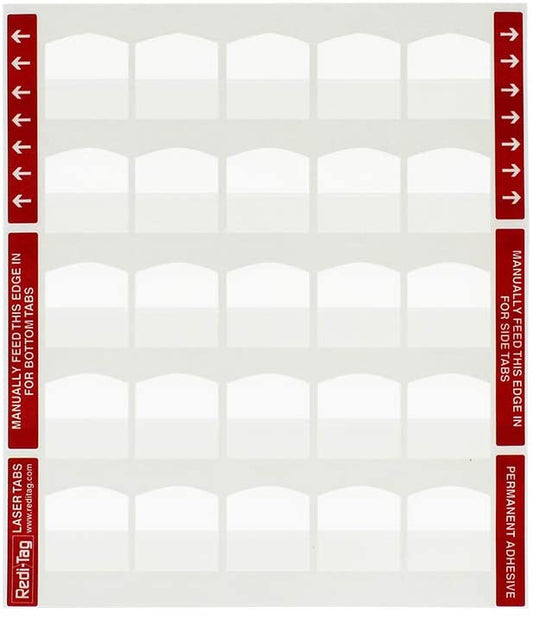
Blank tabs are small labels that attach to the edge of a page so you can mark useful sections of a reference book. Unlike pre-printed tabs, blank versions let you write your own short labels. They can be helpful when a course points you to specific chapters, when your edition organizes a subject differently, or when you want to study only the sections that slow you down. A tab is a location marker, not a miniature answer sheet.
For exam preparation, the biggest advantage is consistency. Put a label where you expect to find a particular topic, then practice returning to that page without turning half the book inside out. If you are shopping the Blank Tabs collection, check the actual listing for tab material, quantity, shape, adhesive type and shipping terms. Those details should not be guessed from the collection name.
Know when a blank tab is better than a pre-printed tab
Pre-printed tabs come with labels already chosen for a book or exam. Blank tabs start with a clean surface, so they are easier to customize for personal study. They can be a smart choice when the reference has unusual chapter titles or you want a small number of labels for repeat problem areas. They can also work well for a group of different books that use different terminology for similar topics.
Neither type is automatically better for every exam. Pre-printed tabs may save labeling time, while blank tabs take more planning. The key question is whether the tab leads you to the right information and meets the examination rules. If you spend an hour making elegant labels but never practice using them, you have created a very organized craft project. Build the system around actual study questions instead.
Confirm whether your examination allows tabs
Some open-book licensing exams allow permanent tabs in approved bound books. Other examinations limit the size, placement, content, or permanence of tabs, and some do not allow outside books at all. Rules differ across testing providers and even between exam programs administered by the same company. Do not rely on the fact that a product is sold as an exam accessory as proof that your proctor must accept it.
Read the most recent candidate bulletin, examination reference list and test-center material policy. Look for terms such as permanently attached, nonremovable, factory-printed, handwritten notes and loose materials. If you cannot find a clear answer, contact the exam provider before altering your books. A good rule is to prepare according to the strictest applicable instruction, not the most convenient story told in an online comment.
Understand permanent versus temporary adhesive
A permanent adhesive is designed to remain attached, while a repositionable tab can be lifted and moved more easily. Many exam instructions distinguish between these products because temporary flags can function like removable notes. Do not assume that a tab feels secure enough just because it has stayed on the page for an afternoon. Read the manufacturer’s description and the testing provider’s exact wording.
When you attach tabs, clean and dry your hands and press the adhesive firmly to a suitable page area. Allow enough time for adhesion before transporting the book. Inspect a few labels after turning pages repeatedly. A test proctor may reject tabs that peel away or violate the relevant policy. The point is to organize an approved reference, not create a handful of confetti near the testing desk.
Check whether handwritten labels are permitted
Blank tabs naturally invite handwritten labels, but the permission to bring a tab into an examination does not always mean you may write anything on it. Some providers allow simple chapter names or printed information while prohibiting handwritten notes, formulas, calculations or copied answers. Policies may also distinguish handwriting inside the book from text on the outside edge. This is the kind of detail worth checking before you prepare dozens of labels.
At home, you may use temporary study notes to learn a subject, but that does not make those notes legal in the test room. When exam rules are unclear, consider pre-printed labels that match approved subjects and ask the testing authority for a specific ruling. Do not place memory tricks, step-by-step solutions or answer codes on tabs intended for an exam unless the rules clearly permit them.
Build a simple tab plan before attaching anything
Start with the official exam outline and the table of contents of each approved reference. Make a short list of topics that are frequently tested or hard to find: definitions, general requirements, chapter indexes, critical tables or a particular set of calculations. Your first list should be smaller than the number of tabs in the package. Too many labels on one book can make navigation slower because every edge looks equally important.
Lay the tabs next to the book without attaching them. Decide where each label will sit and whether adjacent tabs will overlap. Group related topics in a consistent order. For example, put common tables toward the top of the page edge and general chapters below them, if the rules and your reference layout allow that pattern. Once the plan works, apply the tabs with care.
Use short labels that actually help
A good label identifies a location quickly: 'Index,' 'Loads,' 'Safety,' 'Ch. 4' or another plain topic name. Use the book’s actual terms when possible so the label matches what you see on the page. A crowded label is harder to scan. If you need tiny writing to fit an entire rule summary, the tab is probably doing too much work and may be inappropriate for the examination.
Keep your labeling style consistent from book to book. Use the same abbreviations for the same concept, and avoid two almost identical labels that lead to different places. During study, practice finding a subject from a question without first opening the tab list. If a label keeps confusing you, change it before exam day. The goal is a predictable system that reduces mental effort.
Decide between color-coding and plain tabs
Color can help separate categories, but it should not replace a readable label. One candidate might use one color for safety rules, another for tables and a third for business topics. Someone else may prefer plain tabs because the book is already colorful enough. Both are workable if the system is easy to remember. Check that the tab size and color do not hide important printed text.
Avoid elaborate systems that require memorizing a separate legend. If you need an entire chart to explain what blue, green, yellow and red mean, the color system may be too complicated. Try a timed lookup exercise with and without color groups. Keep the approach that actually saves time. The best organization is usually the simplest one you can repeat reliably.
Plan the placement on thick codebooks
Large codebooks have many thin pages and narrow margins, so tab placement deserves attention. Put tabs far enough from the printed text that you can still read headings and tables. Stagger them so several labels remain visible when the book is closed. Do not attach tabs where they catch on a binder, index divider or another reference book in your bag. Consistent spacing makes a surprisingly large difference.
Handle delicate pages gently, particularly in borrowed or rented books. Some rental agreements prohibit modification or require books to be returned in a specified condition. Check those terms before attaching anything permanent. If the book is rented and modifications are not allowed, discuss options with the seller rather than risking a deposit. A tab should make the book more useful, not turn it into an expensive souvenir.
Tab approved books rather than bringing extra notes
Reference-permitted exams normally specify which titles and editions are allowed. Tabs do not turn an unapproved book into an approved one. Before labeling, confirm the exact exam category, reference name, printing, code cycle and whether the book must be bound. A 2020 reference may be useful for learning concepts while being incorrect for an examination based on a later edition.
Use the official list as your source of truth. The Florida construction examination reference lists, for example, separate approved references by exam specialty and testing format. Other programs publish their own bulletins. Read the rules for your actual exam, not just one that sounds similar. A tab attached to the wrong edition points you efficiently to the wrong answer.
Practice index lookups with the tabs
A tab should support, not replace, learning a book’s table of contents and index. In a realistic question, you first identify the subject and then decide which chapter or reference contains the answer. Sometimes the most useful path is the index rather than your favorite tab. Practice both ways. Use a timer and note whether your tabs actually reduce the time required to find a rule.
Try a set of ten mixed lookup questions. For each one, write the topic, destination chapter, and time needed. Then change only the tabs that consistently fail. This small experiment is more useful than placing labels on every section in advance. Over time, you will remember both the tab location and the deeper organization of the book, which helps when a question uses unfamiliar wording.
Keep highlighting separate from tab labeling
Highlighting draws attention to text within a page; tabs identify where a page or chapter begins. They work together, but a highlighted book is not the same product as a tab set. Some 1 Exam Prep products include only tabs, while other packages provide highlighting instructions or prepared books. The distinction matters when you compare prices and decide how much work you want to do yourself.
If you purchase tabs alone, assume you still need to obtain the approved reference books unless the product explicitly states otherwise. If you purchase highlighting instructions, confirm whether actual markers, tabs or books are included. A useful example is the Florida Residential Contractor Pre-Printed Tabs listing, which clearly identifies tabs-only contents. Read before adding the item to your cart.
Organize several books without mixing labels
Contractor exams can permit multiple reference books, each with different indexes and subjects. Keep a separate tab map for each book during study. A simple note on your home desk can list which volume covers building, safety, business and specialty standards. On exam day, only bring this map if the test rules expressly allow it; otherwise rely on the tabs and familiarity you built beforehand.
When several books cover related topics, learn which one is the controlling or most specific reference for a question. A safety regulation, building code and estimating handbook may all mention ladders, but they answer different types of questions. Tabs are most effective when you can select the right book before opening it. That skill comes from studying the exam outline and practicing with mixed subjects.
Avoid common tabbing mistakes
Too many tabs, unclear labels, weak adhesive and inconsistent spacing are the usual problems. Another mistake is writing long explanations on a tab intended to be only a section marker. Some candidates also attach labels to the wrong edition, then realize page numbers or chapter arrangements have changed. Fixing errors after dozens of permanent tabs have been added is not particularly fun.
Make a small pilot set first and test it during a week of study. Open and close the book, put it in your bag, and practice finding sections under a time limit. Ask whether every label earns its spot. Remove unnecessary complexity before you prepare the rest. Confirm exam-room rules at the beginning and again shortly before test day. That is far better than receiving surprising instructions from a proctor.
Compare blank tabs, printed tabs and prepared books
The Blank Tabs collection is a reasonable starting point for candidates who want flexibility, although the page’s current product details should be confirmed before ordering. For ready-made book labels, look at 1 Exam Prep’s pre-printed tabs and trade-specific tab listings. If you want more than labels, review products that expressly offer book packages or highlighting guidance.
Compare the amount of labor you want to do yourself, the allowed tab format, and your test date. A printed set can be convenient when it exactly matches an approved book edition. Blank tabs may suit a less common reference. Already-prepared books may reduce setup time but can carry additional costs or rental conditions. None of these choices replaces the need to study the rules behind the labels.
Prepare your books for the testing center
A week before a reference-permitted exam, inspect every book against the current bulletin. Verify the title, edition, binding, tabs, markings and any restrictions on loose inserts or photocopies. Make sure labels are firmly attached and do not conceal important text. Check the provider’s instructions about what happens if a book fails inspection and whether replacement books are permitted.
Pack only the references and materials your testing program authorizes. A well-organized book that violates an exam rule can create more trouble than an unmarked book that is allowed. Keep your permitted ID and appointment information separate from the books. Practice using the actual reference set you intend to bring. The more familiar the book feels, the less you have to think about the mechanics of looking things up.
Use tabs in a weekly study routine
Pick one reference book and one subject each day. Read the relevant sections, add a small number of approved tabs if needed, and solve a few practice questions that require using those sections. Record which lookups took too long. The following day, repeat the slow ones before adding new labels. This makes the tab system grow alongside your understanding instead of becoming a project you finish before studying starts.
Once a week, attempt a short mixed quiz using only the allowed references. Notice when a label leads you to the wrong chapter or when a table would be faster to reach through the index. Revise your method, not just the labels. Good exam preparation is a combination of accurate reading, regular practice and permitted organization. Tabs can help, but they cannot take the exam for you.
Check the final product details before you buy
Before ordering blank tabs, confirm the exact number in the package, physical dimensions, whether labels can be written on, adhesive characteristics and delivery method. The collection URL alone does not establish those specifications. If the listing is unavailable or unclear, contact the seller. It is better to ask one question now than discover that your planned labeling system does not fit the pages of your codebook.
Also ask whether the purchase includes only tabs or other services. Confirm shipping fees, expected delivery date and return restrictions. If you are buying for an upcoming examination, leave enough time to prepare the reference books and practice. Finally, look at your testing bulletin again. The most useful tab is the one that fits your book, meets your exam rules and saves you time finding real information.
Relevant 1 Exam Prep Products and Official Resources
Check the exact product description and current official rules before ordering a course, book, or service. The links below help you compare study options with the requirements that actually apply to you.
A Practical Action Checklist
- Confirm the exam permits books and the particular tab type.
- Find the current approved reference titles and editions.
- Check rules on permanent adhesives and written information.
- Select a small number of useful chapters and tables.
- Label neatly without covering book text.
- Practice timed lookups using tabs and the book index.
- Check rental terms before modifying borrowed books.
- Inspect the tabs and book policy again before test day.
Frequently Asked Questions
Conclusion
Blank reference-book tabs can be useful because a codebook is not always easy to navigate under pressure. The best tab system is not the one with the greatest number of labels. It is the one that helps you reach the correct chapter or table with less searching. Begin by finding the official examination outline and approved reference list. Then decide whether your chosen test even allows outside books and whether its policy permits permanent tabs, handwritten labels or particular kinds of markings. A tab that violates those rules is not a shortcut.
Blank tabs offer flexibility that a pre-printed set may not provide. You choose the subjects, write short labels and place them where you need them. That can be valuable when a book has unusual chapter titles or your study routine focuses on a small number of troublesome subjects. However, flexibility also creates responsibility. Put labels on the wrong pages, use vague abbreviations or cover important printed text and you make your own reference harder to use. Plan the layout before attaching everything.
A simple approach is to begin with the table of contents and index. Select common definitions, code chapters, frequently used tables and reference sections that repeatedly appear in practice questions. Place a few tabs, solve a handful of questions and measure whether lookups become faster. Keep the labels that help. Reconsider the ones that add clutter. Color-coding may assist, but readable wording is more important than any elaborate rainbow pattern. You should be able to use the system without memorizing another system just to find a book page.
Keep products and services separate when you shop. Blank tabs are not books, printed tabs are not highlighting instructions, and highlighting guidance does not always include physical supplies. Some product bundles include several items, while others cover only a single accessory. Review the exact listing, current price, quantity, adhesive type and delivery details. If you use rented references, read the return policy before modifying them. The goal is to make a practical purchase that fits your actual study setup.
Before test day, compare each reference with the current candidate bulletin once more. Confirm editions, bindings, permitted tabs and restrictions on inserts or handwritten information. Practice timed mixed questions with the approved books, not a different collection of convenient materials. If the provider rules are unclear, ask for clarification. A carefully placed tab can make navigation more comfortable, but it cannot choose the right code requirement or solve a calculation. That part still belongs to you, and that is exactly why practice matters.
If your exam is still several weeks away, keep the setup flexible during study. Try the tab system with realistic practice questions and time yourself. A label that seems clever when you attach it may be hard to interpret later. Move or replace the design only when your book ownership and exam rules permit it. For any unfamiliar test provider, confirm the policy before purchasing supplies. Remember that a useful study accessory should make you more confident about where information lives in the book. It should not tempt you to skip reading the underlying section. Well-used tabs are part of a study system, not a substitute for one.
Key Takeaways
- Only use tabs in the exam room if the specific testing program permits them.
- Blank tabs provide customizable labels; pre-printed tabs arrive labeled.
- Short, readable labels and a small tab plan beat a crowded book edge.
- Check product inclusions, adhesive type, book ownership and return terms.
- Practice finding rules in the index and approved references, not just by tab color.
Plain-Language Summary
Blank tabs are little labels that stick out from the edge of a book. They help you find a chapter, table or index page without searching through every page. For an open-book contractor exam, this may save time. But only use them in the test room if your exam rules allow that kind of tab. The testing company decides what materials are permitted. A product being sold for exam preparation does not mean it is automatically approved for every test.
First, find the current candidate bulletin for your exam. Check which reference books and editions are allowed. Then read the rules about tabs and writing. Some exams allow permanent tabs but not removable sticky notes. Others restrict handwritten content or do not allow any books. If you are unsure, ask the testing provider before writing on or attaching labels. It is much easier to ask early than to face a rejected book on test day.
Next, plan your labels. Look at the table of contents and write down a few important locations. You might mark definitions, general rules, key tables and the index. Use short labels that match the book. Try arranging the tabs so they do not overlap or cover text. You do not need a tab on every page. A smaller group of useful labels usually makes a book easier to understand than an edge crowded with dozens of identical flags.
Practice with the tabs while you study. Open a practice question, identify the topic and find the section. Use the index when the tab system does not help. Time a few lookups and notice what makes them slow. Change unclear labels and practice again. You can also compare blank tabs with pre-printed sets. Blank ones are flexible, while pre-printed ones may save time if they fit the exact book edition. Neither option is a substitute for reading the code.
Finally, check the details before purchasing. Confirm how many tabs are included, whether they are permanent or removable, and whether the product includes anything besides labels. If you have rental books, make sure you are permitted to attach them. If the Blank Tabs collection does not show clear specifications, contact 1 Exam Prep. Before the exam, check all materials against the official instructions one last time. The basic idea is simple: use allowed tabs to find information faster, but build your knowledge so you know what information you need.
If you have time, test your tabs before the exam. Pick a few practice questions, start a timer and see how quickly you find each answer. If a tab points to the wrong place, fix your plan while studying. Use the index too, because not every question will match a tab. Keep records of the books and editions you are using. If you buy a new codebook, check whether the old labels still match its chapters. A little preparation now can prevent frustrating searches later. Just remember that understanding the rule matters more than having a colorful book edge.