





2023 Master Electrician Study Guides: NEC Exam Prep, Books and Study Plan
A master electrician exam can turn years of field experience into a serious test of code knowledge, electrical math, and judgment. The job has plenty of surprises already. Your study plan should not be one of them. A good 2023 NEC study guide helps you practice finding the correct rule, solving the right calculation, and managing the clock.
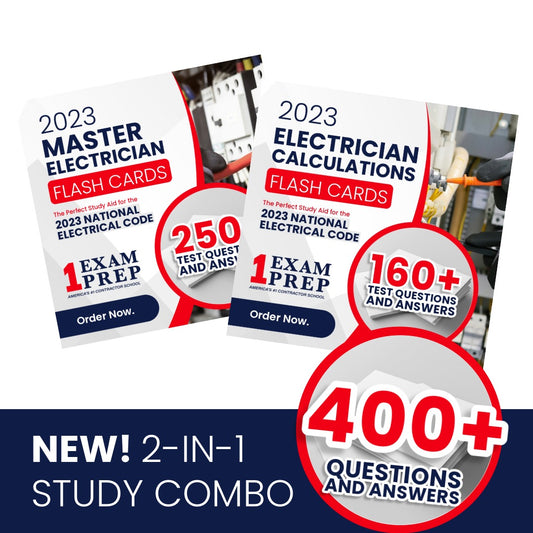
Start with the 2023 Master Electrician Study Guides collection and compare individual books or study packages before buying. Review the individual product pages as well, since bundles can differ in the books, tabs, and online study resources they include. Above all, confirm the electrical code edition and exam bulletin approved by your state or local licensing authority.
First verify your master electrician exam
There is no single master electrician examination that works the same way everywhere. One jurisdiction may require a particular experience level and a state exam, while another uses local rules or a different credential title. Exam length, passing score, permitted references, and subject emphasis can vary. Begin with the authority that will issue your license.
Save the current candidate bulletin, exam registration instructions, and reference list. Write down the precise test name and electrical code edition. If a website says 2023 but your scheduled exam uses a different edition, follow the testing authority rather than a book cover. Correct alignment prevents a great deal of wasted study time.
Understand what a 2023 NEC guide should do
The National Electrical Code, NFPA 70, is a reference for electrical installation requirements. A study guide does a different job: it turns those rules into practice questions, explanations, and problem-solving routines. Together, they can help you move from recognizing a topic to finding and applying the relevant requirement under test conditions.
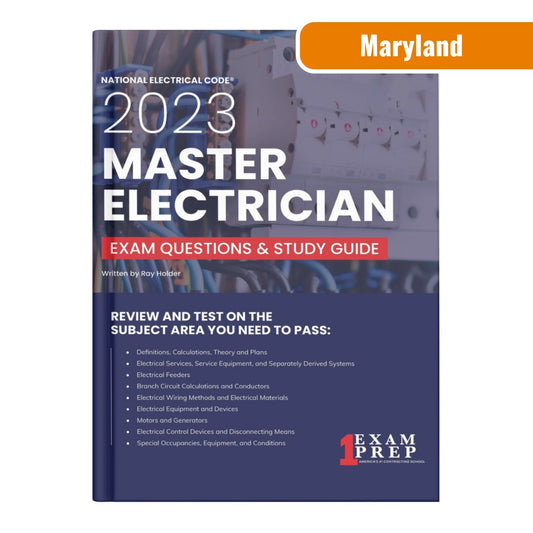
Review the 2023 Master Electrician Exam Questions and Study Guide book and confirm the edition used for the sections you plan to practice. Product descriptions can contain mixed edition wording, so check the exact publication and official examination reference requirements before relying on any guide.
Make codebook navigation a daily habit
An open-book electrical examination is not a scavenger hunt with unlimited time. Knowing that an answer exists somewhere in the book is not enough. You must identify the relevant article, locate its section, read conditions and exceptions, and choose the correct answer before the clock keeps marching forward.
Practice three short lookup rounds each day. Read a question, name the likely topic, then use the codebook index or table of contents to locate the rule. Track whether you selected the correct section and how long it took. Speed matters, but finding the wrong rule quickly does not earn extra credit.
Build a study schedule around weak topics
Start with a short diagnostic set rather than reading every page in order. Group misses by topic: grounding, conductor sizing, branch circuits, motors, transformers, services, calculations, or special conditions. Use the results to decide which areas deserve more practice. The goal is to improve your weakest skills without forgetting the subjects you already know.
Set aside manageable study blocks and rotate technical reading with practice problems. A working electrician may find four focused sessions easier than one exhausting weekend. Reserve time for mixed practice because the real exam will not politely announce which chapter comes next. Review your error log at the beginning of each new week.
Review electrical theory and formulas
Electrical theory supports calculations throughout master-level testing. Voltage, current, resistance, power, and the relationship between them should feel familiar. You may also encounter alternating-current concepts and equipment ratings. Memorizing one formula without knowing when it applies can create an answer that looks neat but is completely wrong.
Write the given values, their units, and the unknown quantity before doing the math. Check whether the question asks for amperes, watts, kilowatts, or another measure. Work several problems that change only one value. That practice helps you recognize the correct setup rather than guessing from answer choices.
Know branch circuits and feeder rules
Branch circuits and feeders are major building blocks of electrical systems. Expect to review conductor selection, overcurrent protection, calculated loads, and how equipment ratings fit into a design. A question may include continuous loads, adjustment conditions, or other details that affect which rule applies. Never choose an answer based on a familiar breaker size alone.
Draw a simple panel and label the source, feeder, protective devices, branch circuits, and loads. Then solve sample questions for each level. If you miss one, check whether the mistake came from a calculation, a definition, or an overlooked condition. That distinction makes your next practice round more effective.
Practice service and load calculations
Service and feeder calculations can feel like math problems wearing hard hats. The challenge is often deciding which loads belong in the calculation and which demand rules apply. Residential and commercial scenarios may use different approaches. Rushing into arithmetic before reading the full question can produce an answer that is precise and still incorrect.
Create a repeatable routine: identify the occupancy, list the loads, select the appropriate method, apply required demand factors, and check units. Use the exact tables and rules in your approved code edition. Review worked examples only after trying the problem yourself so you learn to build the solution.
Strengthen conductor sizing knowledge
Conductor questions can involve ampacity, insulation ratings, temperature conditions, conductor material, termination limits, and installation factors. A simple wire-size question may hide several assumptions. The correct approach is to read the facts given and identify every condition that affects the chosen conductor or protective device.
Practice with scenarios that change the ambient temperature, number of conductors, load, or installation method. Then compare the rule used in each answer. Avoid memorizing a single table entry as if it applies everywhere. A master-level exam rewards careful interpretation of the conditions written in the problem.
Study grounding and bonding carefully
Grounding and bonding are not interchangeable words. Equipment grounding helps establish an effective fault-current path, while bonding connects conductive parts to support electrical continuity. Exams may ask about grounding electrodes, service equipment, separately derived systems, or equipment connections. Understanding the purpose behind the requirements makes the details easier to remember.
Sketch the relevant parts of a system and identify normal current paths separately from fault-current paths. Use the code to verify requirements for the particular installation. A diagram can reveal a misunderstanding that was hidden when you simply read a paragraph and nodded along.
Understand raceways, boxes and wiring methods
A master electrician needs to select wiring methods suitable for the installation environment. Questions may cover raceway types, conduit fill, box fill, support, protection from damage, and conditions such as wet locations. The correct choice depends on both the electrical requirements and the setting described in the question.
Build a comparison sheet with common wiring methods and the situations where they are allowed or restricted. Practice looking up box and raceway capacity rather than relying on rough memory. Watch for questions that combine more than one condition. The best answer must satisfy the full installation, not just its easiest part.
Do not skip motors and controllers
Motor questions can require careful handling of nameplate information, current values, branch-circuit protection, overload protection, controllers, and disconnects. These items serve different purposes. Treating every protective device as the same thing is a common way to lose points and misunderstand an otherwise familiar installation.
Draw a motor circuit with the source, protection, controller, and motor labeled. Note which rating or table the question tells you to use. Solve one step at a time and compare your result with the specified code provision. Repetition helps when a timed test gives you several motor questions in a row.
Review transformers and derived systems
Transformer questions may involve primary and secondary voltage, current, power ratings, conductor protection, and system grounding. A problem can become confusing when the information switches from one side of the transformer to the other. Keep the sides labeled and state what you are calculating before inserting any numbers.
Practice simple transformer relationships and then add installation details. For separately derived systems, verify which grounding and bonding rules apply to the actual scenario. Do not rely on a shortcut copied from a different system. Matching the rule to the system matters more than producing a fast-looking formula.
Learn special occupancies and equipment
The NEC includes requirements for locations and equipment that do not fit ordinary general-purpose installations. Depending on your exam outline, you may need familiarity with special occupancies, hazardous locations, emergency systems, generators, renewable energy, or similar subjects. The exact distribution of questions depends on the approved test outline.
Rather than trying to memorize every unusual situation, practice identifying the keyword that points to the applicable article. Read the definitions and scope before jumping to a detail. A specialty problem may use general rules together with specific rules, so understand how both pieces relate.
Select study materials by their components
Some learners want a single guide, while others need a codebook, calculation practice, and online review. The 2023 Master Electrician study guide and NEC combo with tabs combines a guide with the 2023 code reference. Check the current listing and whether the included tabs comply with your exam's rules.
For broader practice, review the 2023 Complete Master Electrician Book Package. Look at each included item, its edition, and whether you already own something similar. A larger package is useful only when its components match your test and fill a real study need.
Use online practice for timed review
Online tests let you practice in short sessions and review wrong answers without carrying every book around. The 2023 Master Electrician Online Test Success Kit describes practice exams, final exams, and mobile-compatible study access. Check its current features and how long access lasts before purchasing.
Practice in two modes. In learning mode, allow yourself to pause and investigate why an answer is correct. In timed mode, follow the rules and time limit shown in your actual exam bulletin. Track scores by subject, not just overall percentage. An improving total can still hide one area that needs attention.
Understand what tabs and highlighting can do
Tabs help you reach an article or chapter faster, while highlighting can make a rule easier to find. They are navigation aids, not replacements for understanding what a code provision means. Some testing programs allow limited permanent tabs and markings, while others impose stricter rules.
Check the current candidate bulletin before preparing your books for exam day. A package that includes tabs does not automatically mean every testing authority accepts them. Use permitted materials during your final practice sessions so you develop a rhythm that matches what you can actually bring into the room.
Learn to read questions before calculating
Many incorrect answers start before the calculator is touched. A question may ask for a minimum, a maximum, a selected rating, or an exception. Each word changes what a correct answer must accomplish. Train yourself to mark the requested result and list only the facts the question actually provides.
When you miss a question, write one sentence explaining the mistake. Was the code section wrong? Did you skip a condition? Did you confuse primary and secondary? Over time, the error patterns become obvious. Improving how you read can be as valuable as learning another formula.
Prepare for test day and the license application
Confirm the testing location, appointment time, identification rules, calculator restrictions, and approved references well before your exam. Prepare a practice session using only the books and tools that the current rules permit. Keep your confirmation notice and any required authorization documents easy to find.
Remember that an exam score does not necessarily issue a master electrician license. The board may also need experience verification, an application, a fee, or other records. Plan both stages together. Finish the credential process before assuming you are authorized to perform regulated master-level work.
Resources for 2023 Master Electrician preparation
Use the official exam outline to decide which materials belong in your study plan. These links are for comparing specific 1 Exam Prep resources and reviewing the electrical code publisher.
Your seven-step study checklist
Turn the general advice into a routine you can follow. If a step does not match your official examination instructions, update it before test day.
- Confirm your licensing authority and precise exam title.
- Verify the required NEC edition and approved references.
- Take a diagnostic quiz and record weak subjects.
- Practice calculations and codebook lookups each week.
- Review errors, exceptions, and mixed-topic questions.
- Complete timed practice using only permitted materials.
- Prepare documents for both exam day and licensing.
Turn a missed question into a better study habit
A wrong practice answer can teach you something useful if you examine it. First, reread the question and underline the conditions that change the solution. Next, find the applicable code rule or calculation method. Then explain the answer in your own words, as though you were teaching a new apprentice. Finally, write a short note about the mistake and retry a similar question later. This four-part routine improves both understanding and recall.
Do not rely on the answer key alone, especially when a guide and your exam use different code editions. Check important answers against the approved reference text. If a question seems inconsistent, make a note and consult the latest exam bulletin or credible training source. Your goal is not to memorize a particular practice test. It is to become confident enough to solve a fresh problem with new numbers and different conditions.
Frequently Asked Questions
Conclusion
The best way to prepare for a Master Electrician exam is to begin with the test you are actually taking. The words master electrician do not point to one national exam with one set of rules. Your state or local licensing authority decides the accepted code edition, subject outline, exam format, and required documents. Before buying a guide, find the current candidate bulletin. Check the examination title and whether the 2023 National Electrical Code is approved. That simple check can save weeks of studying from the wrong book.
Once the reference list is clear, turn the codebook into a tool you can use under pressure. Learn the table of contents, index, article structure, and common topic locations. Practice looking up a question, finding the rule, and checking its exceptions. A quick search is useful only when it leads to the right answer. If your exam allows tabs or markings, follow its exact policy. Prepare with the materials you will be permitted to use rather than assuming every study accessory can enter the testing center.
Build your schedule around important topics and your weakest skills. Grounding and bonding, conductor sizing, branch circuits, feeders, services, wiring methods, motors, transformers, and load calculations often deserve serious attention. But the exact weight of each subject depends on your official outline. Work through small examples before moving to mixed practice sets. If math slows you down, write the known values, units, and required result before selecting a formula. That habit can prevent surprisingly expensive little errors.
Good study resources serve different purposes. A book explains concepts and gives you questions to solve. An NEC combo can help you practice with a matching code edition. A calculations workbook gives extra repetitions in the areas where people lose time. An online course may provide simulated tests and answers. Compare the 2023 Master Electrician Study Guide and the 2023 NEC study combo against your bulletin. More books are not always better if they do not match your examination.
Track mistakes by cause. Did you pick the wrong article, overlook an exception, read a diagram incorrectly, or make a calculation error? Review the reasoning before moving on. Timed practice matters, but racing through questions can train you to repeat bad habits faster. Start with accuracy and then build speed. Near exam day, practice with your expected time limit and only the tools allowed by the testing provider. Keep your identification, appointment details, and approved reference list ready.
Finally, remember that passing the test and receiving a license may be separate steps. The authority might still need experience evidence, fees, or other paperwork. Follow the current instructions through to a decision and understand the actual scope of the credential issued. Your next useful step is small: confirm the exam bulletin, choose the right materials, and solve a few targeted problems today. With steady practice, an intimidating codebook becomes a familiar reference instead of a very heavy paperweight. Even ten focused minutes today can build useful momentum for your next session.
Key Takeaways
- Confirm the exact master electrician exam and approved NEC edition before buying materials.
- Practice finding rules and exceptions quickly in the permitted codebook.
- Study calculations, grounding, conductors, feeders, services, motors, and transformers.
- Use mixed timed tests, then review why incorrect answers were wrong.
- Check test-day rules and complete all licensing steps after the exam.
Plain-Language Summary
A Master Electrician study guide helps you get ready for a test about electrical rules, calculations, and safe decisions. The exact exam is different from place to place. One state may use the 2023 National Electrical Code, while another may require an older edition or extra local rules. Before you buy a guide, get the current candidate bulletin from the authority that handles your license. Check the exam name, the allowed codebook, and the subjects that will be tested.
Once you know which book to use, practice finding answers in it. Do not try to memorize every page. Learn where the index and table of contents are, then use them to locate the right article. Read the whole rule and watch for exceptions. Some exams let you bring a marked or tabbed codebook. Others have strict limits. Follow the rules in your bulletin, even if a popular study kit uses a different setup.
The exam may cover grounding, bonding, wires, raceways, branch circuits, feeders, services, motors, transformers, and electrical equipment. Calculations can be important too. Study one subject at a time when you are learning it. Later, mix different topics so you practice choosing the correct method. If a problem includes numbers, write down the values and units first. That small step can catch a wrong conversion before it becomes a wrong answer.
Practice questions are useful when you learn from them. After every quiz, review the questions you missed and find out why. Maybe you looked in the wrong code section, forgot an exception, or rushed through a math problem. Keep those mistakes in a notebook and return to them during the week. You need to improve through practice.
You can compare a 2023 Master Electrician study book, a study guide and NEC combo, or an online practice course. Each type helps in a way. A book is good for reading and practice questions. A code combo gives you a reference book to learn. Online practice may help you get comfortable with timed questions. Check the actual contents, access terms, and required code edition before purchasing.
Set a study plan you can follow. Try short sessions on most days instead of one giant session just before the exam. Spend extra time on weak subjects. Use a timer for some practice tests, but do not let speed replace understanding. During the last week, check your appointment, identification, calculator rules, permitted books, and travel plans. You want to walk in ready to think about electrical problems, not wondering whether you brought the correct materials.
Passing the exam may not be the final step toward a license. You may still need to turn in proof of experience or complete another part of the local process. Follow the licensing authority's instructions until your credential is issued. Begin with the bulletin, study the right NEC edition, practice calculations and code lookups, and review your mistakes. This steady approach is more reliable than hoping the answers will jump out of a codebook on test day.