













2025 Journeyman Electrician Exam Prep: Study Guide, NEC 2023, Practice Tests, and Packages
A journeyman electrician exam is more than a vocabulary quiz. Questions may ask you to select a wiring method, apply conductor and overcurrent rules, work out a load, read a diagram, or understand grounding and bonding. The subjects can feel familiar from work, but the test often expects a code-based explanation.
Browse the 2025 Journeyman Electrician collection after confirming the exact exam name with your licensing authority. Check eligibility, reference editions, allowed materials, and exam format. Local or state rules can differ, so do not assume your coworker's testing experience will match yours. Your study plan should fit your test, not somebody else's story.
Study checkpoint: Download or print the exam subject outline and write the required NEC edition on its first page. Organize each topic into confident, uncertain, or new. Study the uncertain ones before retesting your favorite material.
2025 Study Guide, 2023 NEC: Understand the Difference
A book labeled 2025 can still be written for the 2023 National Electrical Code. That is true of the 2025 journeyman resources featured here. The dates are not a contradiction: one identifies the guide, while the other identifies the code on which its questions are based.
The NEC has a 2026 edition as well, but the newest published code does not automatically become the required reference for every licensing exam. Before ordering, check the official exam bulletin for the adopted code edition and applicable amendments. A study guide based on the wrong edition may teach useful concepts, yet leave you practicing rules that do not match the test.
Study checkpoint: Compare the code year printed in a product description with the edition named by your exam provider. Make a note of any separate state amendment booklet so you know exactly which rules your questions should reflect.
Inside the 2025 Journeyman Study Guide
The 2025 Journeyman Electrician Exam Questions and Study Guide describes 12 practice tests with 25 questions each and two final exams with 80 questions each, based on the 2023 NEC. Its listed topics range from electrical theory and plans to feeders, wiring, motors, devices, services, and renewable energy technologies.
You can make those questions work harder for you by recording why every incorrect response failed. Was it a definition, wrong code section, bad arithmetic, or rushing? Reviewing the reason behind each miss turns ordinary practice into a map of your weak areas. Write down the code location so you can review it again later.
Study checkpoint: Use the first short practice test as a diagnostic. For each incorrect question, write whether the cause was terminology, reading, code lookup, or calculation. Those categories tell you where to spend your next hour.
Get Started With Books and Tabs
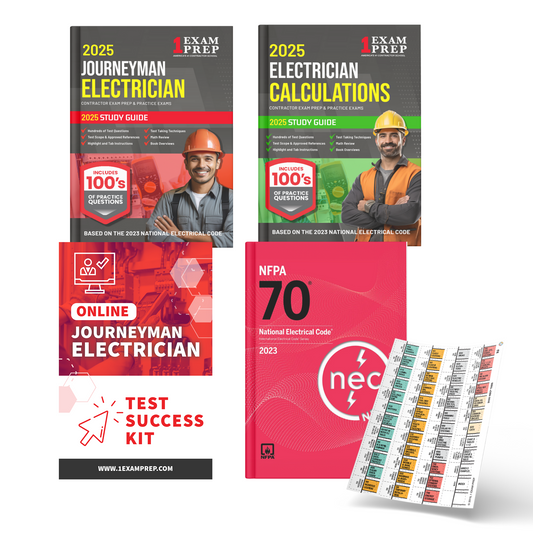
The 2025 Journeyman Electrician Jump Start Package includes a 2023 NEC paperback with tabs, a 2025 journeyman guide, calculations practice, and an online Test Success Kit according to its product description. It can be a reasonable place to investigate if you want your learning tools organized in one purchase.
First, verify the current listing and your test reference requirements. Then open the NEC and identify the chapters you need most. Tabs can speed up study navigation, but you should still learn how the table of contents and index work. Think of tabs as road signs, not a substitute for knowing your destination.
Study checkpoint: Practice looking up three familiar topics using the NEC index before touching the tabs. Time the search, then compare speed and accuracy. This helps you build more than one navigation skill for open-book preparation.
Complete Journeyman Book Package
Another option is the 2025 Complete Journeyman Electrician Book Package, which lists a 2023 NEC with tabs, the journeyman guide, an electrician calculations book, and online course access. This lets candidates move between printed explanations, arithmetic practice, and test simulations.
Do not try to use every resource at once. Pair them in small blocks: read a code topic, complete a handful of related questions, then solve one calculation. At the end of the week, use an online quiz to see what you remembered. Check whether the online access and printed materials meet your schedule before you buy.
Study checkpoint: Schedule two printed quiz sessions and one online simulation each week. If you do not have time for all three, shorten each session rather than cutting out the review of questions you answered incorrectly.
Electrical Theory and Reading Plans
Even a practical licensing exam can include voltage, current, resistance, power, circuit relationships, and plan interpretation. You may have handled these ideas on jobsites for years, but questions often use a tidy diagram instead of a familiar piece of equipment.
Practice turning a drawing into a short written description. Identify the source, circuit path, loads, and protective equipment. Then connect the diagram to the formulas or code rules that apply. Do not memorize a diagram without understanding its purpose. If you can explain what happens when one condition changes, you are learning the idea instead of just the picture.
Study checkpoint: Draw a simple series and parallel circuit and explain what changes when a component or load changes. If you stumble over the explanation, revisit electrical theory before taking another large practice test.
Branch Circuits and Feeder Rules
Branch circuit and feeder questions can look alike until one word changes. Learn how these terms are defined, how conductors and overcurrent devices relate, and why continuous loads or specific equipment conditions affect the result.
Make a simple study sheet with two diagrams, one showing a branch circuit and another showing a feeder. Label each part and jot down the relevant code topics. Test yourself with three variations, changing the load or conductor information each time. When a wrong answer seems tempting, look for the assumption you made before reading the full question. The small details carry the score.
Study checkpoint: Underline the signal words in every branch-circuit or feeder question before choosing a formula. Write the applicable code topic beside the problem, then explain why a tempting different provision does not apply.
Grounding and Bonding
Grounding and bonding deserve their own study sessions. Exam questions may describe electrodes, equipment grounding conductors, bonding connections, or how fault-current paths are established. People sometimes use these terms casually on the job, but an exam expects the distinction.
Draw a simple service arrangement, then identify the role of each conductor or connection. Read the definitions before using tables. When a question involves an exception, read beyond the first relevant sentence. Your notes should answer two questions: what does this requirement protect, and where do I find it? Learning the purpose of a rule makes it easier to remember under pressure.
Study checkpoint: Create a small illustrated vocabulary sheet for bonding and grounding. Cover the labels and identify each part without looking. Repeating a clear diagram can be more useful than copying a long definition.
Wiring Methods, Raceways, and Box Fill
Study conductors and cables, raceways, boxes, installation conditions, and how different wiring methods are selected. Some questions involve calculations, while others depend on a specific allowance or limitation in a code article.
Use short practice cases rather than flipping through the book without a goal. For example, change the number of conductors in a box problem, or compare two locations with different conditions. Explain why the allowed method changes. Work from the exact code edition for your exam. Reading a table note is often as important as finding the table itself, especially when a common shortcut seems obvious.
Study checkpoint: Choose one box or raceway problem and alter its conditions three times. Check whether the same rule still applies. This trains careful reading when an exam uses a familiar-looking scenario with one changed fact.
Services, Motors, and Load Calculations
Electrical calculations are easier when you learn a repeatable approach. Identify the equipment, known values, and conditions first. Then decide which rule or table controls the problem. Only after that should you reach for the calculator.
Practice a mix of service, motor, and general load questions, using the topics named in your outline. Record the setup, not just the final number. If you missed a problem because you selected the wrong demand factor, writing down the correct factor is not enough. Explain why it applied. Consistent problem setup reduces those errors that appear when the timer starts to tick.
Study checkpoint: Redo a missed motor or service calculation from a blank page. Note the first step at which you previously went wrong. That point is more useful than simply seeing the corrected numerical answer.
Open-Book and Closed-Book Questions
Many study guides include both codebook-related and no-book practice questions. That is useful because actual licensing tests vary by jurisdiction. One exam may allow a prescribed codebook, another may restrict all references, and some may have different rules for different sections.
Do not assume that the practice mode is a promise about test-day rules. Read the testing provider's current bulletin, including permitted books, tabs, calculators, notes, and electronic items. Prepare without books as well, so core terminology and common procedures stay available even when you cannot look them up. Practice finding information quickly only when the exam format calls for it.
Study checkpoint: Work ten questions with no book to test what you actually know. Then verify the provider's material policy and practice the separate reference-navigation skills required if your exam allows them.
Online Test Success Kit and Weekly Tracking
The online Test Success Kit listed with some packages is intended to help candidates practice questions and timing. Online practice can be convenient when you have a busy job schedule, but the real value comes from reviewing mistakes and comparing performance over several sessions.
Make a log with five columns: date, topic, correct answers, time used, and next review. After each timed set, pick the two most common errors and address them during the next study block. Retake missed questions later, not immediately, to check what you actually remember. That gives you a more honest picture than repeating familiar answers until the score looks impressive.
Study checkpoint: At the end of an online quiz, pick one incorrect question and explain its answer in a voice memo or notebook. Clear explanation shows understanding more reliably than another fast attempt at the same item.
A Six-Week Journeyman Study Routine
Spend the first week confirming the exam outline and learning the NEC layout. In week two, review theory, definitions, plans, branch circuits, and conductors. Week three can cover wiring methods, grounding, and bonding. Use week four for motors, services, and calculations. In week five, mix timed quizzes with detailed review of your mistakes.
During week six, attempt full practice exams, check exam-day policies, and revisit topics that still slow you down. The plan is a suggested framework, not an official requirement. Stretch it if you work long shifts. A realistic twenty- to forty-minute daily habit often beats a schedule so ambitious that it lasts exactly two days.
Study checkpoint: Block short study sessions on workdays and reserve a longer weekend session for calculations or full practice exams. A simple calendar that fits real life is stronger than a perfect plan nobody follows.
Avoiding Common Study Mistakes
One common mistake is buying an impressive package without checking the reference edition. Another is memorizing answer letters instead of understanding the code. Some candidates also spend all their time on their favorite topic and none on calculations because the numbers make them nervous.
Give each weak area a fair chance. Use a timer for realistic practice, but remove the timer when you're learning a difficult method for the first time. Ask yourself what assumption led you to the wrong answer. If you cannot explain the corrected rule in plain language, the topic still needs work. That's normal; it is why you practice.
Study checkpoint: Rewrite three incorrect answers in plain language. For every one, explain what you misread and the condition that changes the result. Review those notes before attempting another timed practice round.
Choosing Books Versus a Complete Package
A single study guide may be enough if you already own an approved NEC edition and have a solid calculations resource. A complete package may be simpler when you need several tools, especially print books and an online practice component. Neither choice guarantees a passing result.
Before paying, check the product's edition, included items, access period, shipping terms, and return rules. Compare the cost with materials you already have. If your exam has state-specific amendments, find out how to study those separately. Better organization is worth more than owning the largest possible stack of books.
Study checkpoint: Before buying a bundle, list the resources already on your desk. Match the remaining need to the package contents and check access limits, shipping, and the correct edition.
Your Next Step Toward Journeyman Licensing
Start by saving your exam outline and scheduling a baseline quiz. Then compare the 2025 Journeyman Study Guide with the Complete Journeyman Package to choose the format that fits your needs. If your authority uses a different NEC edition, search for materials that match it instead.
The 2025 Journeyman Electrician collection makes it easier to see the available options in one place. Keep your application paperwork and experience records organized while you study. Good preparation is more than turning pages. It means knowing your exam, measuring progress, and practicing safe technical judgment week after week.
Study checkpoint: Complete one realistic test under quiet conditions and compare the result with your baseline. Use the findings to plan your last review, not to decide whether you are a good electrician.
Frequently Asked Questions
Select a question to find practical answers about this collection, exam references, and study choices.
Conclusion: Build a Study Plan That Fits Your Exam
Preparing for a license as a journeyman electrician can feel like facing an enormous shelf of books with no signs explaining where to start. The best way through is to begin with the licensing authority, not the shopping cart. These few details tell you what to study and what you can safely leave for another day. A study plan becomes much easier when it answers a specific exam rather than a vague goal.
Good materials support that plan but cannot replace it. The available options include the 2025 journeyman workbook, NEC paperback with tabs, Jump Start package, and Complete Journeyman Book Package. Avoid buying a larger bundle simply because it has a dramatic title. The best set is one that covers your genuine gaps. A study guide can be useful when you already own the codebook. A complete bundle can make more sense when you want calculations and online questions organized with the printed references. Think about your schedule, budget, and how you learn when a difficult concept refuses to cooperate. Learning aids are useful when they solve a problem, not when they collect dust.
Once you have the materials, turn your exam outline into a series of manageable study sessions. Pay special attention to electrical theory, branch circuits, grounding, bonding, motors, services, wiring methods, and calculations. Study one subject, answer questions about it, and check the explanations before moving on. That distinction matters. Repeatedly taking quizzes without reviewing misses can produce a higher score through familiarity, while your understanding stays in the same place. Real progress means being able to explain an answer you have never seen before.
Testing format also matters. If an exam is open-book, you need to know which references are allowed and how to find information accurately. Read the index, article headings, tables, notes, and exceptions, and practice under a realistic time limit. If the examination is closed-book, work on knowing fundamental ideas without needing a page in front of you. Either way, make your practice conditions increasingly similar to the actual test. Check policies directly with the exam provider. Rules on calculators, tabs, notes, and permitted publications can vary, and advice from somebody who tested years ago may be outdated.
A practical schedule can be surprisingly modest. Keep a progress log. It should tell you which subjects are improving and where the same mistake appears again. Protect your sleep and attention before exam day, and make sure identification, travel, application documents, and permitted materials are prepared in advance. A calm routine is one more useful tool.
Finally, remember that purchasing exam preparation does not issue a license or guarantee a passing score. Experience verification, applications, examinations, fees, and other requirements still belong to the appropriate state or local authority. Use official instructions for decisions about eligibility and current code requirements. As your next action, review the 2025 Journeyman Electrician collection and select only the resources matched to your license. Choose a small number of helpful resources and commit to using them. Clear goals, accurate editions, steady practice, and honest review give you a sensible path forward. That may not sound as exciting as a miracle shortcut, but it is much more dependable when test day arrives.
Key Takeaways
- Match the 2025 Journeyman study guide's 2023 NEC basis to your official exam reference list.
- Review branch circuits, grounding, feeders, wiring methods, motors, services, and calculations.
- Use printed practice questions and online simulations to identify specific weak subjects.
- Learn codebook navigation, but verify all open-book and tab restrictions before exam day.
- Choose a guide or bundle based on your existing resources and realistic study schedule.
Plain-Language Summary
This guide is for anyone preparing as a journeyman electrician and trying to choose the right exam study materials. The first step is simple: find out what examination you will take. Get the current candidate guide from the state or local authority. The guide should explain the license, important subjects, required books or code editions, and testing rules. Do not choose books only because their title looks familiar or because someone at work used them. Different places can use different exams, even when the license names sound very similar.
After that, compare the study tools. Some products supply books only. Others combine books with practice exams, online lessons, calculations material, or prepared tabs. Check the contents of every listing before you buy it. Do not assume that the word complete means the same thing for all products. A study guide can be useful when you already own the codebook. Pick materials that fill the gaps in what you already own. Your goal is not to build the tallest stack of books. It is to have a small group of useful tools you actually study from.
Next, make a short list of subjects to review. Put a check beside the areas you understand and a question mark beside the ones you find difficult. Begin with one topic, read a clear explanation, and answer a few related questions. When a question goes wrong, do not simply memorize the correct letter. Find out why the answer is right. Write down the rule or method you missed. If the same subject causes several errors, return to it before beginning a completely different chapter.
Practice questions are helpful because they show how a test might ask about real work. A timer is useful, but it is not everything. Make sure you understand the problem before trying to answer faster. Keep a little notebook showing the subject, score, time used, and what you need to review next. Test yourself again several days later with different questions. This checks whether the information stayed in your head instead of looking familiar for just one afternoon.
You should also learn whether the exam is open-book or closed-book. If books are allowed, the test provider may still limit editions, tabs, notes, or other materials. Practice finding information in the permitted references by using contents pages, indexes, headings, and tables. If no books are allowed, practice explaining common rules and calculations without opening the guide. Do not assume a tabbed book can be taken to every test center. Follow the current instructions from the company or board running your examination. These details are important and easy to overlook.
A six-week study plan is one possible way to stay organized. First collect the correct materials and take a practice quiz. Then study the major topics over several weeks, leaving extra time for difficult calculations or reference searches. Use the last week to take timed tests, fix repeated mistakes, and prepare for the actual exam day. You can make the schedule longer if needed. Finally, review the 2025 Journeyman Electrician collection and select only the resources matched to your license. Study materials can help you prepare, but licenses depend on meeting the official requirements and passing the right examination. Good habits and the correct resources matter more than last-minute guessing.