











Ray Holder Electrician Exam Prep: Journeyman and Master Study Books, Flash Cards, and Tests
Electrician exams can test technical rules, calculations, and the ability to make safe decisions when the question is phrased in a way you have never seen on a jobsite. That is why a good electrician study guide is more than a collection of answers. It should help you understand the National Electrical Code (NEC), practice using it, and build confidence with timed questions. Ray Holder's electrical exam preparation books are a familiar name in that kind of training.
The Electrical Ray Holder Products collection is the topic of this guide. Although that collection link could not be confirmed during this review, individual Ray Holder study guides and practice products are available through 1 Exam Prep. We will focus on those verified materials and explain how to choose among journeyman books, master-level books, flash cards, online tests, and calculation references.
One rule matters more than the year printed in a product title: the NEC edition used by your examination authority. A 2025 study guide based on the 2023 NEC is not automatically the right reference for a test using another code cycle. Confirm your license level, code edition, and examination format before you shop.
Your preparation can be simple: choose the right level of guide, read a short topic, solve questions, check the code, and return to the topics you miss. A consistent routine makes the subject feel more manageable. There is no need to pretend every section is easy on the first try. The purpose of practice is to discover where you need another look.
Who Is Ray Holder, and What Makes His Study Guides Useful?
H. Ray Holder has authored electrician examination materials designed to make technical topics easier to understand. His published guides cover code rules, calculations, definitions, wiring methods, services, grounding and bonding, motors, and more. For candidates who already have hands-on experience, a focused guide can help translate practical knowledge into the question-and-answer style used in many licensing examinations.
A study guide is still only one tool. It is not an electrical license, a substitute for required apprenticeship experience, or a promise of a passing score. Treat the explanations as a bridge to the official NEC edition and the current exam outline. When a question involves an exception, go back to the code wording rather than memorizing a shortcut.
Choose Journeyman or Master Electrician Material
Journeyman and master electrician exams may cover overlapping NEC subjects but often test different levels of responsibility and calculation difficulty. Journeyman candidates commonly study installations, conductors, equipment, services, and basic sizing. Master-level candidates may need deeper work with system planning, complex loads, motor rules, transformers, service calculations, and code interpretation. The precise topics depend on the licensing board.
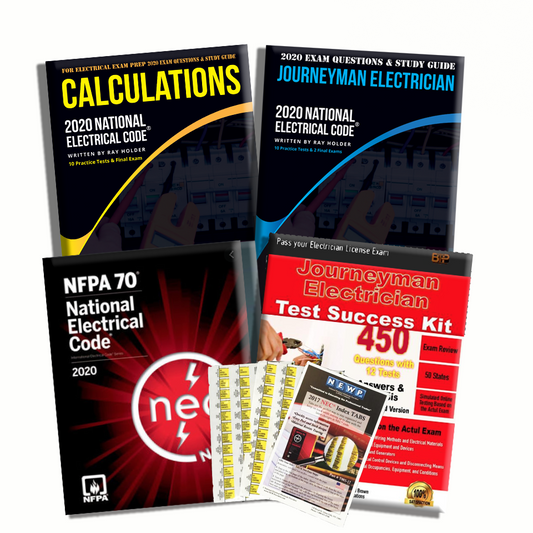
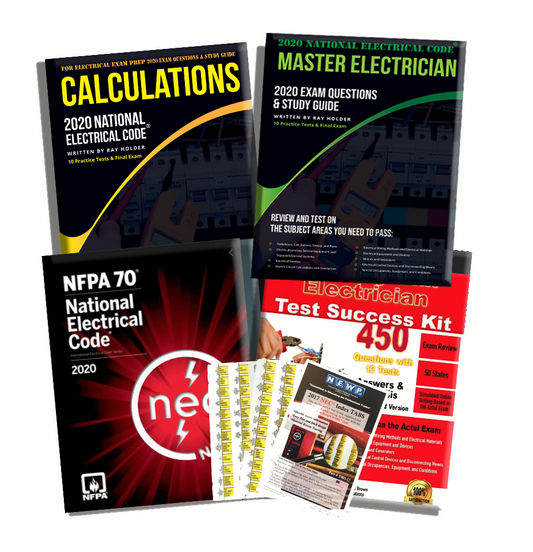
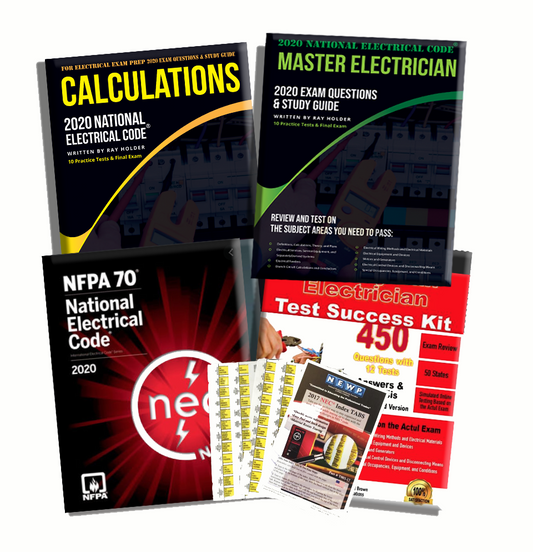
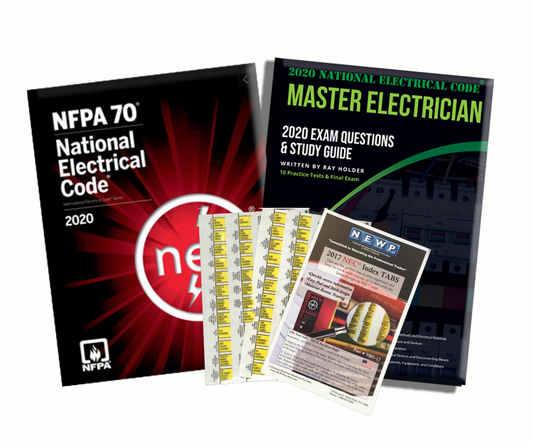
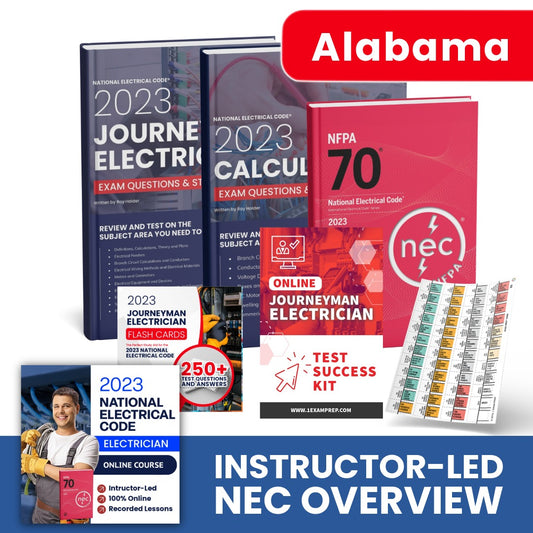
Start by choosing the guide built for your target credential. The 2025 Journeyman Electrician Study Guide based on the 2023 NEC and 2025 Master Electrician Study Guide based on the 2023 NEC are different products for different exam levels. Compare their contents with your official candidate handbook before you commit.
Understanding Product Years Versus NEC Code Editions
A book can have 2025 in its title and still be based on the 2023 National Electrical Code. That is not a mistake by itself; publication year and code edition are different pieces of information. The important question is whether the code cycle used by the book matches the one your examination currently tests. Different states and cities can adopt editions at different times.
Before buying, look for wording such as based on the 2023 NEC, and check whether your board names that edition. Some candidates also encounter newer code cycles, so never assume that the newest book title is universally correct. A small edition check at the start can save weeks of studying a reference you cannot use on test day.
Ray Holder's Journeyman Study Guide and Practice Exams
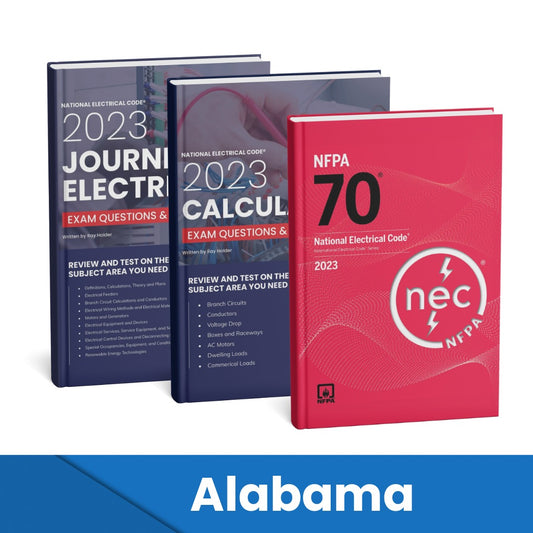
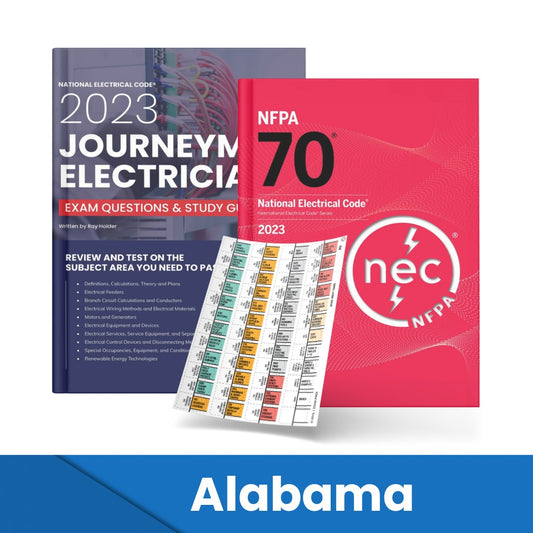
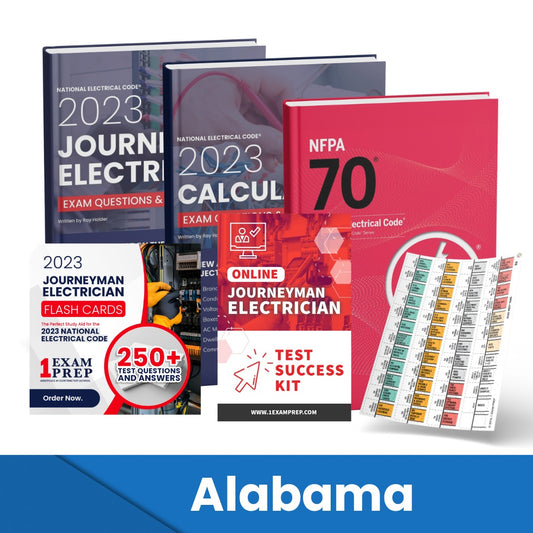
The 2023 Journeyman Electrician Exam Questions and Study Guide is a specific book listing from 1 Exam Prep. The product describes twelve practice exams with twenty-five questions each plus two longer final exams with eighty questions each. Subjects include theory, branch circuits, feeders, services, motors, wiring methods, grounding concepts, and specialized equipment.
Practice exams are most valuable when you work through them actively. Finish a short set, mark the questions you guessed, and find the code rule behind each uncertain answer. Do not simply repeat the same quiz until the answers look familiar. Try to explain why the right option is correct and why the other choices do not apply. That is how a practice book becomes a learning system.
Ray Holder's Master Electrician Study Guide
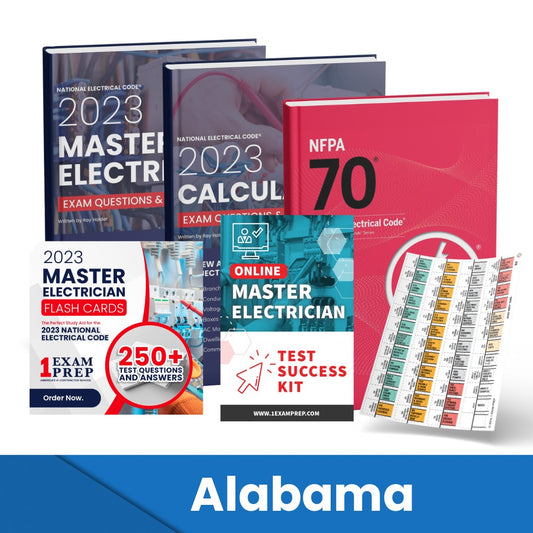
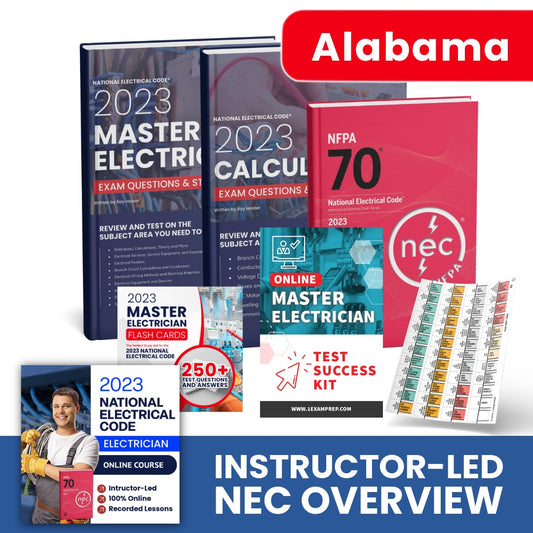
Candidates aiming for master-level credentials may prefer the 2023 Master Electrician Exam Questions and Study Guide. Its product description also highlights multiple practice sets and longer final exams based on the 2023 NEC, while covering subjects such as electrical services, controls, motors, generators, calculations, and special installations. The level of review should match what your licensing board expects from a master candidate.
Set aside more time for calculations and applied code decisions than you would for memorizing definitions. Work through every step of a formula, identify units, and ask whether the result makes sense for the scenario. If you miss a question because of a math error, practice the process. If you miss it because of the code rule, find and read the full section.
Flash Cards for Short, Repeated Review
Flash cards can be useful when you are studying around a full-time job. Ten minutes of focused recall may fit into a lunch break more easily than an hour with a heavy codebook. Use cards to review definitions, formulas, code topics, symbols, and the decision steps behind common electrical questions. If a card seems obvious, explain the answer aloud before flipping it.
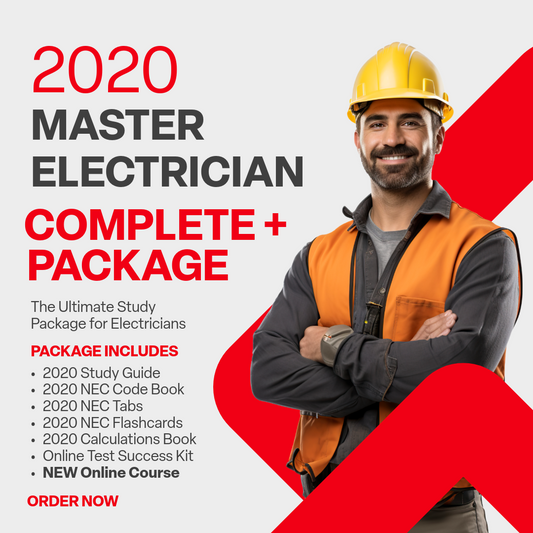
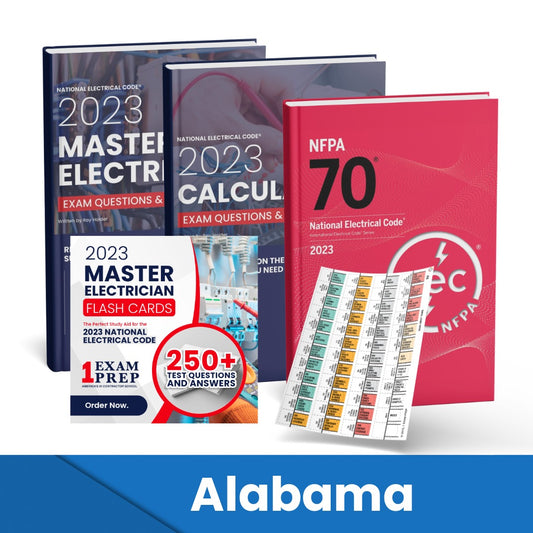
The Master Electrician Study Guide and Flash Cards Combo is an example of a bundled study product. Its listing mentions a flash-card component alongside a 2023 NEC-based guide. Check the exact product version and contents before ordering. Flash cards should reinforce your understanding, not replace full questions that require calculations or several code references.
Online Test Success Kits and Timed Exam Practice
A digital practice tool can help candidates prepare for the pace and format of an electrician licensing examination. Timed questions give you feedback about more than factual knowledge: they show whether you read carefully, manage your time, and know when a lookup is worth the effort. Review the explanation after every missed answer instead of treating the score as the only result.
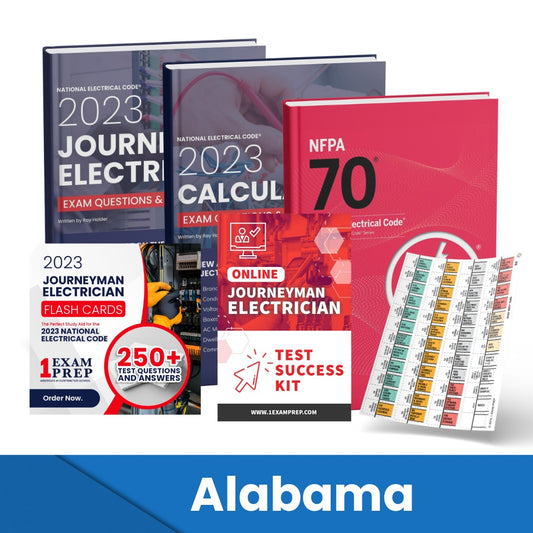
The 2025 Journeyman Electrician Online Test Success Kit based on the 2023 NEC lists practice exams, simulated computer-based testing, and downloadable study material. Product access and included formats may change, so read the current listing. Use timed practice as rehearsal for test conditions, not as a guarantee that the real exam will contain the same questions.
Practical Electrical Calculations and Formula Practice
Electrical calculations deserve their own study time. Depending on the examination, candidates may work with conductor sizing, branch circuits, feeder and service loads, voltage drop, boxes, motors, and other technical subjects. Writing formulas from memory can be helpful, but understanding when to use a formula is even more important. A correct calculation applied to the wrong situation is still wrong.
Ray Holder has authored calculation-focused resources, including Calculations for Electrical Exam (2014 NEC). That product uses an older code edition and should be treated as a subject resource only when appropriate, not automatically as a current exam reference. Always match formulas, tables, and allowable references to your testing board's approved code edition.
NEC Navigation: Learn the Map Before the Exam
The National Electrical Code contains definitions, tables, installation rules, exceptions, and cross-references. Knowing that a concept exists is different from finding its precise rule quickly. Start by learning the code's structure and index, then practice moving from a question to the correct article or table. When you find an answer, read enough surrounding text to identify exceptions and limitations.
If your exam permits a codebook, check exactly which edition, tabs, and markings are allowed. If it is closed-book, build recall through repeated explanations and practice questions instead. Neither format rewards guessing. A student who understands the code structure can make better choices than one who remembers a handful of page numbers without understanding the rules.
Grounding, Bonding, and Overcurrent Protection
Grounding and bonding questions often challenge candidates because the terms sound similar but serve different purposes. Your study plan should help you distinguish concepts, recognize the type of system in a question, and locate the applicable requirements in the correct NEC edition. Overcurrent protection adds another layer of decision-making around conductors, equipment, and operating conditions.
Write short explanations in everyday language and then compare them with the formal code text. Use practice scenarios that change one detail at a time. For example, ask what happens when equipment characteristics, conductor properties, or an exception changes. That makes you less likely to rely on a half-remembered phrase and more likely to apply the correct requirement.
Motors, Services, Feeders, and Special Equipment
Motors, transformers, services, and feeders connect the math side of electrical work with the rules side. They can involve demand calculations, operating conditions, protection, sizing, and equipment requirements. These topics deserve practice with complete problems rather than only short definition questions. Drawing a quick diagram can help you see which parts of the installation the question describes.
Create a checklist of the steps you take when solving a complex problem: identify the equipment, determine the applicable rule, select the right quantities, perform the math, and check whether an exception applies. If you always jump straight to arithmetic, you may miss a detail that changes the answer. A slower, organized method usually becomes faster with practice.
Open-Book and Closed-Book Electrician Exams
Some electrician examinations allow a specified codebook; others are closed-book or mix code-related and no-book questions. Testing rules differ by licensing board and provider. The only dependable way to know what applies is to read the current candidate bulletin. A study product cannot grant permission to use a book, calculator, tab set, or note in the testing room.
Practice under the conditions that match your actual exam. For open-book work, time yourself locating and applying code sections. For closed-book portions, rely on active recall, calculations, and full explanations. If the test permits only particular materials, keep that same limited set beside you during practice. Your goal is to remove surprises, not discover new rules at the check-in desk.
A Six-Week Study Routine for Ray Holder Products
Use the first week to verify your exam level and NEC edition, then take a short diagnostic quiz. In week two, review definitions, wiring methods, and basic circuit topics. Week three can emphasize grounding, bonding, protection, and conductors. In week four, work through services, feeders, motors, and calculations. Week five is for timed practice exams. During week six, revisit the most troublesome topics and prepare for the real test.
Adjust the sequence to your exam outline, especially if you are preparing for a master-level examination with heavier calculation requirements. Mix reading, solving, flash-card review, and full-length testing. If you only reread the answer key, you may feel familiar with the page without learning the rule. Try explaining each correction as though you were teaching a new apprentice.
How to Select the Right Ray Holder Product
Decide whether you need a printed question-and-study guide, added flash cards, an online practice kit, or a calculation reference. A book may suit someone who likes writing in a notebook, while online tests may fit a candidate who wants timed practice on a device. Many people use a combination, but buying everything does not guarantee that you will study more effectively.
Compare the journeyman guide, master guide, and online test kit against your exact exam. Check the code year in the description, the included practice material, and any access periods. Choose the resources you will consistently use. Regular practice, careful correction, and knowledge of the proper code edition matter more than the size of the box arriving at your door.
Turn Wrong Answers Into a Real Study Advantage
Practice tests are helpful only when you study the results. After each set, divide incorrect answers into three groups: rules you did not know, calculations you performed incorrectly, and questions you misread. The first group needs code reading, the second needs step-by-step math, and the third needs slower attention to wording. Different errors require different fixes, so a single generic review strategy may not work.
Keep your corrections in a notebook organized by NEC subject, not by the date you took the quiz. Revisit missed questions a few days later without looking at your previous answers. When you can explain the rule and solve a similar problem using different numbers, you have probably learned more than when you merely recognize the letter choice.
Frequently Asked Questions
Select a question to view its answer. These cards expand in place without navigating away from the page.
Conclusion
Ray Holder electrical study materials can be a useful part of an electrician licensing exam plan, especially for candidates who want structured practice rather than random questions from the internet. The real value comes from combining explanations, calculations, and code references with regular effort. A book can help you recognize a subject, but understanding it takes another step: being able to solve a fresh problem without memorizing the answer letter. That is the habit to build from the beginning.
Your first decision should be whether you are pursuing a journeyman or master electrician credential. The exams can overlap in electrical theory, wiring, grounding, bonding, services, motors, and the National Electrical Code, but the expected depth and responsibility may differ. A journeyman-focused guide should not automatically be treated as a complete master-level preparation course. Match the guide to the current exam outline from your licensing board. You may be comfortable with many field tasks and still need focused practice on the topics emphasized by the written examination.
The second decision is the NEC edition. A study guide labeled 2025 may be based on the 2023 National Electrical Code, and an older calculation text may use a much older edition. That is not a problem when the material is being used appropriately, but it can create confusion if you assume publication year equals required code cycle. Check the description and compare it to the testing provider's approved references. Code editions can vary by jurisdiction, so selecting the correct one matters more than buying the product with the newest-looking cover.
Choose tools that support the way you learn. A printed guide lets you work through questions and underline your own explanations. Flash cards encourage quick recall during shorter breaks. Online test success kits can give you timed practice and show whether you are ready for the pace of the examination. Calculation guides help you slow down and understand how formulas work. You may combine these formats, but start with the essentials. Buying more resources is not the same as spending time with them.
Use practice questions as feedback. After every test, separate mistakes caused by missing code knowledge from mistakes caused by math or rushed reading. Return to the correct rule and practice a similar question with different numbers or wording. Learn your codebook's layout if your exam allows it, and practice recall if the exam is closed-book. Either way, carefully reading the whole question is a skill worth practicing. One missed exception can undo a correct calculation, no matter how confidently you reached it.
Finally, keep the process steady. You do not need to become an expert on every NEC subject during one weekend. A six-week plan can start with the exam outline, move through common systems and calculations, and finish with timed practice and review. Adjust it to the subjects you need most. Compare verified Ray Holder journeyman and master-level study guides along with digital practice options, then confirm the code cycle before ordering. When the exam arrives, your strongest advantage will not be the number of books you own. It will be the number of problems you understand.
Key Takeaways
- Choose Ray Holder materials for the journeyman or master electrician exam you actually need.
- Check the NEC edition in the product details, not only the publication year in the title.
- Use printed practice exams, flash cards, and online tests as complementary study methods.
- Practice electrical calculations and full code explanations instead of memorizing answer letters.
- Follow the licensing board for current reference-book and exam-room rules.
Plain-Language Summary
Ray Holder is an author of electrician exam study guides. His books are meant to help people prepare for journeyman and master electrician examinations. The materials may include practice questions, explanations, electrical calculations, and topics from the National Electrical Code, often called the NEC. Some products also offer flash cards or online practice tests. They can help you organize your study time, but buying a guide does not give you an electrician license or guarantee a passing score.
The first thing to check is your exact exam. A journeyman electrician test may focus on wiring methods, conductors, branch circuits, services, grounding, bonding, and safety. A master electrician test may include deeper calculations and more complex system questions. The topics and test rules differ by state or licensing board. Choose a guide that fits your exam level. Do not use a master guide just because it sounds more advanced or a journeyman guide because it happens to be on sale.
The NEC edition is also important. A book published in 2025 can be based on the 2023 NEC. That means the publication year and the code edition are not the same thing. Your licensing authority decides which references apply to your exam. Before ordering, read the book's product details and the candidate handbook. A guide based on the wrong code cycle may still teach general ideas, but it might not match the actual test.
Ray Holder's journeyman and master study guides include practice exams on electrical subjects. Some products also include flash cards, which can help with short review sessions. Online test kits offer another way to practice under timed conditions. Electrical calculation books help candidates learn formulas and problem-solving methods. These formats work best when you use them regularly and check your mistakes. Reading the answer without understanding the reason does not teach much.
Make a simple study plan. Start with code definitions and basic concepts, then work on wiring, protection, services, and calculations. Try a few practice questions after each topic. If you get one wrong, find the rule and write down why you missed it. Some questions will require arithmetic. Others will test whether you understand a code requirement or can notice an exception. Keep practicing those weaker areas until you can solve new questions without help.
Finally, check whether your real exam is open-book or closed-book. If it is open-book, learn to use the correct NEC edition quickly and follow the test center's rules about tabs and markings. If it is closed-book, practice recall as well as explanations. Compare the journeyman study guide, master guide, and online test kit to see what fits your preparation style. The best study tool is one that matches your exam and that you will actually use each week.
It also helps to work with a friend or coworker who can ask questions in a new way. Explaining a wiring or calculation problem out loud shows whether you really understand it. If the explanation becomes confusing, go back to the reference and review the topic until the next attempt feels clearer.