Now you are eligible FREE SHIPPING
Preparing for a Wisconsin trade exam can feel overwhelming, especially when you are balancing work, family, apprenticeship hours, and daily jobsite responsibilities. The good news is that a clear study plan can make the process much easier. This guide focuses on three popular Wisconsin credentials: Wisconsin Journeyman Electrician, Wisconsin Master Electrician, and Wisconsin Journeyman Plumber. Each path requires strong code knowledge, practical understanding, accurate calculations, and the ability to find information quickly during an open-book exam.
The Wisconsin Department of Safety and Professional Services manages trade credential applications and examination information. Current state information says the Wisconsin Journeyman Electrician and Wisconsin Master Electrician exams are open book and require a passing score of 70 percent. The Wisconsin Journeyman Plumber examination is divided into two open-book parts, with a passing score of 70 percent for each part. Candidates should always confirm the latest application steps, approved references, testing locations, fees, and scheduling rules before registering because these details may change. :contentReference[oaicite:0]{index=0}
This guide is designed to help candidates understand what effective preparation looks like. It does not replace official Wisconsin rules, applications, reference lists, or examination notices. Instead, it explains how to organize your books, improve code navigation, practice calculations, review common subject areas, and build a study routine that matches the credential you are pursuing.
A Wisconsin Journeyman Electrician is expected to understand electrical wiring methods, equipment installation, conductor sizing, grounding, bonding, overcurrent protection, load calculations, motors, services, feeders, branch circuits, and other common electrical topics. A Wisconsin Journeyman Electrician candidate should not study only by memorizing answers. The better approach is to understand how the National Electrical Code is organized and how Wisconsin requirements work with the code. A Wisconsin Journeyman Electrician must be able to locate rules efficiently because open-book testing rewards fast and accurate research. The Wisconsin Journeyman Electrician exam may allow approved references, but access to a book does not help when a candidate cannot find the correct article, table, exception, or definition. Strong Wisconsin Journeyman Electrician preparation therefore combines code navigation, calculations, timed practice, and careful reading.
The state application materials explain that a Wisconsin Journeyman Electrician applicant generally qualifies through an approved apprenticeship or an accepted experience pathway and must pass the license examination. Candidates should review the current application closely because experience documentation, apprenticeship records, fees, and supporting forms can affect eligibility. :contentReference[oaicite:1]{index=1} A Wisconsin Journeyman Electrician candidate should create a checklist before applying. That checklist should cover eligibility, required documents, application submission, examination approval, scheduling, approved references, identification requirements, and test-day rules. Handling these items early allows the Wisconsin Journeyman Electrician candidate to focus on studying instead of dealing with last-minute paperwork.
The best Wisconsin Journeyman Electrician study plan begins with a skills check. Take a practice test before doing a deep review and mark every missed question by topic. Common categories may include services, feeders, branch circuits, grounding and bonding, conductor ampacity, box fill, raceway fill, motors, transformers, lighting loads, demand factors, and special occupancies. Once the weak areas are clear, build the Wisconsin Journeyman Electrician schedule around them. A candidate who struggles with motor calculations should spend more time using motor tables. A candidate who misses grounding questions should review definitions, electrode rules, equipment grounding conductors, bonding requirements, and related tables. This targeted method makes Wisconsin Journeyman Electrician exam prep more useful than reading the code from front to back without a purpose.
Code navigation should be practiced every day. During Wisconsin Journeyman Electrician preparation, read a question and identify its main subject before opening the code book. Decide whether the question involves a service, feeder, branch circuit, conductor, raceway, motor, transformer, dwelling, hazardous location, or another category. Then use the index, table of contents, article structure, definitions, and cross-references to locate the rule. A Wisconsin Journeyman Electrician candidate should also practice checking nearby exceptions and informational notes when allowed by the approved reference. The first section you find may not contain the complete answer. Careful reading is a major part of Wisconsin Journeyman Electrician success because one word such as minimum, maximum, permitted, required, continuous, or calculated can change the answer.
Electrical calculations often create the most stress for a Wisconsin Journeyman Electrician candidate. The solution is repeated practice with a consistent process. Write down the known values, identify what the question is asking, select the correct formula or table, complete each step, and verify the units. During Wisconsin Journeyman Electrician practice, do not skip written steps just because you can perform part of the calculation mentally. Written work helps prevent mistakes involving amperes, volts, watts, volt-amperes, phases, conductor quantities, adjustment factors, correction factors, and demand factors. The goal of Wisconsin Journeyman Electrician calculation practice is not simply to finish a problem. It is to create a repeatable method that remains reliable under time pressure.
Timed practice should become part of the Wisconsin Journeyman Electrician routine well before test day. Begin with small groups of questions and gradually move to full-length practice sessions. When reviewing a Wisconsin Journeyman Electrician practice exam, study every wrong answer and every answer that was guessed. Record the code location, the reason the correct answer is right, and the mistake that led to the wrong choice. This error log becomes one of the most valuable Wisconsin Journeyman Electrician study tools because it shows patterns. You may discover that most errors come from missed exceptions, incorrect table use, rushed arithmetic, or misreading the question.
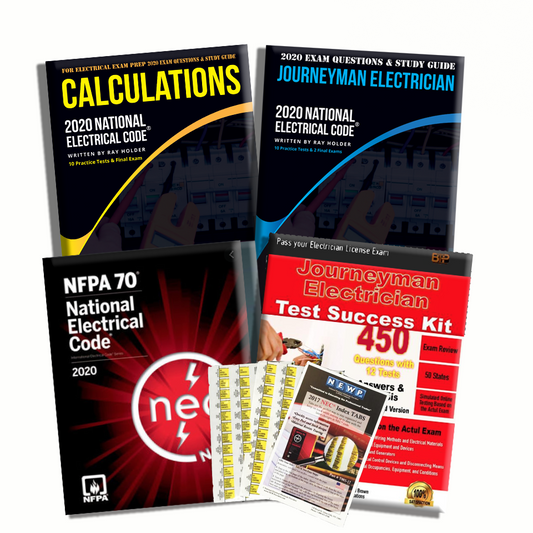
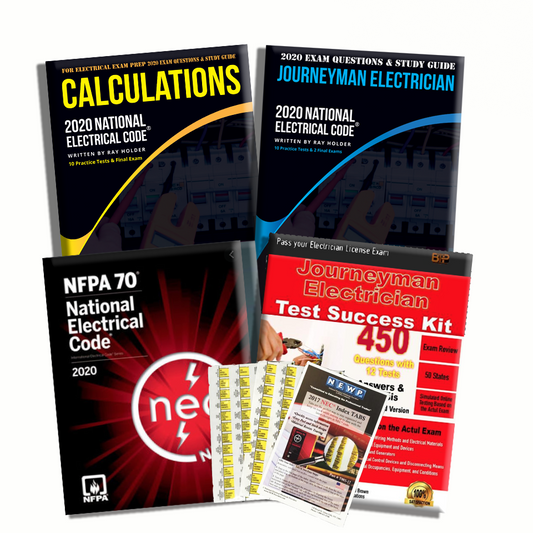
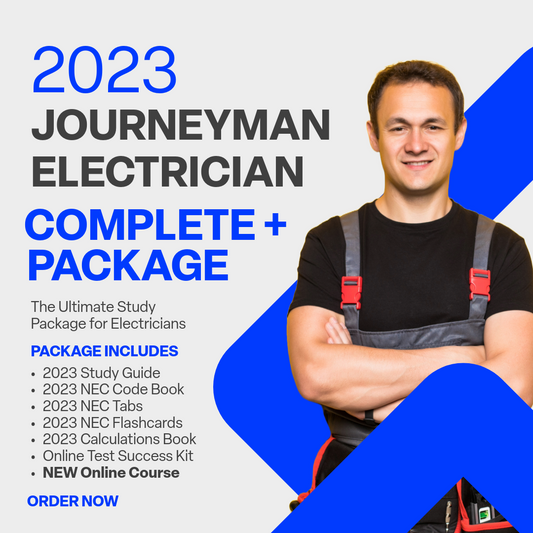
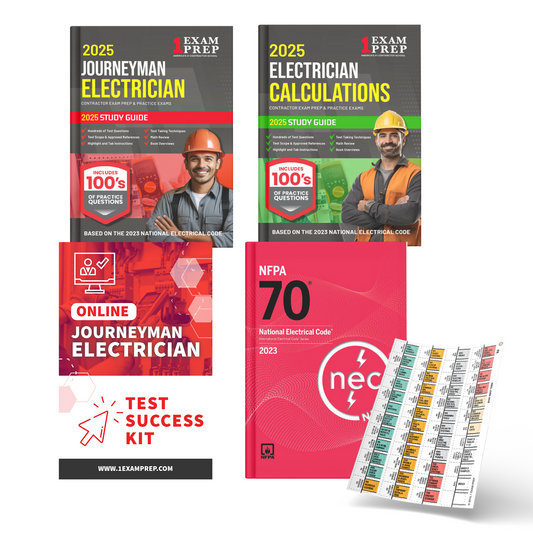
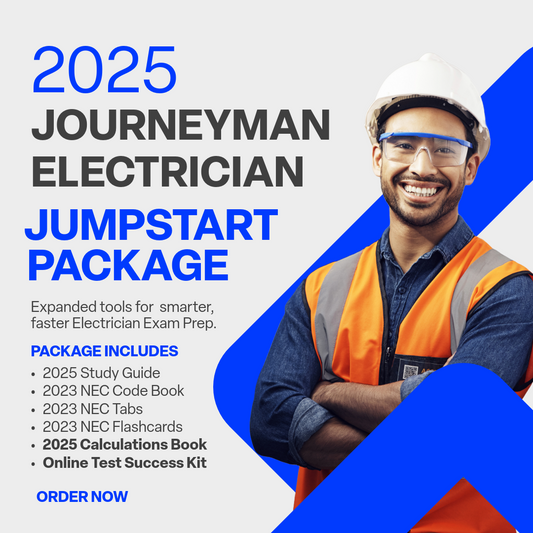
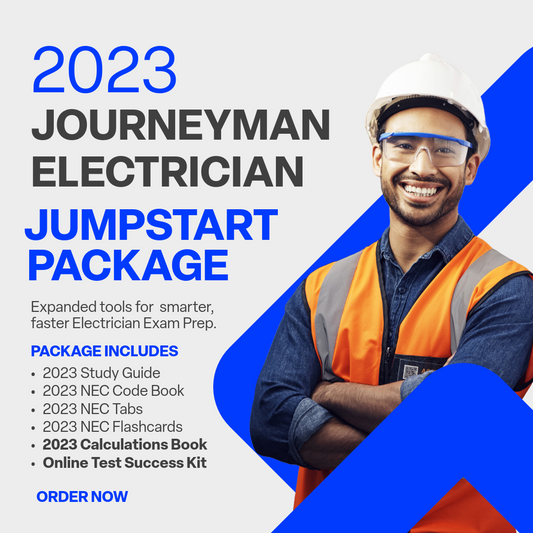
A complete study system should include the current approved code book, Wisconsin materials listed by the state, calculation practice, exam-style questions, and a clear study guide. The 2026 Wisconsin Journeyman Electrician Exam Prep Study Guides and Code Book Ultimate Combo is designed to place several preparation resources together for candidates who prefer an organized package. Before purchasing or studying, compare the edition named in the product with the official Wisconsin examination reference list. A Wisconsin Journeyman Electrician candidate should never assume that the newest publication is automatically the edition used for a specific exam date.
Successful Wisconsin Journeyman Electrician preparation is based on steady progress. A candidate who studies for 45 focused minutes on most days may retain more than someone who studies for eight rushed hours once a week. Keep the Wisconsin Journeyman Electrician code book nearby, practice finding rules, work calculations without distractions, and review missed questions regularly. By test week, the Wisconsin Journeyman Electrician candidate should be comfortable with the approved references, familiar with common tables, and able to manage time without panicking.
A Wisconsin Master Electrician credential represents a higher level of electrical knowledge and responsibility. A Wisconsin Master Electrician candidate should expect to work with advanced calculations, code interpretation, system planning, services, feeders, motors, transformers, grounding, bonding, and other subjects that require careful analysis. Wisconsin Master Electrician preparation should build on journeyman-level skills rather than start from the beginning. Candidates need confidence with basic electrical formulas and code navigation before they move into more complex Wisconsin Master Electrician problems. When basic skills are weak, advanced questions take too long and small mistakes become more common.
Wisconsin application materials indicate that a Wisconsin Master Electrician applicant must satisfy an experience or education pathway and pass the master electrician examination. The application describes qualifying options involving electrical experience or an electrical engineering degree, subject to the stateās documentation requirements. :contentReference[oaicite:2]{index=2} Every Wisconsin Master Electrician candidate should confirm the current pathway that applies to their background. Work history should be documented carefully, and any required records should be gathered before the application is submitted. Preparing early reduces delays and gives the Wisconsin Master Electrician candidate a more predictable examination timeline.
Wisconsin Master Electrician questions may combine several code concepts in one problem. A service calculation, for example, may require the candidate to identify connected loads, apply demand factors, account for continuous loads, choose conductors, and verify overcurrent protection. A Wisconsin Master Electrician problem involving motors may require several tables and different rules for conductors, overload protection, short-circuit protection, and disconnecting means. The Wisconsin Master Electrician candidate must know when one value is based on nameplate information and when another value comes from a code table. This is why Wisconsin Master Electrician exam prep must focus on complete problem-solving processes rather than isolated facts.
Another challenge is distinguishing between rules that appear similar. Wisconsin Master Electrician candidates should pay close attention to the differences among dwelling and nondwelling calculations, branch circuits and feeders, grounding and bonding, conductor ampacity and overcurrent protection, or general rules and special conditions. During Wisconsin Master Electrician study sessions, compare related topics side by side. Write a short explanation of when each rule applies and identify the code sections that support the difference. This method helps the Wisconsin Master Electrician candidate avoid choosing an answer that looks familiar but applies to a different situation.
A strong Wisconsin Master Electrician study plan should be divided into phases. The first phase reviews major code sections and calculation foundations. The second phase concentrates on advanced calculations and multi-step problems. The third phase uses timed Wisconsin Master Electrician practice exams and detailed error review. The final phase focuses on speed, reference organization, and weak areas. Each Wisconsin Master Electrician study phase should include active work. Highlighting pages and watching lessons can help, but the candidate must also solve problems, find code sections, explain answers, and repeat difficult calculations.
Create a Wisconsin Master Electrician calculation notebook that contains formulas, sample problems, table references, common conversion steps, and reminders about frequent mistakes. Keep the notebook organized by subject, such as services, feeders, dwellings, motors, transformers, voltage drop, grounding, and conductor sizing. The purpose is not to create unauthorized test material. The purpose is to improve learning before the Wisconsin Master Electrician exam. Rewriting the process in your own words forces you to understand the steps. It also gives the Wisconsin Master Electrician candidate a fast review tool during the final weeks of preparation.
Because the Wisconsin Master Electrician exam is described by the state as open book with a 70 percent passing score, reference speed is important. :contentReference[oaicite:3]{index=3} A Wisconsin Master Electrician candidate should practice with the same approved books and editions expected on test day. Learn how each book is organized, where major tables are located, and how definitions affect technical questions. During Wisconsin Master Electrician practice, avoid covering pages with excessive notes or markings that may conflict with examination rules. Follow current state instructions about tabs, notes, loose papers, and permitted materials.
Practice answering Wisconsin Master Electrician questions in rounds. During the first round, answer direct questions that can be solved quickly. During the second round, work moderate code questions and familiar calculations. During the final round, return to difficult Wisconsin Master Electrician problems that require several steps. This approach protects time and helps the candidate collect available points before becoming stuck. A Wisconsin Master Electrician exam is not the place to spend a large part of the session fighting one problem while easier questions remain unanswered.
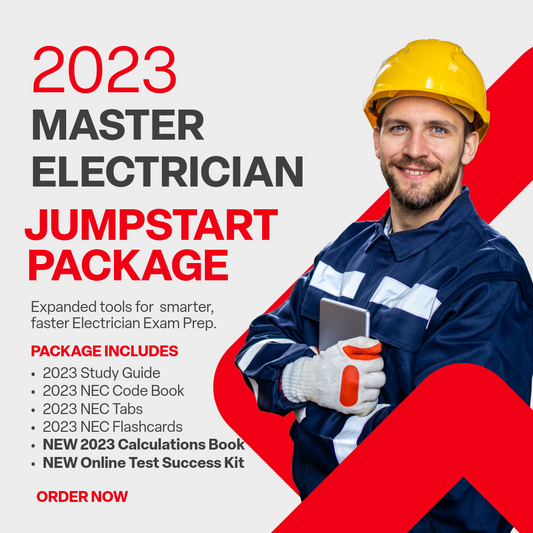
The Wisconsin Master Electrician Exam Prep Study Guides and Code Book Ultimate Combo provides a bundled option for candidates who want study guides and a code book in one package. Check the product edition against the official state reference list for your examination date. Wisconsin Master Electrician candidates should also verify whether Wisconsin administrative code materials or additional references are required. A well-matched Wisconsin Master Electrician resource package can reduce confusion, but the candidate still needs a consistent schedule and regular practice.
The final goal is confidence based on preparation, not confidence based on hope. A Wisconsin Master Electrician candidate should know which topics are strong, which topics remain weak, and how long different question types take. Complete enough Wisconsin Master Electrician practice problems to recognize familiar patterns while still reading every new question carefully. The Wisconsin Master Electrician exam rewards candidates who combine practical experience with accurate code research and disciplined calculations.
The Wisconsin Journeyman Plumber examination is different from a single-session test because the state describes it as a two-part open-book examination. Each part requires a score of 70 percent to pass. :contentReference[oaicite:4]{index=4} A Wisconsin Journeyman Plumber candidate should prepare for both parts as separate testing challenges while recognizing that many plumbing concepts connect across the examination. Wisconsin Journeyman Plumber preparation may involve Wisconsin plumbing code, system design, sizing, drainage, venting, water distribution, fixtures, materials, developed lengths, plans, and calculations. The exact reference list and examination outline should always come from current official information.
A Wisconsin Journeyman Plumber candidate must be able to read technical language with care. Plumbing questions often include details about pipe size, fixture units, slope, developed length, elevation, pressure, vent distance, material, occupancy, or installation conditions. Missing one detail can lead to the wrong table or rule. Wisconsin Journeyman Plumber study should therefore include more than memorizing common pipe sizes. The candidate must learn how to identify the system being described and select the correct code section. This skill becomes especially important during a Wisconsin Journeyman Plumber open-book exam because several tables may appear relevant at first glance.
Wisconsin Journeyman Plumber preparation should begin with the organization of the approved plumbing references. Learn where definitions, general requirements, materials, fixtures, water supply, sanitary drainage, venting, stormwater, and other major subjects are located. A Wisconsin Journeyman Plumber candidate should use the table of contents and index until navigation becomes natural. When a question is missed, record the correct section and note why the first search attempt failed. Over time, this Wisconsin Journeyman Plumber error log becomes a map of the candidateās weak areas.
Practice using tables without rushing. A Wisconsin Journeyman Plumber question may require the candidate to select the right row and column based on several conditions. Read the table title, headings, notes, and limitations before choosing a value. During Wisconsin Journeyman Plumber practice, point to each value used and write down the reason it applies. This may feel slow at first, but accuracy should come before speed. Once the Wisconsin Journeyman Plumber process is correct, repeated practice will make it faster.
Many candidates find plan-based and sizing questions difficult because they require several pieces of information to be connected. A Wisconsin Journeyman Plumber candidate may need to trace a piping system, count fixtures, determine fixture units, calculate developed length, identify required sizing, or evaluate venting. Start with simple Wisconsin Journeyman Plumber diagrams before moving to complicated plans. Use colored pencils during study sessions to separate water, drainage, vent, and storm systems. This visual method can help the Wisconsin Journeyman Plumber candidate follow the direction of flow and understand how system sections connect.
Calculation practice should follow a standard worksheet. A Wisconsin Journeyman Plumber candidate should list the given information, identify the required result, select the code section or table, complete the calculation, and check whether the answer is reasonable. When reviewing a wrong Wisconsin Journeyman Plumber answer, determine whether the problem came from arithmetic, code selection, units, plan reading, or a missed condition. Correcting the cause of the error is more important than memorizing the final number.
Wisconsin uses the LicensE system for trade license applications and renewals, and eligible candidates schedule examinations through the process described by DSPS. Official examination information says plumbing credential examinations are offered through designated Pearson testing centers in Wisconsin and cannot be taken at Pearson centers outside Wisconsin. Candidates need an open application in LicensE before scheduling. :contentReference[oaicite:5]{index=5} A Wisconsin Journeyman Plumber candidate should verify the current testing locations, available dates, identification rules, rescheduling policies, and reference requirements before making travel plans.
Test-day preparation begins several days before the Wisconsin Journeyman Plumber exam. Check the approved books, remove any material that is not permitted, confirm the testing appointment, and plan the route to the center. A Wisconsin Journeyman Plumber candidate should arrive with enough time to complete check-in without unnecessary stress. During the test, answer direct questions first, mark difficult items, and protect time for review. Because the Wisconsin Journeyman Plumber examination has two parts, candidates should plan their preparation and scheduling around the demands of both parts.
The 2026 Wisconsin Journeyman Plumber Exam Prep Study Guide offers a focused resource for candidates preparing for this credential. The product title identifies the code basis used by that study guide, so candidates should compare it with the official Wisconsin reference list before beginning. Wisconsin Journeyman Plumber candidates may also consider a larger package when they need books, tabs, courses, or additional practice, but the selected materials should match the candidateās learning style and examination date.
A Wisconsin Journeyman Plumber candidate who follows a consistent schedule can make steady gains. Spend time each week on code navigation, tables, plan reading, calculations, and timed questions. Review every missed Wisconsin Journeyman Plumber problem until the reason for the error is clear. By the final week, the Wisconsin Journeyman Plumber candidate should know the approved references, understand the two-part format, and have a practical strategy for managing time.
A weekly schedule helps turn a large exam goal into manageable steps. On Monday, review one major code topic and locate its most important sections. On Tuesday, complete calculations connected to that topic. On Wednesday, answer practice questions without a timer and study every explanation. On Thursday, complete a timed question set. On Friday, review mistakes and rewrite difficult steps. Use the weekend for a longer mixed-topic session or a complete practice exam. This basic structure can be adjusted for a Wisconsin Journeyman Electrician, Wisconsin Master Electrician, or Wisconsin Journeyman Plumber candidate.
Study sessions should be focused and realistic. A candidate who works full time may choose five 45-minute sessions instead of two long sessions. Keep the phone away, gather the required books before starting, and set a specific goal. A useful goal might be completing ten service calculations, finding twenty code sections, reviewing vent tables, or correcting a previous practice test. Clear goals make it easier to measure progress and prevent passive studying.
Every two weeks, complete a progress check. Compare practice scores, average time per question, calculation accuracy, and the number of questions that required guessing. A rising score is encouraging, but score alone does not tell the whole story. Candidates should also look for improved code navigation and fewer repeated mistakes. The final study schedule should spend less time on comfortable topics and more time on areas that continue to lower the score.
Q. Is the Wisconsin Journeyman Electrician exam open book?
A. Yes. Wisconsin DSPS describes the Wisconsin Journeyman Electrician exam as open book, with a passing score of 70 percent. Candidates should confirm which reference books, editions, tabs, and markings are allowed for their specific test date. :contentReference[oaicite:6]{index=6}
Q. Is the Wisconsin Master Electrician exam open book?
A. Yes. Wisconsin DSPS describes the Wisconsin Master Electrician exam as open book and states that candidates need a score of 70 percent to pass. Open book does not mean easy, so candidates should practice locating code rules and tables quickly. :contentReference[oaicite:7]{index=7}
Q. How many parts are on the Wisconsin Journeyman Plumber exam?
A. Wisconsin DSPS states that the Wisconsin Journeyman Plumber examination has two parts. Both parts are open book, and the passing score is 70 percent. :contentReference[oaicite:8]{index=8}
Q. What score do I need to pass a Wisconsin trade exam?
A. The official pages for the Wisconsin Journeyman Electrician, Wisconsin Master Electrician, and Wisconsin Journeyman Plumber examinations state a passing score of 70 percent. Candidates should still review the latest state instructions in case policies change. :contentReference[oaicite:9]{index=9}
Q. Where do I apply for a Wisconsin trade license?
A. Wisconsin DSPS directs applicants to the LicensE system for trade license applications and renewals. Candidates should create or access their account, choose the correct credential, submit the required information, and follow the application instructions. :contentReference[oaicite:10]{index=10}
Q. Can I schedule my exam before submitting an application?
A. Wisconsin DSPS states that candidates need an open application in LicensE before scheduling a trade examination. Eligible candidates receive scheduling directions through the application process. :contentReference[oaicite:11]{index=11}
Q. Can I take a Wisconsin plumbing exam outside Wisconsin?
A. Current Wisconsin DSPS information says plumbing credential examinations are available only at designated Pearson centers in Wisconsin and cannot be taken at Pearson testing centers outside the state. Candidates should verify the current locations before scheduling. :contentReference[oaicite:12]{index=12}
Q. How long should I study for a Wisconsin trade exam?
A. Study time depends on experience, code knowledge, calculation skills, and available weekly hours. Many candidates benefit from several weeks or months of steady preparation rather than a short period of cramming. A diagnostic practice test can help determine how much review is needed.
Q. What is the best way to study for an open-book exam?
A. Practice finding answers instead of relying only on memory. Learn the organization of each approved reference, use the index and table of contents, complete timed questions, and keep an error log. Open-book success depends on knowing where information is located and how to apply it correctly.
Q. Should I use the newest code book available?
A. Use the code book edition and reference materials approved for your examination. The newest edition sold in stores may not always match the edition listed for a particular Wisconsin exam date. Check the official reference list before buying books or beginning a study program.
Passing a Wisconsin trade exam is not based on one perfect study session. It comes from repeated practice, honest review, and a clear understanding of the materials allowed on test day. Whether you are preparing for the Wisconsin Journeyman Electrician exam, the Wisconsin Master Electrician exam, or the Wisconsin Journeyman Plumber exam, your preparation should begin with official information. Confirm your eligibility, application process, examination format, approved references, testing location, and current rules before creating a study schedule.
After the administrative details are clear, focus on building practical test skills. Learn how each book is organized. Practice using the table of contents, index, definitions, tables, notes, and cross-references. Work enough calculations to develop a dependable written process. Complete practice questions under timed conditions, but do not rush into full exams before learning the material. Smaller topic-based sessions are often more helpful during the early stages because they allow you to correct weak areas without becoming discouraged.
The Wisconsin Journeyman Electrician candidate should become comfortable with electrical code navigation, conductor sizing, services, feeders, branch circuits, grounding, bonding, motors, and calculations. The Wisconsin Master Electrician candidate should build on those foundations with more advanced, multi-step problems and careful code interpretation. The Wisconsin Journeyman Plumber candidate should prepare for both parts of the exam through plumbing code research, table use, sizing, plan reading, drainage, venting, water distribution, and calculation practice. Each exam is different, but the strongest preparation habits are similar.
Do not measure progress only by the number of hours spent studying. Measure the number of questions you can now solve correctly, the speed with which you can find a rule, and the mistakes you no longer repeat. A focused hour that corrects a major weakness is more valuable than several distracted hours of reading. Keep a record of your practice scores and review the record each week. When a score stops improving, change the study method rather than repeating the same routine.
Good study resources can provide structure, but the candidate must still do the work. Choose materials that match the current exam references and your preferred learning style. Use study guides to organize topics, practice questions to test understanding, code books to verify rules, and calculation exercises to build confidence. Avoid depending on memorized answers because the wording and conditions of a real question may be different.
Finally, protect your confidence by preparing the details that are under your control. Check your appointment, identification, travel route, approved books, and testing rules before exam day. Arrive ready to work through the questions in a calm order. Answer the questions you know, mark difficult problems, and return to them with the remaining time. A Wisconsin trade credential can open the door to new responsibilities and career opportunities, and a disciplined preparation plan can help you approach that goal with greater confidence.