







Plumbing Licenses Exam Prep Guide: Books, Courses, and a Smarter Path to Licensing
Want to take the next step in your plumbing career? Earning the right plumbing license can help you qualify for new work, show customers that you take safety seriously, and build a stronger future in the trade. But first comes the licensing exam. It may test more than your skill with a pipe wrench. You could face questions about drainage, water supply, venting, plumbing codes, jobsite safety, and trade math. Even experienced plumbers can feel surprised by the amount of material.
The good news is that preparation does not have to turn your kitchen table into a mountain of mystery books. A clear study plan, the correct code references, and realistic practice questions can make a surprisingly big difference. The Plumbing Licenses collection at 1 Exam Prep is a useful starting point for exploring training and study resources for different licensing paths.
This guide explains how journeyman, master, and plumbing contractor exams can differ. It also walks through books, online classes, prepared reference packages, common exam subjects, and simple study habits. The goal is not to memorize every pipe fitting on Earth. It is to learn what your exam actually asks and build a routine that works with your schedule.
Understanding Plumbing Licenses and Why the Right Exam Matters
Plumbing licensing rules are not the same everywhere. A state may issue certain licenses, while a city or county may have its own registration, testing, or contractor requirements. That means a study package that is perfect for one area may be a poor match somewhere else. Before buying materials, write down the exact license name and the agency that controls it.
Some exams focus on hands-on plumbing knowledge and code use. Others add business, finance, contracts, and contractor responsibilities. Approved code editions can also vary. One test may use the International Plumbing Code, while another may use the Uniform Plumbing Code, a residential code, state amendments, or several separate references. Always check the current candidate bulletin or licensing board instructions.
Think of it like buying the right pipe size. Close enough can still leave you with a leak. Start with the correct license, then match your books, course, and practice work to the official exam outline.
Journeyman Plumber Exam Prep: Strengthen Your Trade Skills
Journeyman plumber testing often focuses on the rules and practical decisions involved in installing, maintaining, and repairing plumbing systems. You may need to read plans, understand fixture connections, solve simple calculations, and recognize safe installation methods. The exam asks whether you can apply knowledge, not just repeat a definition you saw yesterday.
A strong journeyman study routine mixes code reading with practice problems. For example, read a short section on traps and vents, then solve questions that make you apply that section. When you miss one, go back and find the correct rule. This turns every wrong answer into a useful lesson instead of an unpleasant surprise.
For an example of focused journeyman training, explore the Journeyman Plumber Exam Prep Online Course. Check its listed code edition against your own exam requirements before enrolling.
Master Plumber and Plumbing Contractor Preparation
Master plumber and plumbing contractor exams can demand a wider view of the job. Beyond installation rules, candidates may need to think about system design, supervision, project decisions, safety, and the responsibilities that come with running work. Some contractor paths also test business and finance knowledge, including estimating, contracts, accounting, and legal duties.
That does not mean every master exam covers every business subject. The required material depends on the license and location. For example, Florida plumbing contractor preparation can include trade references and separate business-focused study. Candidates exploring that path can review the Florida Plumbing Contractor Exam Prep page to see how a contractor-focused track is organized.
If you already work in the field, resist the urge to skip the basics. Experienced plumbers may know how to complete a job, but exams often demand a specific answer from a specific code. Practice translating real work into the language of the test.
Plumbing Ultimate Exam Prep Packages
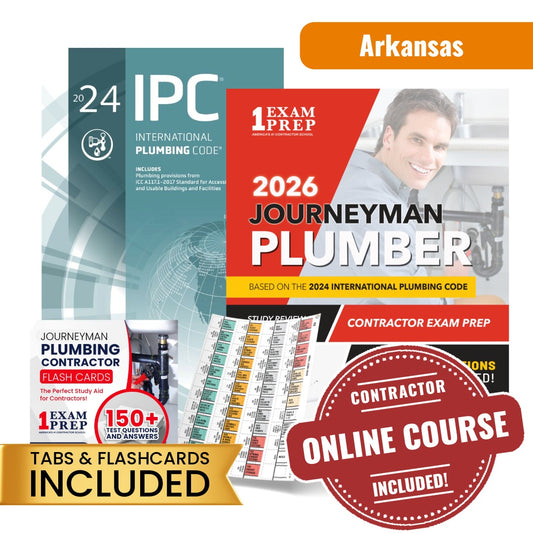
An ultimate exam prep package is built for candidates who want several kinds of support in one place. Depending on the specific product, a package may combine code books, reference tabs, study guides, online lessons, practice questions, or other training tools. This can make planning easier because you are working from a connected set of materials instead of hunting for each item separately.
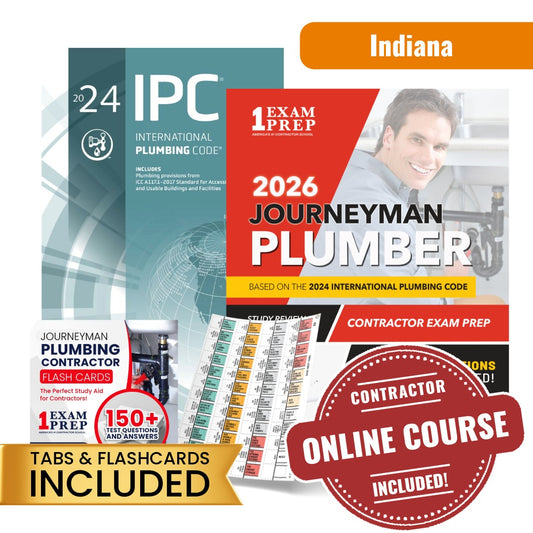
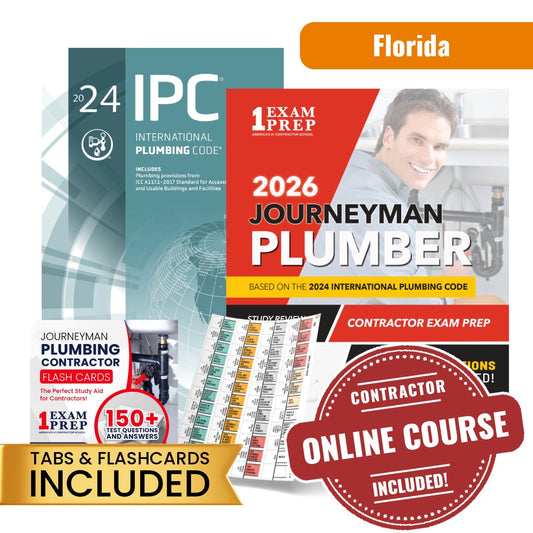
The Indiana Journeyman Plumber Ultimate Exam Prep Package is one example. Its listed materials include a plumbing code reference, tabs, a study guide, and online course access. The Florida Plumbing Contractor Ultimate Exam Prep Rental Package shows a different approach, with rental references plus business and trade study support. These are examples, not interchangeable packages.
Before selecting one, read exactly what is included, whether books are owned or rented, which code editions appear, and how long online access lasts. A complete-looking bundle only helps when it matches your particular test.
Plumbing Books & Courses Rental Packages
A books and courses rental package can be a practical choice when an exam requires several references but you do not want to purchase every book. The usual idea is simple: study from the listed materials during the rental period while following course lessons or other guided review. However, deposits, return conditions, shipping times, and included access differ from one product to another.
For a real example, see the Reading, Pennsylvania Journeyman Plumber Books & Courses Rental Package. Its product information identifies the 2018 International Plumbing Code as a rental reference and encourages candidates to practice using that code during open-book preparation.
Rental study works best when you plan ahead. Make a schedule as soon as your books arrive. Leave time to practice code lookups, review missed questions, and complete any return steps on time. Nothing makes exam week more exciting in the wrong way than discovering your most useful reference is already due back.
Plumbing Online Exam Prep Courses
Online learning gives busy plumbing professionals a way to study without adding another long commute. You can review a lesson after work, repeat a tricky explanation, or tackle a short question set before the day gets crowded. The biggest benefit is flexibility, but the real results come from showing up regularly, even for short sessions.
The 1 Exam Prep journeyman online course lists video instruction, practice questions, simulated exams, plumbing math, isometric drawings, and code review. It also lists mobile-friendly access. Those features can support different learning styles: watch an explanation, try the problem, and then check why your answer was right or wrong.
Video lessons are helpful, but watching alone is not enough. Pause the lesson and solve the problem yourself before the explanation appears. If a code rule keeps slipping away, write its topic and page location in your study notes. A few active minutes often teach more than an hour of videos playing while you fold laundry.
Highlighted & Tabbed Plumbing Book Packages
Code books can feel like a maze when you first open them. Highlighted and tabbed packages help organize important sections so you can learn where information lives. Tabs can point toward major chapters and topics, while highlighting can draw attention to wording you should review closely. They are study tools, not magical shortcuts that answer questions for you.
The Georgia Journeyman Plumber Highlighted & Tabbed Book Package is an example of a prepared reference option. Always confirm whether your exam is open book or closed book and whether your testing provider permits the specific tabs, markings, and books you plan to bring.
During practice, use your index first, follow the tab, and then read the whole applicable requirement. A highlighted sentence may be useful, but an exception a few lines below can change the answer. Fast page turning is nice. Accurate reading is better.
Plumbing Exam Book Packages and Code References
Some candidates prefer to start with the official references and build their own study routine. An exam book package can gather books associated with a particular license test, such as plumbing, fuel gas, mathematics, or other required subjects. The exact contents depend on the examination. Not every plumber needs the same stack of books.
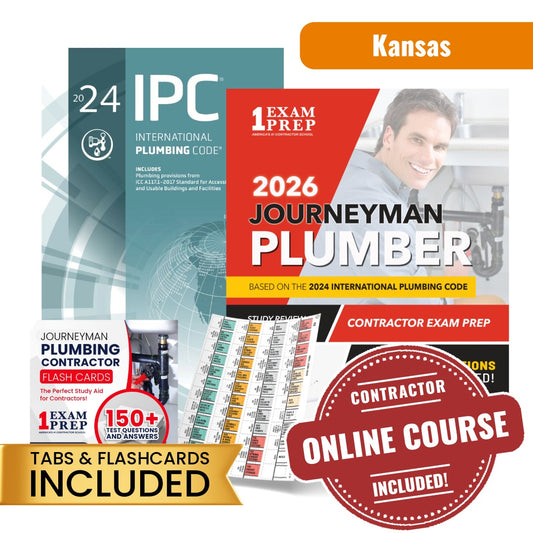
For example, the Kansas Journeyman Plumber with Gas Exam Book Package is geared toward a specific ICC exam, while the Utah Residential Plumber Written Exam Book Package gathers references for a different written examination. These examples show why selecting the right exam matters.
If you like learning by reading and solving problems, a book-centered approach may fit you well. Just remember to check editions and permitted materials against the newest official exam notice before you purchase or bring anything to a test center.
Important Topics to Review for a Plumbing License Exam
Every exam has its own outline, but several plumbing subjects appear often enough to deserve a place in your study plan. Focus on understanding how systems work and why rules exist. It is easier to remember a venting rule when you know the problem it is meant to prevent.
- Water supply and distribution: Piping, pressure, valves, materials, connections, and protection of drinking water.
- Drainage and venting: Waste flow, slopes, traps, cleanouts, fixture connections, and vent design.
- Fixtures and water heaters: Installation rules, clearances, fittings, temperature, and safe operation.
- Plumbing math: Fractions, decimals, measurements, volume, slope, offsets, and other job-related calculations.
- Plans and isometric drawings: Tracing pipes, reading symbols, and understanding three-dimensional layouts.
- Fuel gas and jobsite safety: Gas-piping rules where applicable, protective practices, and safe construction work.
You may also need state amendments, business and finance, accessibility, or specialized systems. Let the official content outline set your priorities. The purpose of this list is to help you organize, not to replace your board's exam requirements.
A Simple Five-Week Plumbing Exam Study Plan
You do not need a perfect schedule. You need a realistic one that you can repeat. Use this five-week plan as a starting point, then adjust it around the actual exam outline, your work hours, and the topics that need the most attention.
- Week 1: Confirm the exam and collect the right materials. Read the outline, learn the code book's contents and index, and complete a short baseline quiz.
- Week 2: Review water supply, fixtures, and water heaters. Answer questions after each topic and note the rules that caused trouble.
- Week 3: Focus on drainage, vents, traps, and isometric drawings. Practice reading diagrams slowly before working against a timer.
- Week 4: Work on plumbing math, safety, fuel gas if tested, and any required business topics. Repeat questions you missed earlier.
- Week 5: Take timed practice tests, review weak areas, check exam-day rules, and make a simple plan for travel and required identification.
Short, steady sessions beat one giant cram session for most people. Your brain needs practice connecting ideas. And unlike a leaky faucet, weak areas rarely fix themselves overnight.
Choosing the Plumbing Prep Option That Fits You
There is no single best format for every candidate. If you learn by watching demonstrations, an online course may be a strong starting point. If you like printed references and hands-on review, a book package may feel more natural. If you need several tools together, a complete prep bundle may make studying easier to organize. Rental options can also be worth reviewing when you need access to a larger reference set for a limited period.
Ask yourself three questions before making a decision: Does this product match my exact exam? Will I actually use the way it teaches? Do I understand what is included, how long I can access it, and any shipping or return terms? Those questions are more useful than choosing whatever package has the longest name.
Good preparation is a mix of correct materials, regular effort, and practice that shows where you still need work. Explore the available plumbing license exam prep resources at 1 Exam Prep and choose a path that helps you think clearly.
Frequently Asked Questions
Get clear answers to common questions about plumbing licenses, exam books, study courses, and test-day preparation. Select a question to see its answer.
Conclusion: Build Your Plumbing License Exam Plan With Confidence
A plumbing license can represent a step forward, but the road to that license starts long before you arrive at the testing center. It begins when you identify the credential you need and learn the rules that apply locally. A journeyman exam is not always the same as a master plumber exam, and contractor licensing may include business requirements beyond installation. Knowing the difference keeps your study time focused on the right goal. It can also save you from buying a perfectly good book for the wrong test.
The strongest preparation starts with an official exam outline. Use it to choose code editions, understand whether the exam is open book, and identify the topics to prioritize. Water supply, drainage, venting, fixtures, water heaters, plans, math, and safety are common areas to review, but your test may add fuel gas, local amendments, or business and finance. When your schedule gets busy, remember that exam requirements should guide the plan. Practice questions cannot replace knowing the exam outline.
Study materials can make that work easier to manage. A book package can put important references in one place. Highlighted and tabbed books may help you practice finding information efficiently when the rules allow them. An online course can break complicated ideas into lessons you can repeat. A books and courses rental package may be useful when the reference list is long. An ultimate package can bring multiple study tools together, although the contents and rental terms depend on the specific product. None of these choices is automatically best for everybody. The right choice is the one that matches your exam, your learning style, and your budget.
Once you have the materials, make the routine simple enough to follow. Read a small section, answer a few questions, and review every mistake. Practice plumbing math instead of only watching. If your exam permits reference books, practice navigating the index and locating code sections while a timer runs. Pay attention to exceptions and tables instead of grabbing the first sentence that looks familiar. Short, steady sessions usually make more sense than a heroic last-minute cram. A good plan leaves room for life.
Exam day should feel like the final step in a process you already understand, not a surprise inspection. Confirm the testing location, identification rules, approved materials, and appointment details. Give yourself enough time to arrive and settle in. Then read each question carefully, use the methods you practiced, and manage your time without racing. Passing an exam does not automatically complete every licensing requirement, so follow through with the responsible board or agency afterward. For preparation options, explore the Plumbing Licenses collection at 1 Exam Prep and compare each product against your official exam notice. With the correct resources and a repeatable study plan, you can move toward your next plumbing credential with practical confidence, not just crossed fingers.
Remember to keep your application paperwork, experience records, and deadlines organized, too. A well-prepared candidate checks both the examination requirements and the steps that follow.
Key Takeaways
- Confirm your exact plumbing license, eligibility, exam topics, approved references, and code editions before you purchase study materials.
- Match your learning style to books, online courses, highlighted and tabbed references, rental packages, or complete preparation bundles.
- Prioritize water supply, drainage, venting, fixtures, plumbing math, safety, and any business topics named in your official exam outline.
- Use short, consistent study sessions, timed questions, and an error log to turn weak spots into stronger exam skills.
- Check testing-center rules, permitted materials, exam-day details, and licensing steps that come after the test.
Plumbing License Exam Prep: Plain-Language Summary
Getting ready for a plumbing license exam can feel confusing because exams vary. One person may be studying for a journeyman license, another for a master plumber credential, and another for a plumbing contractor license. Rules differ. Some exams focus mostly on code and trade knowledge. Others also test business and finance. Before you buy anything or set a test date, find the official requirements for the license you want. Check the exact exam title, the test provider, and required references.
Most plumbing exams ask candidates to understand how plumbing systems work. Common topics include water supply, drains, vents, traps, fixtures, water heaters, and plumbing math. You might also have questions about drawings, materials, fuel gas, or worksite safety. Your exam may include other subjects, too. Instead of guessing what might show up, use the official exam outline as a checklist. Put a mark beside each subject you know well and another beside the ones that need more practice. This gives you a clear starting point.
There are several ways to study. You can read exam reference books and answer questions on your own. You can use an online course that explains rules step by step and lets you revisit lessons. You can choose a package that combines books and a course. Some packages let you rent books instead of buying everything. Highlighted and tabbed books may also make it easier to find important sections, for open-book practice. Be careful, though. A test center may limit which books, tabs, or markings you can bring. Always read the current exam rules.
Your study schedule matters just as much as the materials. One possible plan is to spend the first week learning the exam outline and getting your books organized. Next, review water supply, fixtures, and water heaters. Then study drains, vents, traps, and plans. Use another week for math, safety, and any business topics on your test. Finish with timed practice questions and a review of your weak spots. You can stretch this plan across more weeks if needed. Regular practice is better than hoping a single long weekend will do the job.
When you miss a question, do not memorize a letter. Find the rule, work through the explanation, and see why the answer makes sense. Keep a small list of mistakes that you want to revisit. If you are using an open-book format, practice finding answers quickly while checking exceptions. Finally, check your test appointment, identification, and allowed materials so exam day runs smoothly.
A plumbing exam prep product should support your exact goal, not distract you with features you do not need. Compare the course topics, included books, code editions, access periods, and any rental return conditions. The Plumbing Licenses collection at 1 Exam Prep offers examples of different study formats. Use it as a place to explore your choices, then confirm the details with the official licensing authority. Know your exam, pick matching materials, and practice.
Ask the licensing office when rules or book requirements seem unclear.