















2025 Journeyman and Master Electrician Exam Prep: Study Guides, NEC Books, and Package Comparison
Journeyman and master electrician licenses are not interchangeable. Journeyman exams generally emphasize safe installation, code application, wiring, grounding, branch circuits, feeders, and calculations. Master-level tests may push further into service design, load analysis, equipment selection, and judgment across complicated projects. The exact division depends on the state or local licensing authority, not on the title of a study package.
Start by reading the official candidate bulletin. Write down the exact exam name, required electrical experience, code edition, passing standard, and testing rules. Then browse the 2025 Journeyman and Master Electrician collection to compare training materials matched to your goal. A fancy package cannot fix studying for the wrong exam.
Study checkpoint: Make a two-column checklist headed Journeyman and Master. Place every official topic under the correct target, then circle the areas you cannot explain clearly without opening a book. This becomes your next week's study map.
Important: 2025 Book Titles Versus the 2023 NEC
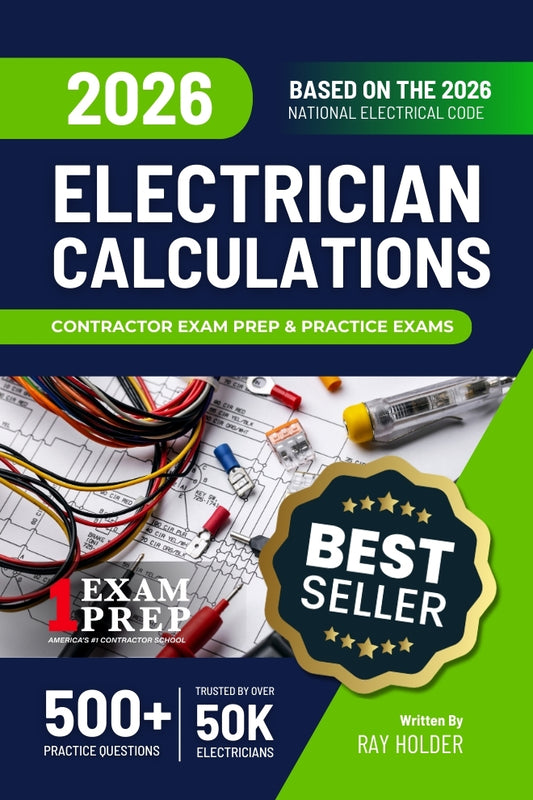
Many products in this collection carry 2025 in the title while saying they are based on the 2023 National Electrical Code. Those dates describe different things: the study guide's release or branding and the code edition used for its questions. The 2026 NEC also exists, but an exam does not automatically switch editions when a new code is published.
Check your exam administrator's current approved-reference list before purchasing. If the test uses the 2023 NEC, materials based on that edition can help; if it requires another edition, verify a suitable alternative. Never assume that all states or counties adopt code updates on the same calendar. Matching the actual exam bulletin is more useful than buying the newest-looking cover.
Study checkpoint: Write the NEC edition and any state amendments at the top of your study notebook. Compare that line to every product you consider. If they do not match, ask the testing authority before spending money.
2025 Journeyman Electrician Study Guide
The 2025 Journeyman Electrician Exam Questions and Study Guide is designed around the 2023 NEC. Its product description lists 12 smaller practice exams and two final exams, with questions on feeders, branch circuits, wiring methods, motors, devices, service equipment, and calculations. That makes it a focused option for people who want frequent quizzes instead of a huge pile of unorganized notes.
Use one short test as a starting measure, not a final judgment on your ability. Mark every question you missed, then look up the relevant topic and explain why the correct answer applies. If several mistakes involve the same rule, spend your next session on that subject rather than taking another random quiz.
Study checkpoint: Take one sample quiz cold, before serious study. Keep the original score as your baseline and record the subject of each error. Repeat a comparable set in two weeks to judge progress honestly.
2025 Master Electrician Study Guide
The 2025 Master Electrician Exam Questions and Study Guide also describes 2023 NEC-based practice, including code and calculations topics. Master candidates should use it to strengthen their ability to evaluate entire systems, not simply memorize isolated definitions. Service sizes, feeders, overcurrent protection, motors, and special conditions often require several connected decisions.
When you practice, write down your steps. Identify the loads or equipment, select the governing provisions, perform the calculation, and then check the result against the question. This process helps reveal the difference between knowing one formula and understanding when to apply it. Review your licensing bulletin for any extra topics beyond this guide.
Study checkpoint: Explain one service-load problem aloud and check each code decision afterward. If your explanation skips a step, you have found a useful weak spot. Slow reasoning today can prevent a rushed mistake on exam day.
2025 Complete Journeyman Book Package
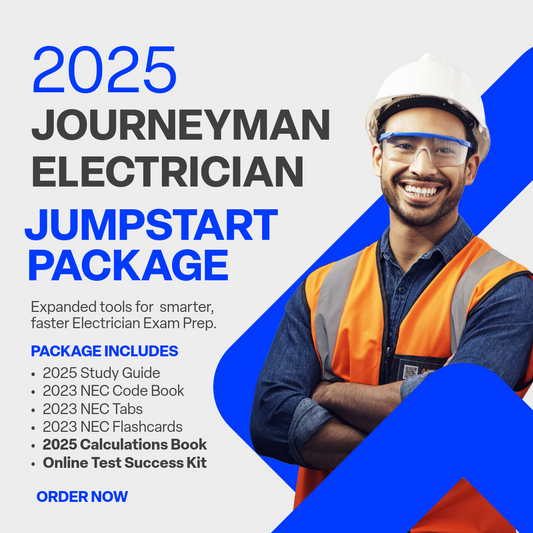
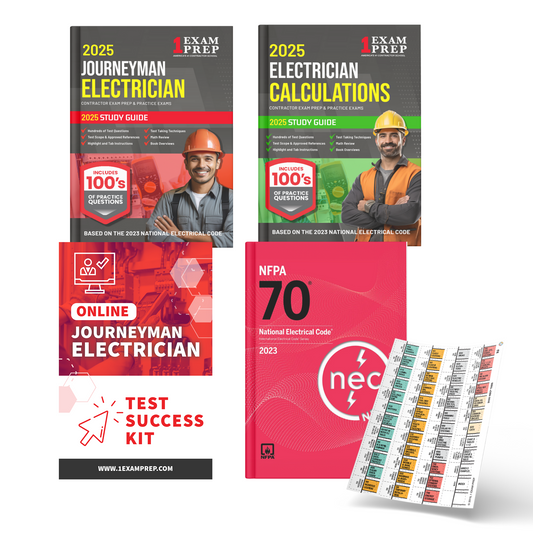
The 2025 Complete Journeyman Electrician Book Package combines a 2023 NEC paperback with tabs, a 2025 journeyman study guide, a calculations book, and online Test Success Kit access according to its listing. This mix supports reading, problem solving, repeated code lookups, and timed online practice.
A complete package works best when you actually use each component. Try reading a topic in the codebook, answering a short set from the guide, practicing one related calculation, and then attempting an online quiz. That sequence can show whether the problem is unfamiliar code language, weak arithmetic, or test timing. Confirm package contents and access terms at checkout.
Study checkpoint: Create a weekly rotation for the four listed package components rather than tackling everything every night. Finish each session by writing one rule you learned and one question you still need to answer.
2025 Master Packages: Start Small or Choose Complete Prep
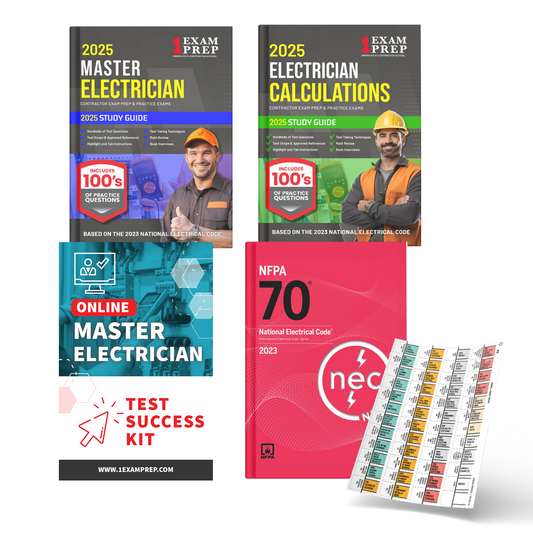
The catalog includes both the 2025 Master Electrician Get Started Package and the 2025 Complete Master Electrician Book Package. The starter option is useful to investigate when you mainly need a guide and code reference. A larger package may provide broader calculations and study support. Review the current contents rather than assuming two similar product names include identical books.
Your ideal bundle depends on the exam outline and your habits. If calculations are your weakest skill, a package with dedicated practice may be more useful than extra reading alone. If you're strong in math but slow at looking up rules, spend more time learning the NEC organization and index.
Study checkpoint: Write a simple purchase comparison with the two master options side by side. Identify the actual codebook, calculations help, online access, and printed tests that come with each, rather than comparing package names.
Branch Circuits, Feeders, and Conductors
Both exam levels frequently call on knowledge of branch circuits, feeders, conductor protection, and wiring methods. Study the meaning of continuous loads, conductor ampacity, termination conditions, and how system choices interact. For master-level preparation, expand those skills into larger installations and multiple connected pieces of equipment.
Build a small set of sample scenarios. Draw the circuit path, label its important parts, and list the code sections you would consult. Practice explaining what the question is asking before you hunt for numbers. Reading accurately matters: one changed word such as feeder versus branch circuit can send an otherwise good calculation in the wrong direction.
Study checkpoint: Practice distinguishing a feeder question from a branch-circuit question with three short examples. Underline the words that reveal the difference, then connect each example to its relevant code article and table.
Grounding, Bonding, and Overcurrent Protection
Grounding and bonding questions reward careful reasoning because many terms sound similar. Study equipment grounding paths, bonding methods, grounding electrode systems, and how protective devices relate to conductors and equipment. Rather than memorizing a single sentence, connect each rule to the safety purpose behind it.
Use two-column notes: 'What the rule addresses' on one side and 'Where to find it' on the other. Review diagrams and identify which conductors or metal parts serve which function. If you repeatedly confuse terms, pause practice tests and rebuild your vocabulary. The goal is to recognize the correct requirement even when the exam presents an unfamiliar installation.
Study checkpoint: Review one grounding and bonding diagram from memory. Redraw it, label the parts, and verify every label. Give special attention to terms that sound alike but describe different protective functions.
Services, Motors, and Electrical Calculations
Service and motor problems can combine calculations with code interpretation. Common study activities include load estimates, conductor selection, demand factors, motor circuit protection, and understanding conditions that change a calculation. Master candidates may need to bring several of these steps together more often.
Keep the formulas you are permitted to study in one notebook, then solve problems by hand without copying the solution. Afterward, compare each step with the explanation and relevant table. A calculator cannot tell you which table to use. Practice identifying the correct question before working the arithmetic, and be sure your test provider allows the type of calculator you plan to bring.
Study checkpoint: Solve three calculations in writing before checking answers. Record the code reference, formula, units, and reason for selecting each method. This exposes whether your weakness is the math or identifying the correct requirement.
NEC Tabs, Book Navigation, and Exam-Day Rules
A tabbed codebook can make practice sessions more efficient by helping you locate chapters and important topics. However, tabs and highlighting do not make a book automatically legal inside an exam room. Some tests are closed-book, some allow designated references, and some restrict handwritten notes or tab styles.
Verify your current candidate rules and use the book for study regardless of whether you can take it to the testing center. During practice, start with the index, move to the correct article, and read exceptions and table notes. A quick wrong answer is still wrong, which is why accuracy should come before speed.
Study checkpoint: Take ten timed lookup questions and record how many searches began in the wrong NEC chapter. Next time, focus on picking the right reference location before increasing your page-turning speed.
Online Practice and Simulated Exams
Online questions can turn spare moments into useful review sessions, especially for working electricians. A simulation is most helpful when it provides a realistic pace and a chance to review your mistakes. Do not mistake a high score on a familiar set of questions for complete readiness.
Take one timed practice exam each week. Record the score, time used, and main topics missed. Then redo the missed questions after a few days without looking at your earlier answers. If you remember only the letter, make yourself explain the rule. That is how practice becomes knowledge you can carry into a new question.
Study checkpoint: Use a timed practice set that you have not already memorized. Review errors without looking at the correct answer first. Your explanation should include the rule, not merely the letter of the right option.
Safety and Jobsite Judgment
Electrician exams often test safe work habits, and safety knowledge matters after the exam as well. Review de-energizing procedures, electrical hazards, equipment ratings, protective methods, and any applicable safety material named in the exam outline. Do not substitute general jobsite assumptions for the specific rules being tested.
Use short scenarios: What must be checked before a task? Which condition creates a hazard? What does the question tell you about the equipment? For real work, follow applicable regulations, employer procedures, manufacturer instructions, and qualified-person requirements. Studying should strengthen safe judgment, not encourage guessing on energized equipment.
Study checkpoint: Add the official safety topics to your study checklist. If an exam question refers to a real job hazard, keep code knowledge and actual safe-work procedures distinct; neither should be treated as a guessing game.
A Six-Week Study Plan for Both Levels
Week one is for confirming your exact exam and taking a baseline quiz. In week two, review branch circuits, conductors, and wiring methods. Week three focuses on grounding, bonding, and overcurrent protection. Week four covers services, motors, and calculations. In week five, study the weak topics exposed by earlier tests, adding any master-specific material required by your outline.
Week six is for timed simulations, reference navigation if applicable, and exam-day preparation. This schedule is a flexible example, not an official required course. Adjust the pace around work and family. Consistent forty-minute sessions can be more useful than one heroic weekend that leaves you too tired to remember anything.
Study checkpoint: Put the suggested six-week plan on a calendar and mark actual workdays. Move difficult chapters to days with enough energy for thought, and save shorter quizzes for crowded afternoons.
How to Compare Packages Before Buying
List the exact materials you already own so you do not accidentally buy another copy of the same codebook. Then compare each package's code edition, printed books, tabs, calculations workbook, online course access, shipping details, and refund policies. Pay attention to the difference between a book package and a broader exam-preparation program.
If you expect to change test dates, check access periods before ordering. If your jurisdiction has special code amendments, find out whether you need supplemental material. Your study investment should remove confusion, not create a new puzzle made of receipts and duplicate textbooks.
Study checkpoint: Before purchasing, highlight any resource you already own on the package inventory. Check the code edition, book condition, and online access needs. This is an easy way to avoid paying twice for the same tool.
Common Mistakes and How to Avoid Them
One mistake is relying only on field experience. Installation habits are valuable, but tests may ask for the precise code requirement. Another is practicing calculations without reading the question closely. A third is buying materials based on the book's year rather than the code edition printed in the product description.
Avoid these traps by treating your exam bulletin as the master checklist. Choose one primary study guide, track wrong answers, and schedule time to revisit weak topics. Rest before the test instead of rushing through an unfamiliar chapter at midnight. Strong preparation is organized, not mysterious.
Study checkpoint: Spend ten minutes listing the three most frequent causes of errors in your latest quiz. Decide whether each requires new knowledge, more calculation practice, or simply slower reading of the question.
Choosing Your Next Step
The right path begins with your license target. If you're preparing for journeyman credentials, review the 2025 Complete Journeyman Package and the stand-alone guide. If you are preparing for master-level responsibilities, compare the 2025 Complete Master Exam Prep Package with the book-focused options.
Use the 2025 Journeyman and Master Electrician collection as a place to explore, not as a substitute for official licensing instructions. Confirm your exam's edition, allowed references, application requirements, and scheduling details. A calm plan built around accurate materials and steady practice gives you a better foundation than hoping your favorite code section is the only one tested.
Study checkpoint: Set a realistic date for your next practice exam and save the official candidate bulletin. Keep licensing paperwork and study records together so registration details do not become another surprise during your final week.
Frequently Asked Questions
Select a question to find practical answers about this collection, exam references, and study choices.
Conclusion: Build a Study Plan That Fits Your Exam
Preparing for a license as a journeyman or master electrician can feel like facing an enormous shelf of books with no signs explaining where to start. The best way through is to begin with the licensing authority, not the shopping cart. These few details tell you what to study and what you can safely leave for another day. A study plan becomes much easier when it answers a specific exam rather than a vague goal.
Good materials support that plan but cannot replace it. The available options include the 2025 journeyman and master guides, starter packages, and complete book bundles. Before ordering, read the current product description carefully, check included books, code editions, online access, and any terms about returns or shipping. Avoid buying a larger bundle simply because it has a dramatic title. The best set is one that covers your genuine gaps. A journeyman candidate may benefit most from mastering reliable installation decisions. A master candidate may need greater speed with complex calculations and system-level judgment. Think about your schedule, budget, and how you learn when a difficult concept refuses to cooperate. Learning aids are useful when they solve a problem, not when they collect dust.
Once you have the materials, turn your exam outline into a series of manageable study sessions. Pay special attention to conductors, feeders, services, motors, grounding, bonding, advanced calculations, and electrical safety. Study one subject, answer questions about it, and check the explanations before moving on. That distinction matters. Repeatedly taking quizzes without reviewing misses can produce a higher score through familiarity, while your understanding stays in the same place. Real progress means being able to explain an answer you have never seen before.
Testing format also matters. If an exam is open-book, you need to know which references are allowed and how to find information accurately. Read the index, article headings, tables, notes, and exceptions, and practice under a realistic time limit. If the examination is closed-book, work on knowing fundamental ideas without needing a page in front of you. Either way, make your practice conditions increasingly similar to the actual test. Check policies directly with the exam provider. Rules on calculators, tabs, notes, and permitted publications can vary, and advice from somebody who tested years ago may be outdated.
A practical schedule can be surprisingly modest. Keep a progress log. It should tell you which subjects are improving and where the same mistake appears again. Protect your sleep and attention before exam day, and make sure identification, travel, application documents, and permitted materials are prepared in advance. A calm routine is one more useful tool.
Finally, remember that purchasing exam preparation does not issue a license or guarantee a passing score. Experience verification, applications, examinations, fees, and other requirements still belong to the appropriate state or local authority. Use official instructions for decisions about eligibility and current code requirements. As your next action, compare the 2025 Journeyman and Master Electrician collection with your official examination guide. Choose a small number of helpful resources and commit to using them. Clear goals, accurate editions, steady practice, and honest review give you a sensible path forward. That may not sound as exciting as a miracle shortcut, but it is much more dependable when test day arrives.
Key Takeaways
- Separate journeyman and master exam targets before choosing books or practice tests.
- The verified 2025 study guides in this collection are based on the 2023 NEC; confirm your exam edition.
- Pair code navigation with calculations and timed questions instead of relying on one study method.
- Check whether tabs or references are permitted in your particular examination.
- Compare package contents against what you already own and review missed questions consistently.
Plain-Language Summary
This guide is for anyone preparing as a journeyman or master electrician and trying to choose the right exam study materials. The first step is simple: find out what examination you will take. Get the current candidate guide from the state or local authority. The guide should explain the license, important subjects, required books or code editions, and testing rules. Do not choose books only because their title looks familiar or because someone at work used them. Different places can use different exams, even when the license names sound very similar.
After that, compare the study tools. Options you may see include the 2025 journeyman and master guides, starter packages, and complete book bundles. Some products supply books only. Others combine books with practice exams, online lessons, calculations material, or prepared tabs. Check the contents of every listing before you buy it. Do not assume that the word complete means the same thing for all products. A journeyman candidate may benefit most from mastering reliable installation decisions. A master candidate may need greater speed with complex calculations and system-level judgment. Pick materials that fill the gaps in what you already own. Your goal is not to build the tallest stack of books. It is to have a small group of useful tools you actually study from.
Next, make a short list of subjects to review. Begin with one topic, read a clear explanation, and answer a few related questions. When a question goes wrong, do not simply memorize the correct letter. Find out why the answer is right. Write down the rule or method you missed. If the same subject causes several errors, return to it before beginning a completely different chapter.
Practice questions are helpful because they show how a test might ask about real work. A timer is useful, but it is not everything. Make sure you understand the problem before trying to answer faster. Keep a little notebook showing the subject, score, time used, and what you need to review next. Test yourself again several days later with different questions. This checks whether the information stayed in your head instead of looking familiar for just one afternoon.
You should also learn whether the exam is open-book or closed-book. If books are allowed, the test provider may still limit editions, tabs, notes, or other materials. Practice finding information in the permitted references by using contents pages, indexes, headings, and tables. If no books are allowed, practice explaining common rules and calculations without opening the guide. Do not assume a tabbed book can be taken to every test center. Follow the current instructions from the company or board running your examination. These details are important and easy to overlook.
A six-week study plan is one possible way to stay organized. First collect the correct materials and take a practice quiz. Then study the major topics over several weeks, leaving extra time for difficult calculations or reference searches. Use the last week to take timed tests, fix repeated mistakes, and prepare for the actual exam day. You can make the schedule longer if needed. Finally, compare the 2025 Journeyman and Master Electrician collection with your official examination guide. Good habits and the correct resources matter more than last-minute guessing.