








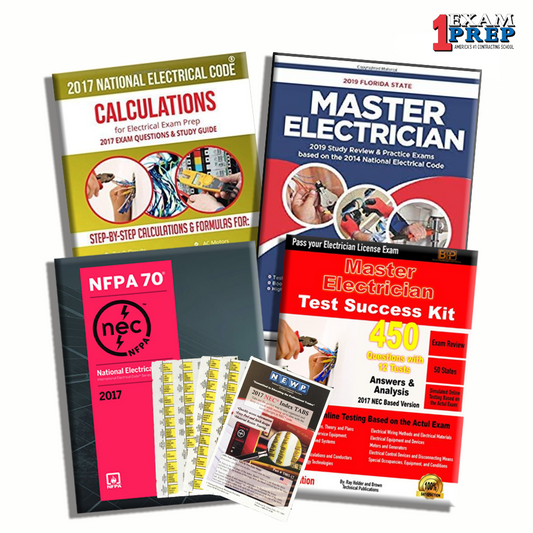

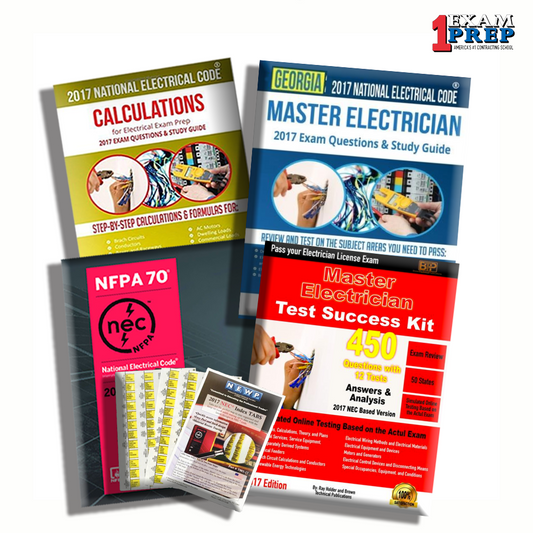

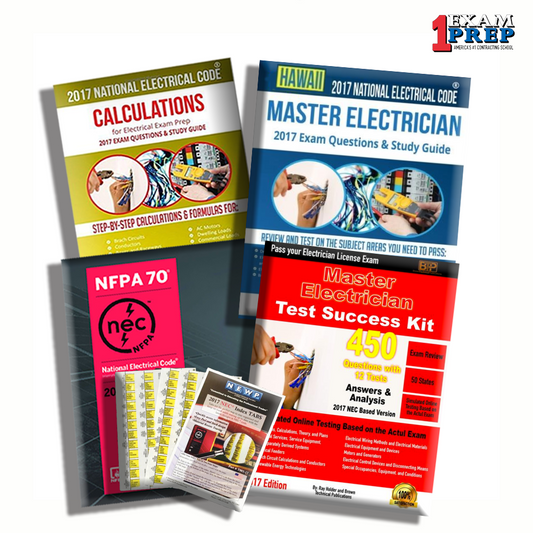


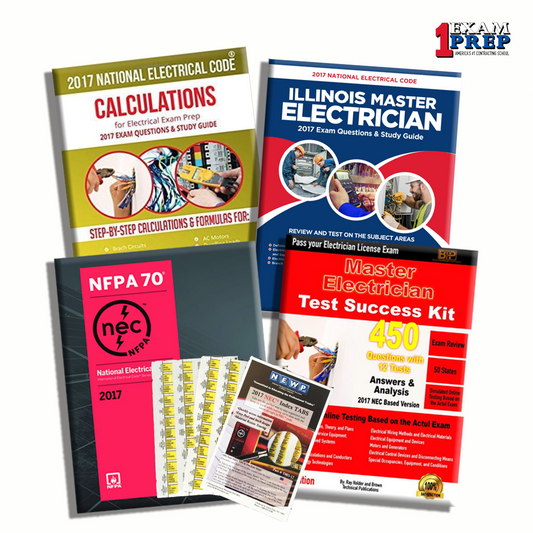
Electrician Exam Prep Packages: How to Choose Books, NEC References, and Courses
An electrician exam prep package can be a smart purchase, or it can be an expensive stack of books for the wrong test. Journeyman, master, contractor, inspector, and specialized electrical exams differ by state, city, and testing provider. Some use the National Electrical Code in an open-book format. Others test calculations, local law, or business knowledge with tighter reference rules. This guide helps you sort out those differences before you buy, then turn the right materials into a useful study routine.
Start with the Electrician Exam Prep Package collection. Because the exact collection listing could not be independently verified, compare any package you find with its product description and your official licensing bulletin. You can also review the 1 Exam Prep electrical study page for examples of course and book formats.
Identify the exact electrician exam
Electrician exams are not one nationwide test. A state journeyman exam may emphasize installation, while a master exam may include design decisions, and an electrical contractor exam may test business duties. A course aimed at a national credential may not cover local amendments or the exam board's application process.
Write down the jurisdiction, exact exam name, exam provider, and target date before searching for materials. Ask which credential the test leads toward. This one-page check prevents buying a package because its title merely contains the word electrician.
Confirm the approved NEC edition
The National Electrical Code, NFPA 70, is updated on a cycle, but not every jurisdiction adopts the newest edition at the same time. Some examinations continue using an older code year. Table numbers, wording, and exceptions can vary across editions, making a mismatched book frustrating under time pressure.
Check the official bulletin for the code year your exam tests. Compare that date with the cover and tabs in your selected package. Do not assume that a 2023 or 2026 textbook is correct just because it is newer.
Understand what a complete package contains
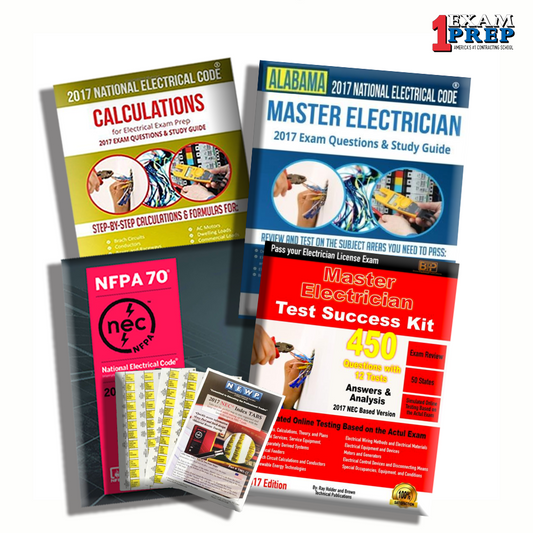
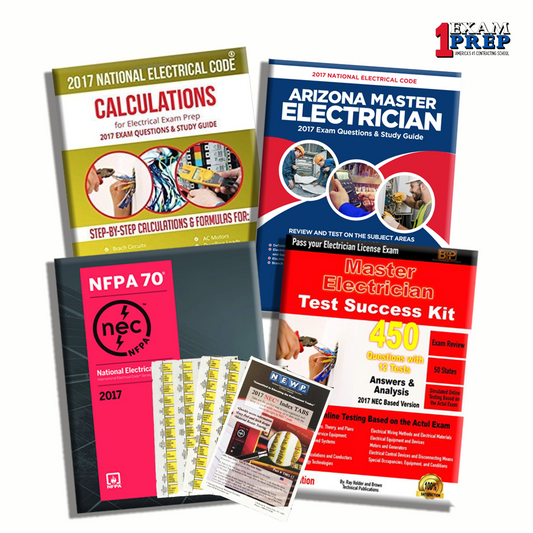
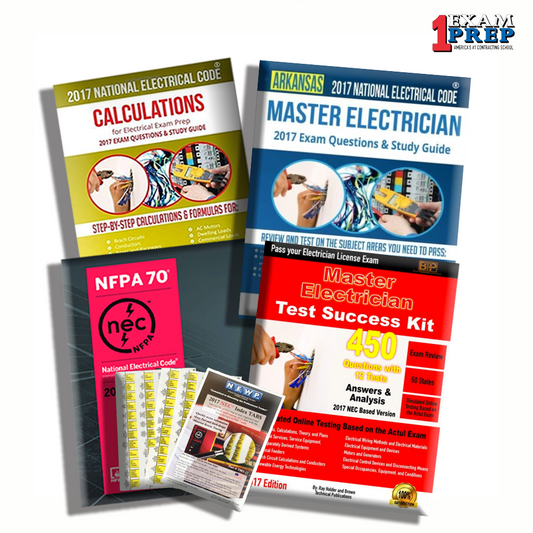
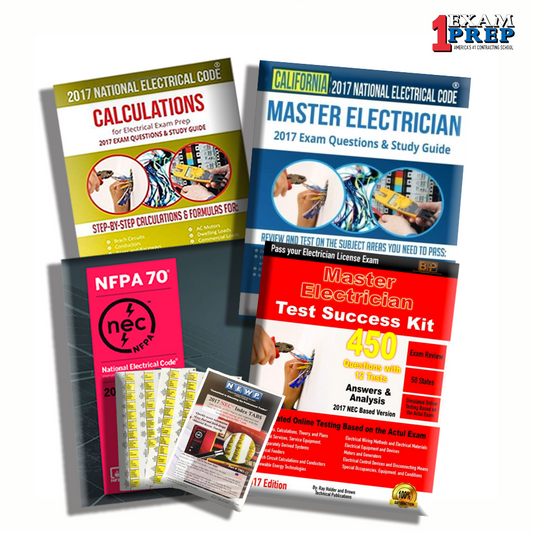
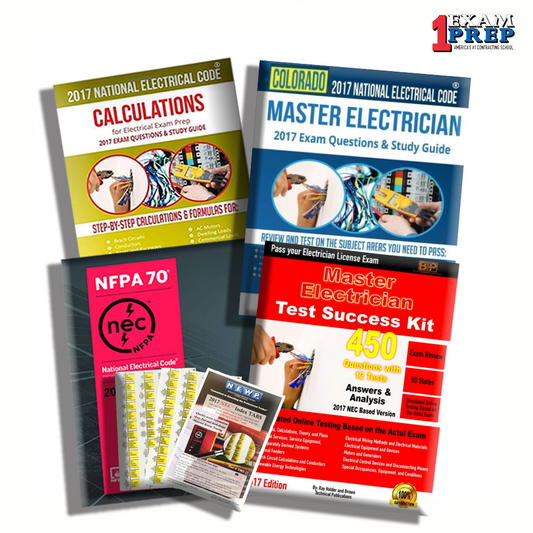
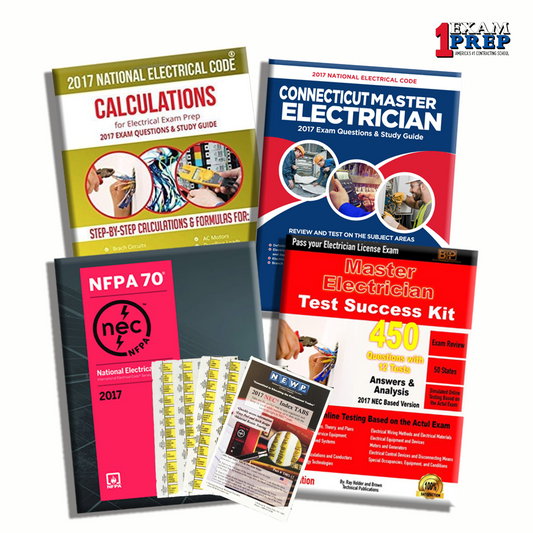
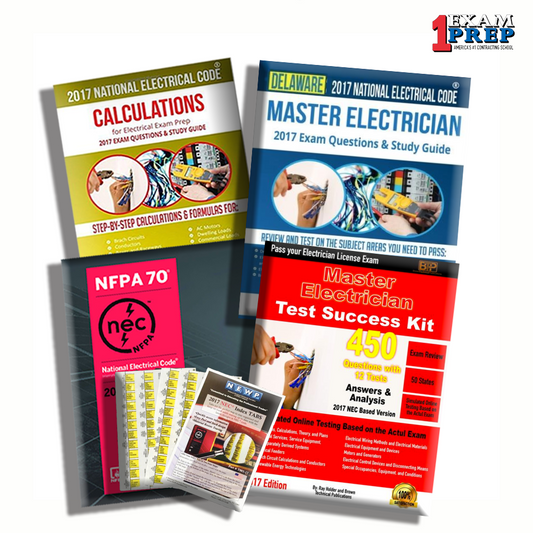
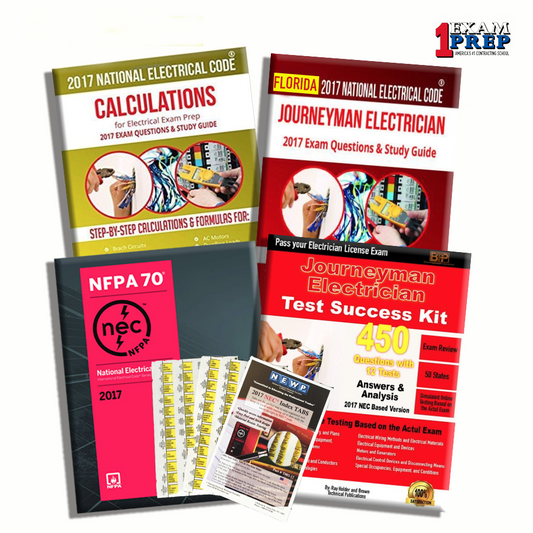
A package can include printed codebooks, study guides, tab sets, flash cards, online video lessons, calculations practice, and simulated examinations. Different bundles may emphasize different items. An online course without the required reference book is not the same purchase as a complete book-and-course bundle.
Before checkout, list the contents you will actually receive and whether books are rented or purchased. Confirm the time limit for online access, shipping expectations, digital downloads, and any return or deposit rules.
Use the official exam outline as your roadmap
An outline tells you which subjects receive attention and often how many questions appear. Without it, candidates can spend days studying an interesting topic that counts for little while neglecting a major section. A package should support the official outline rather than replace it.
Create a study chart with exam domains, your confidence level, and the relevant chapters or lessons. Put the weakest high-weight topic first in your calendar. Revisit the outline whenever you change courses or references.
Understand electrical theory before shortcuts
Voltage, current, resistance, and power explain why circuits behave the way they do. Knowing a formula is useful, but understanding the relationship helps you catch wrong units and unrealistic values. Exam questions may describe a field situation rather than ask for a simple definition.
Work short practice problems and explain the physical meaning of each answer. Use units beside every quantity. When the result seems unreasonable, check the assumptions and convert the problem into a small sketch.
Practice load and demand calculations
Electrical load calculations help determine how systems are planned and protected. A calculation can involve connected loads, demand provisions, and special conditions, so choosing the proper code method matters as much as arithmetic. Skipping a note can change the result.
Build a worksheet with given loads, the selected code method, and a final answer. Keep your steps clear enough that you can revisit a mistake later. Practice locating the governing table without relying on a highlighted answer key.
Study conductors and allowable ampacity
Conductor selection depends on material, insulation, temperature limits, conditions of use, and other details. A wire size that seems familiar from a past job may not fit the exam scenario. The test often rewards careful reading of the setup.
For each practice question, underline the material, insulation rating, installation conditions, and number of current-carrying conductors. Select the relevant code provisions before doing any adjustment or correction.
Review overcurrent protection
Fuses and circuit breakers help protect conductors and equipment, but the correct rating is not always the one closest to a load number. Applicable rules may depend on equipment type, conductor size, and permitted exceptions. Correct sequencing is important.
Draw a small feeder and branch-circuit diagram with devices labeled. Explain where protection occurs, what is being protected, and which rule applies. Keep a separate note for special cases rather than treating them as universal.
Understand grounding and bonding
Grounding and bonding are related but different. Their purposes include limiting dangerous voltages and creating effective fault-current paths. Confusing the terms can make a question seem mysterious even when the installation drawing is simple.
Trace the intended fault-current path in a sample installation. Label conductors and connections carefully and compare the diagram against the proper NEC definitions. Focus on what each connection does, not only its name.
Learn wiring methods and raceway rules
Raceways, cables, boxes, and enclosures must suit the environment and installation method. A location can change the required material or protection. Equipment that looks strong enough is not automatically suitable where water, heat, corrosion, or mechanical damage is present.
Create a decision table for dry, damp, wet, and exposed areas. Use pictures of common wiring methods, then search for the exact provisions that describe where they are permitted.
Practice box fill and conduit fill
Box fill and raceway fill ask you to identify the correct quantities and apply the right rules. These topics are especially vulnerable to rushed reading because a small detail can change a count or calculation. A correct formula with incorrect inputs still produces the wrong answer.
Sketch boxes containing conductors, devices, and fittings. Mark the count rules and practice locating the applicable tables. Use short timed drills until the process feels organized, not memorized.
Study branch circuits and receptacles
Branch circuits involve load types, receptacle locations, required protection, and rules for particular occupancies. A residential example may not transfer unchanged to another location. Exam questions can test how you classify the space before choosing a requirement.
Map a simple floor plan with outlets, appliances, and lighting. Ask which details change the design, then verify answers in the NEC edition assigned to your exam.
Review motor and equipment rules
Motors can bring distinct rules for conductors, overload protection, short-circuit protection, and control. Treating a motor as an ordinary lighting load is a common study mistake. The required steps depend on what part of the installation the question addresses.
Practice a motor problem in stages: identify the equipment, locate the appropriate code table, choose the relevant protection question, and calculate only after the method is clear.
Understand services and feeders
Services and feeders are major parts of electrical distribution and involve sizing, protection, disconnects, and grounding or bonding decisions. The location and role of equipment matter, even when two drawings look similar at first glance.
Trace power from the utility connection through the service equipment to a panel and load. Note where the rules change from service to feeder to branch circuit, using labels on the diagram.
Study special locations and equipment
Pools, health-care areas, hazardous locations, and other special conditions may require more specific rules than a standard room. The exam expects candidates to recognize the type of space before choosing a section. A broad rule may not be the final answer.
Make topic flash cards that begin with the environment or equipment rather than a code number. For each card, find the relevant special provision and its relationship with general rules.
Build a fast codebook lookup routine
Even an open-book exam requires fast navigation. Candidates who search every answer from page one spend time they cannot recover. Tabs can help, but only if they are permitted and correspond to your exact reference edition.
Practice ten-question lookup drills and record your search route. Use the table of contents, index, article structure, and key definitions. Rehearse with the same type of reference you will have on exam day.
Train with timed practice exams
Timed practice reveals whether you can apply knowledge under pressure. It also exposes topics you know well but search too slowly. Practice exams are learning tools, not proof that the real test will repeat their questions or wording.
After each simulation, separate your missed questions into reading mistakes, code-navigation mistakes, calculation errors, and missing knowledge. Adjust your next study session based on the largest category.
Build a schedule that fits working electricians
Working electricians often study around early starts, emergency calls, and family responsibilities. A sustainable plan is better than an ambitious calendar that collapses after three days. Short sessions still work when each has one clear outcome.
Choose four or five study days per week, rotate theory, calculations, code lookup, and mixed practice, and leave a catch-up session. Plan at least one full timed exam before the actual appointment.
Compare self-paced and instructor-led courses
Self-paced study can be convenient if you already know how to manage your time. Instructor-led sessions can help when you need explanations, accountability, or guided calculations. Neither is automatically the better choice for every candidate.
Look for sample lessons, instructor access, course length, and the number of practice opportunities. Match the learning format to your habits, not to a claim that one method works for everyone.
Check package value instead of page count
A bundle with the most books may not be the most efficient purchase. An unnecessary code edition or unused course module adds cost without helping your specific exam. A smaller set that matches the right test can be a stronger choice.
Compare the electrician package collection with your official reference list. Make sure you understand whether the codebook, tabs, workbooks, and course access are included.
Prepare for check-in and examination rules
Exam providers control identification, approved materials, calculators, testing methods, and scheduling. A friend who tested in another county or year may remember a different set of rules. Treat the official bulletin as the final authority.
Make a checklist for your appointment, ID, reference materials, tools, and travel or remote-testing setup. Avoid discovering an unapproved book or prohibited note after you arrive.
Follow through after passing
Passing a test may not complete a license application. Experience verification, fees, business registrations, and insurance can still apply depending on the credential. An exam-prep product never grants permission to advertise yourself as licensed.
Keep exam results, experience records, and official correspondence together. Check the responsible licensing authority for the next step, then track any renewal and continuing-education obligations.
Use NEC definitions to avoid common traps
Many electrical exam errors begin with a misunderstood word. A defined term may have a precise meaning that differs from ordinary conversation at the job site. The difference can matter when a problem refers to a service, feeder, outlet, equipment, or bonding connection.
During each practice session, find at least two definitions connected to your questions. Write a plain-language explanation beside each and draw an example where it changes the answer.
Know when local rules add requirements
The NEC is widely used, but local and state requirements can add amendments, administrative conditions, or separate permitting rules. An electrical contractor license may also require business knowledge and financial qualifications not found in a technical codebook.
Create a separate sheet for local requirements. Avoid mixing city amendments into national-code practice answers unless the official test specifically includes them.
Check your readiness with a final mock exam
A full mock exam is useful because it combines time pressure, question switching, and fatigue. Short drills can disguise problems with pace or concentration. A practice session should show whether your understanding survives the same kind of conditions expected on test day.
Choose a fresh question set, use the correct references, and follow the actual time limit. Afterward, review not just the score but where you slowed down and which kinds of questions created uncertainty.
Recommended references and official resources
Use these links to compare study materials and official requirements. Product pages describe available learning materials; exam authorities decide eligibility, code editions, permitted references, and licensing steps.
A practical action checklist
- Confirm the exact exam or study objective and responsible authority.
- Check current eligibility, test format, exam edition, and reference rules.
- Compare actual book, course, tab, and package inclusions.
- Set realistic weekly study goals and complete mixed practice questions.
- Review wrong answers and practice locating rules efficiently.
- Verify test-day identification and permitted materials.
- Finish official licensing or certification requirements after the exam.
Frequently Asked Questions
Conclusion
Choosing an electrician exam prep package is really an exercise in matching the right tools to the right job. Before thinking about how many books you want or how many practice tests a course offers, identify your exact examination. Journeyman, master, contractor, and inspector tests can overlap in subjects without sharing the same rules. States and cities may use different code editions, registration systems, and approved references. A product can be well made and still be the wrong choice for your goal. Start with the licensing authority's bulletin, not the size of the bundle shown in a photograph.
The National Electrical Code is an important study resource for many electrical examinations, but its edition must match the one assigned to your test. A recent book is not automatically correct. Learn the layout of your approved reference so you can find conductors, overcurrent protection, grounding, bonding, services, feeders, motors, special conditions, and calculations without a long search. Many exams reward a good understanding of the connections among these topics. A conductor selection question may require a load calculation and careful reading of temperature conditions before you reach the final answer.
The best study plan mixes explanation with practice. Read a rule, sketch an installation, and solve a small problem using that rule. Then attempt a question without looking at the answer key first. If you are wrong, locate the reason. Was it the wrong code article, a missed exception, a calculation mistake, or a misunderstanding of the equipment? These categories tell you what kind of practice to do next. Repeating identical questions until you remember a letter is not a dependable substitute for learning how the electrical system works.
Think carefully about the contents of a package. Printed references, tab sets, flash cards, instructor-led lessons, online courses, and timed simulations solve different problems. Someone who already owns the proper NEC edition may need practice questions more than another book. Someone who struggles with calculations may benefit from guided examples. Compare price against usefulness, and read access periods, delivery conditions, and product descriptions. Study materials can improve preparation, but they cannot promise a particular result or replace the licensing board's requirements.
Finally, make exam day and the steps after passing part of your plan. Verify the appointment, identification, allowed tools, and testing method directly with the provider. After the test, submit whatever experience records, fees, or license applications remain. Passing an examination does not itself authorize every kind of electrical work. A strong preparation approach protects both your budget and your professional reputation. Confirm the target credential, choose the matching reference edition, and build a weekly routine with code lookup, calculations, and timed practice. Those simple habits give your study package a clear job.
One helpful test is to explain your study choice to a coworker in two sentences. Name the exam, the code edition, and the skills the package will strengthen. If you cannot explain those points, review the listing again before you buy. Clear purpose makes study time much more useful.
Key Takeaways
- Choose preparation materials for your exact electrical exam, credential, and jurisdiction.
- Match the NEC edition and approved references to the official bulletin, not simply the newest book.
- Compare books, online courses, tab sets, practice tests, and access terms before buying.
- Practice electrical concepts, calculations, code navigation, and timed questions together.
- Exam prep is separate from exam registration and final licensing approval.
Plain-Language Summary
An electrician exam prep package is a set of study tools meant to help you prepare for an electrical test. It may contain codebooks, study guides, practice questions, tabs, online lessons, or instructor support. Different packages include different items, so it is important to read the description before buying. The biggest mistake is choosing a package because the title sounds close to your goal. Electrical exams vary by state, city, credential, and testing provider. A journeyman test is not necessarily the same as a master or contractor test.
Before you buy, write down the exact exam name and the code edition it uses. Many electrical exams refer to the National Electrical Code, also called NFPA 70. Not every exam uses the newest edition. One location may test an older book while another has moved to a newer cycle. The correct edition is the one the exam authority lists for your appointment. If your book is based on another year, some section numbers and requirements may not match, and that can waste time when you need a quick answer.
Important study topics include electrical theory, load calculations, conductors, overcurrent devices, grounding and bonding, services, feeders, branch circuits, wiring methods, raceways, motors, and special locations. Do not treat these as unrelated subjects. A problem can require you to find the load, select a conductor, and then check a protection rule. Learn to draw simple systems and explain what every part does. If you know why a rule matters, it becomes easier to recognize the correct method in a new situation.
Open-book exams still require preparation. You should know how the codebook is arranged before test day. Practice looking up common subjects with a timer. Check whether tabs, highlighting, or notes are allowed under your specific exam rules. Use practice exams to find weak topics rather than memorizing repeated answers. Keep an error log with the reason you missed each question. The goal is to become faster at making a correct decision, not to race through pages without understanding.
When comparing packages, confirm exactly which books, tabs, videos, and practice exams are included. Check shipping and online access dates. Choose a schedule that fits your work and personal life. A few consistent sessions each week can be better than a huge study marathon. Finally, remember that passing a test may not finish the licensing process. Your state or city might still require experience verification, fees, or business paperwork. The right package is the one that matches your exam and helps you build real skills.
When a practice question feels confusing, slow down enough to find the important details. Highlight the equipment type, location, materials, and given numbers. A good answer comes from choosing the right rule, not from guessing what a familiar job would usually involve. Simple, repeatable steps will make you more confident as your test date approaches. Before checkout, keep a copy of your official examination outline. You can use it to confirm the package covers your highest-priority topics.