



Pool Contractor Exam Prep: Books, Courses, Practice Questions, and Licensing Success
Building or servicing a swimming pool sounds like a sunny career. Then you open the contractor exam outline and discover concrete, electrical rules, plumbing, water chemistry, estimates, safety standards, and enough technical language to drain your enthusiasm. Do not worry. Good exam preparation does not mean memorizing every detail in every pool book. It means choosing the right exam, understanding its subjects, and practicing with the materials that actually apply to your license.
Video: How to Pass the Florida Pool Contractor License Exam
The Pool Contractor Exam Prep collection at 1 Exam Prep brings together resources for different swimming pool contractor examinations. This guide will help you compare residential, commercial, and service-focused paths, understand online courses and reference packages, and build an organized study routine. Pool exams vary by state and licensing category, so always verify the current official exam bulletin and approved books before ordering materials or scheduling a test.
First, Choose the Pool Contractor License You Actually Need
A residential pool builder, a commercial pool contractor, and a pool service contractor may work near the same water, but their licenses can cover different activities. Residential testing often gives attention to inground pools, spas, structural shells, equipment, and home-site work. Commercial preparation may add public pool rules, accessibility, and higher-use equipment systems. Service licensing may focus more on circulation, filtration, sanitation, operation, troubleshooting, and repairs.
Your state may offer different names for these licenses or require a separate business examination. Some jurisdictions regulate certain electrical, plumbing, or specialty work under other contractor licenses. Your first step is to identify the exact jurisdiction, license category, testing provider, and exam name. Next, read its official scope-of-work definition. Choosing a course simply because the words 'pool contractor' appear in the title is like ordering a replacement pump without checking the specifications. Similar does not necessarily mean suitable.
Residential Pool Contractor Exam Prep: Learn the Whole Project
Residential pool exam preparation can involve much more than digging a hole and adding water. A successful candidate should understand how layout, soil conditions, excavation, reinforcement, concrete or shotcrete placement, pool finishes, circulation plumbing, filtration, and safe electrical coordination fit together. Study the sequence of the work. A design error early in a project can cause a major problem when the pool shell is already in place.
The Florida Residential Pool Contractor Online Exam Prep Course organizes trade topics around pool and spa standards, estimating, construction safety, structural materials, electrical provisions, and Florida Building Code study. Candidates who want interactive instructor support can also explore Florida Residential Pool Contractor Live Virtual and Self-Study Training. These products target the Florida residential examination, not every state's residential pool license. Confirm the reference list and product inclusions before enrolling.
Commercial Pool Contractor Exam Prep: Public-Pool Rules Matter
A hotel pool, community aquatic center, or public spa introduces questions beyond ordinary backyard construction. Commercial pool exam candidates may need to study public swimming pool standards, equipment capacities, accessible facilities, water quality requirements, and operating responsibilities. Structural work still matters, but public use adds another layer of regulation, inspection, and safety concerns. One wrong assumption about the applicable standard can spoil an otherwise good answer.
The Florida Commercial Pool Contractor Trade Online Exam Prep Course is designed around trade subjects such as shotcrete, reinforcing steel, estimating, electrical safety, public-pool requirements, and pool operations. The related Florida Commercial Pool Ultimate Exam Prep Rental Package provides a broader option with rental references and additional trade and business preparation. The two products are not identical. Read the current offer before deciding which level of support you need.
Pool Service and Repair Contractor Preparation
Service-focused pool examinations often ask candidates to think like problem solvers. Why is the circulation weak? Is the filter operating correctly? What does an unusual water test suggest? How should a technician identify a safety hazard without moving beyond the activities permitted by the license? Pump performance, filtration, valves, heaters, sanitation equipment, water chemistry, troubleshooting, and preventive maintenance all deserve attention.
The Florida Service Pool Contractor Online Exam Prep Course includes guided review of pool and spa systems, public-pool regulations, electrical provisions, safety, book navigation, and simulated practice. Candidates wanting a larger study bundle can review the Florida Service Pool Contractor Ultimate Exam Prep Rental Package. Remember that service and repair authorization has limits. A pool service credential should not be assumed to authorize all structural, electrical, or plumbing work on a project.
The Benefits of an Ultimate Pool Exam Prep Rental Package
An ultimate preparation package can reduce the work of gathering references, arranging lessons, and planning practice. Depending on the individual offer, packages may include highlighted or tabbed rental books, online trade lessons, business and finance review, live or recorded classes, simulated exams, or application support. That convenience can be valuable when a licensing exam requires several technical publications and you do not already own them.
For example, the Florida Commercial Pool Ultimate Rental Package lists trade and business references and multiple types of instruction, while the Florida Service Pool Ultimate Rental Package focuses on its own service-oriented testing path. These packages may have deposits, rental periods, shipping lead times, and rules for returning books. Make a checklist of exactly what is included and what must be returned. A rented code book is useful, but remembering the return date is also a professional skill.
Books and Courses Rental Packages for Pool Contractors
Exam reference books can be expensive, especially when a test combines pool and spa standards with construction codes, electrical requirements, safety materials, and business references. A books-and-courses rental can offer temporary access to an organized library alongside guided instruction. The benefit is not merely having a stack of books. It is learning which book answers which type of question and where the relevant information lives.
The Louisiana Swimming Pools Contractor Books and Courses Rental Package is an example with highlighted and tabbed trade and business references, online courses, and a stated rental period. Its conditions differ from Florida options. Before purchasing any rental package, check the shipping schedule, deposit, return deadline, acceptable book condition, and course access period. Build your study calendar around when the references will be available rather than assuming they will arrive immediately.
Online Pool Contractor Courses for Busy Professionals
An online course makes preparation easier to fit around field work, family obligations, and travel. You might study excavation on Monday, pumps and filters on Tuesday, and code-navigation practice on Wednesday. The flexibility is helpful, but a lesson that plays in the background while you answer emails will not work miracles. Pause videos, test your understanding, and repeat explanations that you did not grasp the first time.
For example, the Louisiana Residential Swimming Pools Contractor Online Exam Prep focuses on its state's pool trade test and open-book reference approach. The Arizona B-5 Residential Swimming Pool Exam Prep addresses a different license and has specific exam-room reference restrictions. A course advertised as self-paced may still have limited access duration. Compare the exact exam code, the current books, the lesson subjects, and the access terms before you choose.
Pool Contractor Online Practice Questions and Simulated Exams
Practice questions help turn passive reading into active decision-making. They can reveal whether you recognize the correct standard, understand technical terms, perform calculations, and manage time. After each practice set, review wrong answers and look for patterns. Missing three questions about electrical bonding tells you more than simply seeing a lower score. It tells you what to study next.
If you are preparing for Florida, separate products include Residential Pool Online Practice Questions, Commercial Pool Online Practice Questions, and Service Pool Online Practice Questions. Each product currently describes three months of question access and does not include physical books or a complete course unless explicitly stated. Practice questions are study aids, not leaked state exam questions and not a promise of a passing score.
Reference Books, Highlighted Tabs, and Open-Book Exams
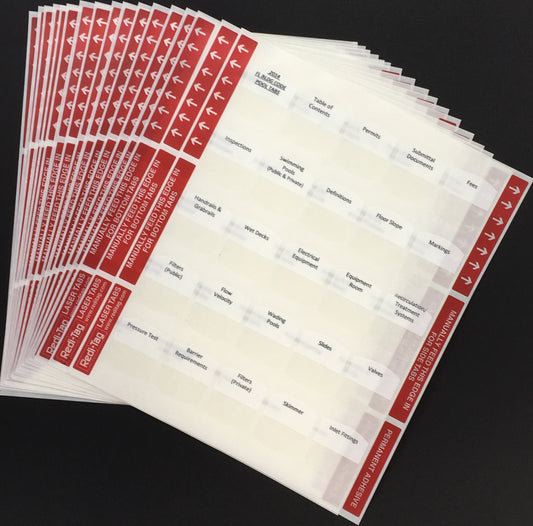
Some pool contractor trade tests are open-book, but the phrase can create false confidence. An open-book exam still runs on a clock. Searching randomly through a large code library can burn minutes quickly. Practice using tables of contents, indexes, definitions, charts, tables, and exceptions. Organize your references by subject so a question about public spas does not send you hunting through a residential concrete reference.
Only bring the editions and materials the test provider currently permits. Some exam centers allow permanent tabs or specific highlighting while refusing loose notes, removable tabs, or unapproved publications. Rules differ by jurisdiction, test, and edition. The Arizona B-5 product, for instance, distinguishes study references from exam-room-approved books. A reference package can help you study well, but it cannot override testing-center instructions. Always check the official candidate bulletin near your exam date.
Pool Construction Topics Worth Knowing Before Test Day
Many pool exams draw on a connected set of construction skills. Rather than memorizing isolated terms, picture a complete project from the first site measurements through filling and startup. Why does proper drainage matter? How does reinforcing placement relate to shell strength? Where might excavation hazards appear? How are piping, valves, pumps, and filters coordinated with electrical and safety requirements? Those connections help questions make sense.
A useful study checklist includes estimating and plans, excavation, soil and groundwater considerations, forming, steel reinforcement, concrete and shotcrete, interior finishes, tile and coping, equipment layout, circulation systems, plumbing, electrical safety, barriers, and construction safety. Public pools and service-focused exams may place very different emphasis on these subjects. Use the official topic outline to decide which areas deserve the most time. Do not study everything equally just because every chapter looks important.
- Estimating, layouts, materials, and construction sequence
- Excavation, reinforcement, concrete, shotcrete, and pool-shell finishes
- Pipes, pumps, filtration, hydraulics, circulation, and equipment
- Electrical safety, grounding, bonding, and protective measures
- Codes, public-pool requirements, safety, inspections, and startup
Pool Water Chemistry, Sanitation, and Equipment Operation
Pool professionals also need to understand what happens after the water arrives. Water chemistry and system operation may be central to a service or public-pool exam. Study how circulation and filtration work together, what pumps and valves do, and how sanitation affects water quality. Understand the purposes of testing pH, disinfectant levels, total alkalinity, and other water-balance measures without assuming every jurisdiction uses identical rules.
Question writers may present an operating condition and ask candidates to choose a safe next step. Your task is to connect the symptom with the system, apply the correct standards, and avoid guessing. Do not turn a study guide into a substitute for manufacturer instructions or actual chemical-handling training. For exam preparation, focus on the required references, their procedures, and which conditions they govern. A shiny pool surface does not prove that every system underneath it is functioning correctly.
Electrical Safety, Bonding, and Jobsite Hazards
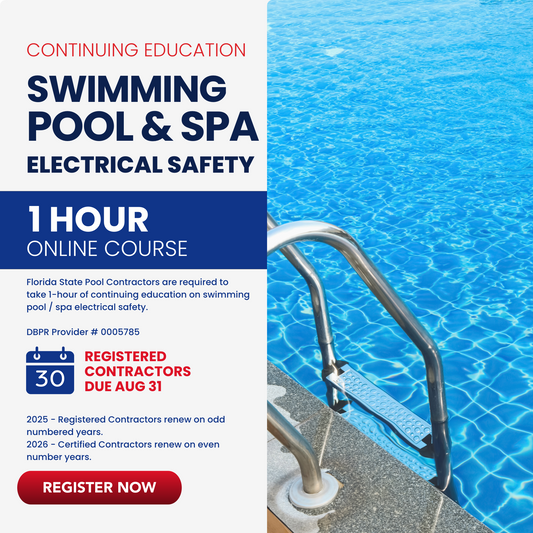
Pools combine electricity and water, which is a good reason to take safety study seriously. Depending on the exam, candidates may need to review bonding and grounding terminology, electrical protection, permitted equipment locations, safe work practices, and provisions related to swimming pools and spas. Other hazards include excavation collapse, heavy equipment movement, wet surfaces, chemicals, and working around the public.
Many Florida pool prep courses list National Electrical Code Article 680 and OSHA construction safety among their references. Candidates should know the official editions listed for their own exam and understand what work requires another properly licensed specialist. Passing a pool contractor test is not permission to ignore electrical licensing boundaries. For difficult questions, use safety principles and code references together. Never assume that an answer is correct merely because a method seems common in the field.
Business and Finance Exam Preparation for Pool Contractors
In some states, earning a pool contractor license involves more than a trade examination. Business and finance subjects can include estimating, bidding, contracts, insurance, project administration, financial records, lien rules, and contractor obligations. These questions matter because operating a contracting business requires more than knowing how to build a watertight shell. A well-built pool and a badly managed contract can still create a serious business problem.
Some Florida packages, including the Commercial Pool Ultimate Exam Prep Rental Package, combine trade study with business and finance preparation. Other offerings are trade-only or practice-question-only. Check whether your licensing pathway includes an additional exam and which references it uses. Then allocate study time accordingly. Do not assume that finishing a trade course completes your financial, experience, application, or insurance requirements.
Comparing Florida, Louisiana, Arizona, and Alabama Pool Prep
This collection spans more than one state, so the location printed on a product name is not a minor detail. Florida offers different residential, commercial, and service paths. Louisiana and Arizona use their own licensing structures, reference rules, and examination providers. Alabama commercial pool candidates may encounter their state's business and application requirements as well as trade material. A question bank written for one jurisdiction may be useful practice in general but still be wrong for another official examination.
Compare the Arizona B-5 Swimming Pool Exam Prep, Louisiana Swimming Pools Rental Package, and Alabama Commercial Swimming Pool All-Inclusive Package only after identifying your actual license. Look at exam names, testing formats, code editions, required books, class access, deposit terms, and licensing services. Use the Florida Pool Course directory when comparing Florida state and county tracks. A state label should guide your decision, not simply decorate the page.
A Six-Week Pool Contractor Exam Study Plan
Start with the official exam content bulletin and a short baseline practice quiz. You do not need to feel ready on day one. The purpose is to identify the biggest gaps and decide where effort will pay off. Build the schedule around your test date and daily commitments. A plan that survives a busy workweek beats an ambitious plan you abandon by Wednesday.
Practice under timed conditions in the final weeks. If approved books are allowed in your exam, use only the appropriate permitted references during simulation. Review the explanations behind missed questions, not just their answer letters. Keep a running list of topics that still need work, and repeat those topics until you can explain them without peeking at the solution.
- Week 1: Confirm your exact license, exam outline, references, and eligibility requirements.
- Week 2: Review pool layout, estimating, excavation, structural shells, and reinforcement.
- Week 3: Study plumbing, equipment, circulation, electrical rules, and safety.
- Week 4: Review pool standards, public-pool rules or service chemistry, and business topics if tested.
- Week 5: Complete subject quizzes and practice timed reference lookups.
- Week 6: Take full simulated exams, revisit weak areas, and confirm exam-day instructions.
How to Choose the Right Pool Exam Prep Package
Before clicking on a product, ask what your biggest study problem actually is. Do you lack the required books? Do you understand the material but struggle with exam timing? Do you need someone to explain code references? Do you have the trade knowledge but still need business and finance preparation? Your answer points toward the right type of resource. Books, online courses, question banks, live training, and rental bundles serve different needs.
Review the Pool Contractor Exam Prep collection and compare each item carefully. Check whether the offer is a complete course or just questions, whether reference books are included, which examination it targets, and when access expires. If rental books are involved, confirm the deposit and return policy. Training can improve preparation, but no legitimate study resource guarantees license approval. The final goal is to arrive at the correct examination with relevant knowledge, practiced skills, and a clear plan.
Frequently Asked Questions
Select a question to learn more about pool contractor exams, books, courses, and licensing requirements.
Conclusion: Prepare for the Pool Contractor Exam With a Practical Plan
Earning a pool contractor license can create new opportunities, but passing the examination requires more than knowing how to install a pump or supervise a concrete pour. Pool construction and maintenance combine several fields that must work together safely. A contractor may need to understand excavation, reinforcement, circulation, electrical protection, water treatment, building regulations, and customer responsibilities. Those subjects can look overwhelming when they appear in one long list. The trick is to divide them into practical topics and study them in a sensible order.
Begin with the exact license you want. Residential builders, commercial contractors, and service professionals do not always take the same exams or work under identical permissions. The rules may also differ between Florida, Louisiana, Arizona, Alabama, and other locations. Your official licensing board and testing provider should be the final authority on qualifications, examination subjects, code editions, permitted references, and applications. This first check matters. There is little value in mastering a practice test designed for someone else's credential, no matter how impressive your score looks.
Next, select preparation materials that solve your biggest learning problems. An online course can organize unfamiliar technical material into manageable lessons. Practice questions help you apply knowledge and discover weak spots. A reference-book package can bring essential publications together. A rental bundle may give temporary access to several required books without a separate purchase of every title. Live instruction can help if you prefer asking questions and hearing explanations. Each format has benefits, but product contents, access periods, and rental conditions differ. Read the current description instead of assuming that a large package automatically includes everything.
If your exam is open-book, spend time learning how your approved books are arranged. Find the table of contents, index, definitions, tables, and exceptions. Practice identifying the correct standard for each question. A public-spa requirement may appear in a different reference from a residential pool detail, and a safety answer may be governed by an entirely different publication. Knowing the right place to look can be as important as remembering the rule. Always follow the testing center's current policy about tabs, highlighting, notes, and editions.
Most importantly, practice actively. Read a topic, complete questions, review errors, and repeat. Take a few timed tests before the real appointment so you understand your pace. Study weak areas instead of repeating only the subjects you already enjoy. Give extra attention to safety because pools involve water, electricity, chemicals, heavy equipment, and public use. A careful contractor knows when a task requires a different qualified trade professional. That respect for limits belongs in both examination preparation and everyday work.
Finally, plan for the steps after testing. A passing score does not automatically mean your license has been issued. Keep experience records, application details, insurance information, and other required documents organized. Compare available options in the Pool Contractor Exam Prep collection, choose the resources that match your examination, and build a schedule you can actually follow. The goal is not to become the world's fastest page flipper. It is to understand your work, recognize the applicable rules, and approach the exam with confidence earned through preparation.
Key Takeaways
- Choose the exact residential, commercial, or service pool license and confirm the current official exam outline before purchasing materials.
- Match your study format to your needs: online courses, reference books, rental packages, practice questions, or live training.
- Review construction, circulation, electrical and jobsite safety, and any public-pool, water chemistry, or business subjects your exam tests.
- For open-book exams, practice fast, accurate lookups using only the editions and markings permitted by the testing provider.
- Build a realistic study schedule, use timed practice exams, review missed answers, and confirm all licensing steps beyond the test.
Pool Contractor Exam Prep: Plain-Language Summary
Pool contractor exam prep helps people get ready for the tests required to work in certain swimming pool and spa trades. The first thing to know is that there is no single pool exam for everyone. One contractor may want to build backyard pools. Another may plan to work on public pools or spas. Someone else may focus on service, filtration, water testing, and equipment repairs. States and local governments can have different license categories and rules. Before choosing a course, write down the exact license and exam you plan to take.
The subject list can be long. Pool construction tests may cover reading plans, estimating, excavation, concrete, shotcrete, reinforcing steel, equipment, water circulation, plumbing, electrical safety, and jobsite hazards. Commercial or public-pool exams may add rules for public facilities and their operation. Pool service exams often place more attention on pumps, filters, valves, sanitation, water chemistry, repairs, and safe equipment operation. Use the official exam outline to see what you need to study instead of trying to learn every pool topic equally.
You have several study options. Online courses let you work through lessons on your own schedule. Practice-question products help you get comfortable with the types of problems you may face and show which topics are still difficult. Reference book packages bring together books linked to a particular exam. Some bundles allow you to rent highlighted and tabbed books for a set time. Larger packages may also include classes, business and finance review, or application services. These are different products, so check each listing to learn exactly what comes with it.
Several pool contractor exams use an open-book format. This does not mean you can bring any book you want or spend unlimited time searching. You can generally use only the publications permitted by the testing provider, and rules for tabs, notes, highlighting, and editions may be strict. Practice finding information in the approved books while answering timed questions. If your exam is closed-book or has different restrictions, change your study methods to match. Always trust the current official examination notice over an old forum comment.
A simple six-week plan may help you get organized. Spend the first week confirming requirements and reviewing the exam outline. In the second week, focus on plans, site preparation, and pool structures. Use the third for piping, circulation, electrical principles, and safety. During the fourth week, study pool standards, service topics, public-pool requirements, or business subjects that apply to your test. Use the last two weeks for quizzes, timed practice, and another look at the questions you missed. Adjust the calendar when you need more preparation time.
The biggest lesson is to choose the right materials and use them actively. Read carefully, test yourself, and learn why answers are correct. Do not assume that finishing a course guarantees an examination pass or a contractor license. You may still need to meet experience, application, financial, insurance, or background requirements. Explore the Pool Contractor Exam Prep collection for options, compare them with your official exam information, and pick a realistic study routine. Consistent work matters much more than collecting the largest pile of books.