






Florida Contractor License Exam Prep: Books, Online Courses, and a Practical Study Guide
Thinking about getting a Florida contractor license? The work may look familiar, but the testing process has its own rulebook. You could be excellent at reading plans, managing crews, or fixing a tricky jobsite problem and still stumble over an unfamiliar contract question. Florida contractor exams can involve trade knowledge, project management, business and finance, and detailed reference materials. That is a lot to carry in your head, even when you have been carrying toolboxes for years.
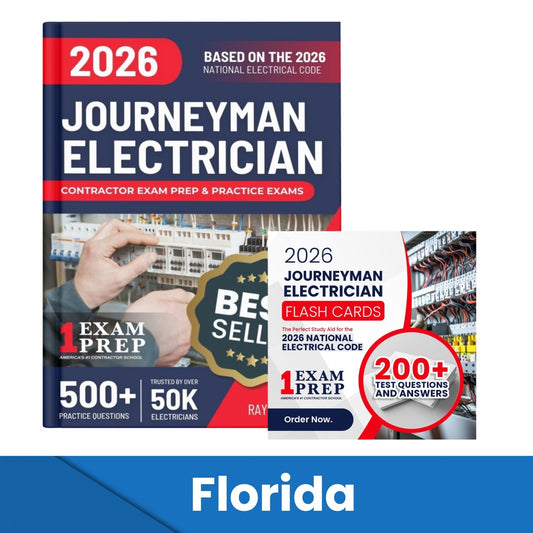
The good news is that you can prepare in an organized way. Start by identifying the license that matches the work you intend to do. Then use the current exam bulletin, the right books, practice questions, and a realistic schedule. The Florida contractor exam prep collection at 1 Exam Prep brings together several licensing paths and study formats, so you do not have to treat every Florida trade as the same examination.
Throughout this guide, we will explain certified and registered licenses, general and specialty categories, open-book study strategies, rental packages, online instruction, business preparation, and exam-day details. The goal is not to memorize a warehouse full of codes. It is to understand which rules matter for your exam and how to locate trustworthy answers efficiently.
Florida Certified vs. Registered Contractor Licenses
Florida uses two important terms that new applicants sometimes mix up: certified contractor and registered contractor. A state-certified contractor generally may contract statewide within the scope of the license without having to meet another jurisdiction's competency requirements. A registered contractor's authority is tied to the local jurisdiction or jurisdictions connected with the registration. Neither description means that permits, business taxes, local rules, or license-scope restrictions disappear.
The Florida Department of Business and Professional Regulation (DBPR) explains these categories through its Construction Industry licensing information. Confirm which credential you need before buying a study bundle. Someone planning projects in several Florida counties may face a different licensing path from a contractor focused on work within one local area. Your project type, license status, and approved scope are equally important.
Licensing is also separate from exam preparation. A book package or class can help you study, but it does not authorize contracting work. Applicants still need to satisfy the applicable experience, education, insurance, financial, background, and application requirements. Verify those requirements with the licensing authority rather than relying on a friend who qualified ten years ago.
Choose the Correct Florida Contractor Classification
Florida offers a range of contractor classifications. General, building, and residential contractors have different authorized scopes. Specialty classifications can cover roofing, plumbing, heating and air conditioning, solar, pools, and other specific work. The exam parts and approved reference lists differ by category. A study book that works well for a building contractor may not be the right choice for someone pursuing a roofing credential.
The first step is to write your intended classification at the top of your study notebook. Under it, write the required exam components, the official reference edition list, and the agency or board responsible for the license. Add your application deadline and the date you expect to test. This one-page checklist can prevent expensive wrong turns.
Use the Florida collection to compare preparation options after you have confirmed the correct license name. Product titles can help you find a starting point, but the official exam materials should settle any doubt. Choose the license for the work you actually plan to perform, not simply the one that sounds most impressive.
Florida General Contractor Exam Prep
Florida General Contractor candidates commonly prepare for three examination areas: Contract Administration, Project Management, and Business and Finance. Contract Administration concerns bidding, agreements, payment matters, subcontractors, and project documentation. Project Management brings together construction methods, safety, estimating, codes, and coordination. Business and Finance turns attention to accounting, contractor responsibilities, and how a construction company operates.
The Florida General Contractor Ultimate Exam Prep Rental Package lists rental references, highlighted and tabbed books, live and recorded instruction, self-study courses, business flash cards, and application support. It may fit someone who wants an organized group of materials rather than separate purchases. Always read the current listing for deposit rules and exact inclusions.
Do not confuse open-book with easy. A general contractor reference library is big. You need to recognize whether a question belongs to a contract document, a code volume, a safety reference, or an estimating book. That recognition improves only through repeated practice. Knowing which book to open is half the battle; reading the right paragraph is the other half.
Florida Building and Residential Contractor Preparation
Building and residential contracting are related, but they are not identical license classifications. Florida Building Contractor candidates may work on a different scope of projects than Residential Contractor candidates. Exam topics can overlap, but you should not assume the product package, references, or testing instructions are interchangeable. Confirm the classification and any specialty restrictions before moving forward.
Candidates who need a broad preparation option can explore the Florida Building Contractor Ultimate Exam Prep Rental Package. Those pursuing a narrower residential license can instead review the Florida Residential Contractor Ultimate Exam Prep Rental Package. Both are presented as combined study solutions, but their exact references and conditions should be checked individually.
Residential applicants may be familiar with framing, roofs, foundations, site coordination, and home construction. Even so, study sessions should also cover contracts, code questions, safety, and money-related responsibilities. The exam may test the rule rather than the custom you use on your crew. Treat work experience as a strong starting point, then fill in the gaps with targeted review.
Florida HVAC: Air Conditioning Class A and Class B
Air-conditioning contractor licensing combines technical reasoning with legal and business responsibilities. Candidates may need to review refrigeration, equipment, duct systems, load calculations, installation rules, ventilation, controls, safety, and applicable Florida codes. Because different classifications have different scopes, verify whether you are applying for Class A or Class B rather than assuming they mean the same kind of work.
The Florida Air A or Air B Contractor Ultimate Exam Prep Rental Package is a product designed around these licensing tracks. It is a way to explore packaged preparation with reference materials and instruction. Match the selected product variant to your exact exam.
For technical subjects, solve calculations with a pencil before checking an explanation. A sample question about airflow or a system component should become an opportunity to review both the practical idea and the code reference that supports it. If math is your weak spot, give it a few minutes daily. Waiting until the night before the exam is a poor time to discover you have forgotten how fractions work.
Florida Roofing and Solar Contractor Exam Prep
Roofing and solar contracting each call for specialized knowledge. Roofing candidates should be comfortable with roof systems, waterproofing, flashings, wind protection, estimating, jobsite safety, and code requirements. Solar candidates may encounter electrical or thermal system topics, installation methods, code compliance, safety, and business responsibilities according to the exact license they pursue.
Relevant preparation options include the Florida Roofing Contractor Ultimate Exam Prep Rental Package and the Florida Solar Contractor Ultimate Exam Prep Rental Package. These are different products for different paths. The advertised reference sets, course access, rental terms, and deposits should not be assumed to match.
Instead of trying to cover every roofing method or solar component in one sitting, divide the subject into short study blocks. Review one system, identify a typical failure or hazard, and then answer a few exam-style questions. The better you connect the technical idea to its practical purpose, the easier it becomes to remember during a timed test.
Florida Plumbing and Pool Contractor Preparation
Florida Plumbing Contractor candidates need to work across systems such as water distribution, drainage, venting, fixtures, code requirements, trade calculations, and jobsite safety. Depending on the examination, relevant study areas can also include fuel gas, accessibility, mechanical requirements, and specialized systems. A large list may sound intimidating, but the official outline can break it into smaller parts.
The Florida Plumbing Contractor Ultimate Exam Prep Rental Package describes a combination of trade and business books, online courses, live classes, flash cards, and application support. Read the details closely because this package has its own rental period and conditions. Florida plumbing trade testing also follows a different scheduling format from the state's other computer-based construction exams, so check the current DBPR construction examination schedule.
Pool contracting covers another family of classifications, including commercial, residential, and service work. Readers exploring these licenses can visit the Pool Contractor Exam Prep collection. Choose a course aligned with the type of pool work you want to perform rather than buying a package only because it contains the word pool.
Business and Finance: The Part You Cannot Ignore
Even skilled contractors can struggle with business questions. The Florida Business and Finance examination may involve accounting, job costing, payroll, contracts, insurance, taxes, bidding, licensing responsibilities, and basic financial decisions. This material matters beyond the test because a project can go wrong financially even if the finished construction looks excellent.
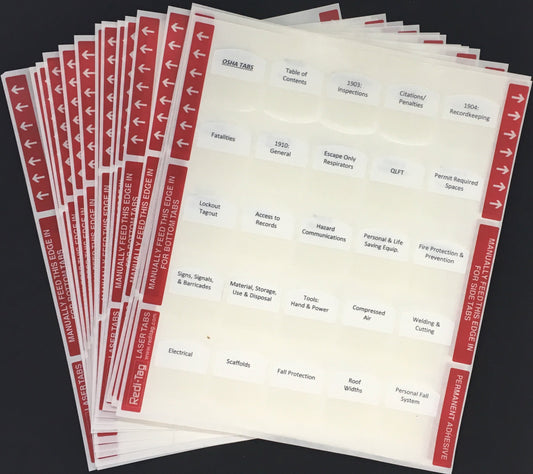
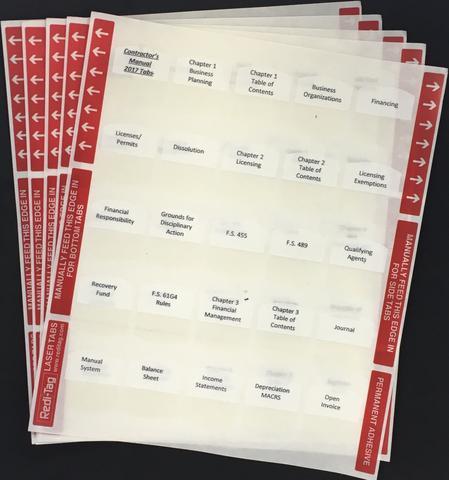
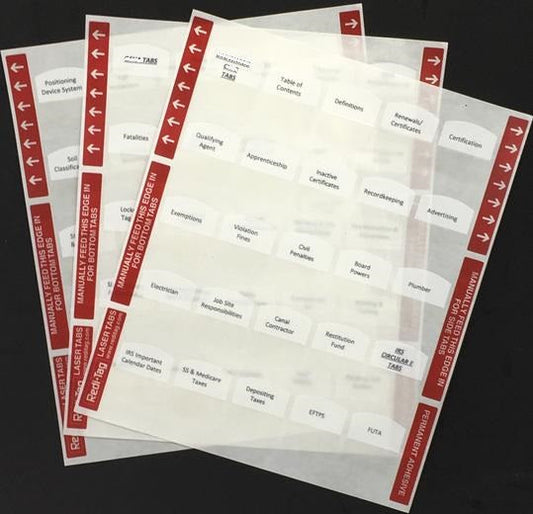
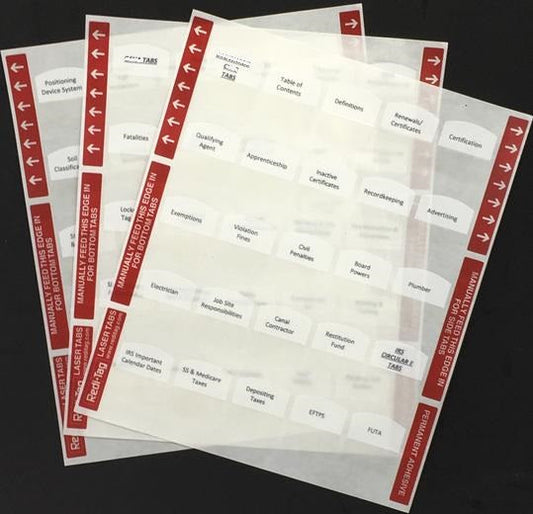
Start by learning where important topics live in the reference set. The Florida Business and Finance Exam Complete Book Set gathers relevant study materials, while the highlighted and tabbed Business and Finance book set provides a prepared-reference format. Confirm which editions the current official reference list approves for your specific test session.
Practice calculations without rushing. After you work through a problem, ask whether your answer makes sense as a business decision. If a job costs more than expected, what happens to the estimate? If a contract changes, where do the responsibilities shift? Thinking about the reason behind a rule can help a formula or definition stay in your memory longer.
Open-Book Florida Exams Still Require Real Studying
Many Florida construction examinations allow approved reference books. That does not mean you can walk into the test center with a pile of books and hope the answer jumps off the page. Time moves quickly, and lengthy tables or code chapters can swallow several minutes if you do not know where to look. A strong candidate is prepared to identify the relevant reference and read the full requirement.
Florida maintains official 2026 construction examination reference lists, separated by examination category and format. Those lists are the place to verify which books and editions apply to your exam. Do not assume that every book included for study may be carried into every examination session. Markings, tabs, loose pages, binding, and electronic material may also be controlled by testing rules.
At home, simulate the real process. Read a question, choose the likely reference, find the answer, and check the related table or exception. Then record how long it took. Repeating this process can make your study more productive than simply reading a code chapter from start to finish. Fast lookups matter, but correct interpretation matters more.
Books, Highlighted References, and Rental Packages
Buying individual reference books gives you control over your library, but costs and editions can add up. Complete book sets simplify shopping. Highlighted and tabbed packages may make it easier to learn where key subjects appear, while rentals let some candidates study from a larger library without owning every volume. Each format has benefits and tradeoffs.
The Florida General Contractor Premium Books & Courses Rental Package is one example of a rental-based program with prepared references and self-study support. Another option is to compare the standalone business book sets before choosing a broader package. There is no need to pay for a course format you will never use, but there is also little value in an incomplete set that omits a reference you need.
Read package details the way you would read a construction contract. Check which items are rentals, whether there is a refundable deposit, when books must be returned, what counts as acceptable condition, and how long online access lasts. These terms vary between products and may change over time. A good study plan should fit both the exam date and the materials you are paying to use.
Online Courses, Live Classes, and Practice Questions
Online courses can help break a large licensing syllabus into manageable sessions. Recorded lessons are useful when you work unusual hours or want to repeat a tricky explanation. Live classes may suit candidates who learn better with a set schedule and opportunities to ask questions. Practice questions can reveal weaknesses that a chapter summary alone might hide.
The Florida General, Building, and Residential Exam Prep overview describes several study formats, including complete packages, self-study options, book sets, and live-class support. Look at each product listing before assuming that a specific feature is included.
Whether you use a full course or only books, turn passive study into active study. Stop a lesson, answer a problem, then explain why the correct answer works. Keep a short list of topics you missed, such as contract changes, a roof assembly, plumbing slope, or a finance calculation. Review that list every few days. The goal is to understand mistakes while they are still small.
Florida Licensing Applications and Exam Registration
Passing an examination is a major milestone, but it is not the same as receiving a license. Florida applicants may need to document qualifying experience or education, meet financial responsibility requirements, provide fingerprints or background information, demonstrate insurance or workers' compensation compliance, pay fees, and complete the correct business or individual application.
The DBPR Construction Industry page is a reliable starting point for current licensing information. Florida uses Professional Testing, Inc. for parts of construction examination administration and Pearson VUE for many computer-based sessions. The official Construction Examinations page describes scheduling and format information, including special dates for plumbing trade testing.
Build a document folder as you study. Save experience records, license numbers, training information, application confirmations, and correspondence. Double-check names and dates. This sort of organization is not exciting, but it can prevent delays. A passed test is satisfying; a complete application is what moves the process toward the finish line.
Continuing Education and What Happens After Licensing
Studying for an initial contractor exam and completing continuing education are two different goals. After obtaining a license, contractors may need to meet renewal and continuing-education obligations. Requirements vary with license type, board rules, and reporting cycle, so do not assume the same course works for every person or local jurisdiction.
The 1 Exam Prep Continuing Education collection lists Florida-related course options, including state and local programs. Before enrolling, confirm that the course is appropriate for your license, approved where required, and accepted for the specific renewal period you are completing.
Maintaining a license can also involve keeping business records current, carrying required coverage, and staying aware of code and regulatory changes. The work is not over when you receive your license card. A strong contractor keeps learning because building methods, safety expectations, and rules do not stand still. The smartest long-term habit is to verify changes before they become problems on a real job.
A Six-Week Florida Contractor Exam Study Plan
Week 1 is for direction. Confirm the exact license classification, required exam parts, candidate instructions, and current reference lists. Gather the books or course access you need and try a short diagnostic quiz. Do not judge yourself by this first score. It simply tells you where to begin.
Week 2 focuses on business and finance. Review accounting terms, contract responsibilities, insurance, licensing rules, and the books that answer those questions. Spend part of each session practicing short reference lookups. Week 3 moves into your first major trade topics. For general and building contractors, this might include construction methods, documents, and estimating. For a specialty contractor, it should follow that trade's own examination outline.
Week 4 covers remaining technical material plus jobsite safety. Work with formulas, tables, diagrams, and code language rather than just reading headings. In Week 5, mix trade and business questions under timed conditions. Keep an error log that identifies whether each miss came from a knowledge gap, choosing the wrong reference, making a math error, or reading too fast.
Week 6 is for realistic practice and exam logistics. Take timed quizzes, review weak subjects, and verify the permitted books and test-center requirements. Confirm your appointment, identification, travel plan, and any special examination rules. If your exam is open-book, rehearse the reference lookup process. Finish with shorter review sessions so you arrive prepared rather than exhausted. Adjust the plan to your own experience and the time available.
How to Choose the Best Florida Contractor Exam Prep Option
Choosing a preparation product should begin with your exam, not with the longest product name or the biggest stack of books. Confirm the license classification, exam components, required reference editions, and your preferred learning style. Then compare what is included. A candidate who enjoys independent reading may do well with books and practice tests. Someone who needs structure may benefit from guided lessons or scheduled classes.
For a broad starting point, explore the Florida State courses and products collection. You can compare general, building, residential, HVAC, roofing, plumbing, pool, solar, and other related preparation paths. Look carefully at rental deposits, course access, return deadlines, and whether application assistance is part of the package.
Preparation materials cannot guarantee a passing score or licensing approval. What they can do is help you organize the work, practice important ideas, and become comfortable with references before test day. The best program is one you can actually follow. Pick the correct materials, set a routine, and give your future contractor business a more confident starting point.
Frequently Asked Questions
Choose a question to see the answer. These answers are general guidance. Official Florida licensing and examination requirements control your application and test.
Conclusion: Prepare for Your Florida Contractor License With a Clear Plan
Preparing for a Florida contractor license is a meaningful investment in your career, but it works best when the process is treated as a series of manageable decisions. First, identify the license classification that matches the projects you actually want to perform. Florida uses different scopes for general, building, residential, and specialty work. It also distinguishes state-certified contractors from registered contractors. Those details affect where you can work, which examinations apply, and what you must document on an application. Getting that first decision right can save both time and money.
Next, connect the examination to the correct study materials. A General Contractor candidate may need to prepare for Contract Administration, Project Management, and Business and Finance, while a roofing or plumbing candidate follows a different trade outline. Never assume that one contractor reference library fits every license. Florida's current official reference lists identify the books and editions associated with examination categories. Because many construction tests are open-book, candidates must know how to find information efficiently. Having an approved book beside you does not help much when you have no idea which chapter to open.
Books, rental packages, online courses, live instruction, and practice questions each offer a different kind of support. A book set helps organize references. Highlighted and tabbed materials can support navigation when permitted under testing rules. Online courses let busy contractors work at a steady pace, while live classes may provide needed structure. A rental package can reduce the need to own every title, but it also brings return deadlines and deposits that deserve careful attention. Read every product description and compare it with the exam you plan to take. Good preparation should make the process clearer, not add another confusing contract to your life.
The study method is equally important. Divide business and technical content into short sessions. Work calculations yourself, answer realistic questions, and keep track of mistakes. When you miss an item, identify whether the problem was knowledge, math, reference selection, or reading too quickly. Repeat the topic until the explanation makes sense. For an open-book test, practice choosing the right reference and finding the rule under a timer. Build speed through familiarity, but never sacrifice accuracy for a fast page turn.
Finally, remember that passing the examinations is not the final licensing step. Applicants may still need experience records, background documentation, financial information, insurance, fees, and properly completed forms. Keep those requirements organized while you study. After licensing, stay alert to renewal and continuing-education obligations. The Florida Contractor Exam Prep collection at 1 Exam Prep offers several ways to explore preparation for different trades. Choose what fits your exact credential, confirm everything against DBPR's current instructions, and follow a realistic plan. A strong contractor builds one sound step on top of another. Your exam preparation can work the same way. Keep the official reference list in the same folder as your study plan and check it again close to your examination date. Requirements and product editions can change. A small amount of careful verification is often worth more than many hours spent reviewing the wrong material. That habit can continue serving you when you are running real projects and managing a construction business.
Key Takeaways
- Start with your exact Florida contractor classification and confirm whether you need a certified or registered license.
- Use the official 2026 DBPR examination and reference lists to match the right books, editions, and test format.
- Practice Business and Finance alongside your trade subjects, using timed questions and open-book reference lookups when appropriate.
- Compare online courses, rental packages, book sets, deposits, access periods, and return rules before purchasing.
- Passing examinations does not itself issue a license: plan for application, experience, insurance, financial, and renewal obligations.
Plain-Language Summary: Florida Contractor Exam Preparation
Florida contractor license exam preparation starts with one important question: Which license do you actually need? Florida has general, building, residential, and many specialty contractor classifications. Roofing, plumbing, HVAC, solar, and pool work can have different license paths. There is also a difference between certified and registered contractors. A state-certified contractor generally may work statewide within the licensed scope, while a registered contractor has authority connected to the local jurisdictions listed in the registration. Before spending money on study materials, confirm the license and the work it allows.
After choosing a classification, find the required exam parts. General Contractor candidates commonly prepare for Contract Administration, Project Management, and Business and Finance. Specialty contractors have their own trade topics and often need separate business preparation. The official examination outline tells you what to study. The current reference list tells you which books and editions are relevant. Florida posts separate reference lists for different exam categories and testing formats. This matters because a book that was correct for an older exam may no longer match the references listed for your appointment.
Many Florida construction licensing exams are open-book, but that does not mean they are easy. You still have to understand the question, select the right book, find the information, and apply the rule while time is running. Some materials may be useful for studying but not allowed in the exam room. Testing rules can also limit notes, loose pages, binding, tabs, and markings. Check the instructions every time you schedule an exam. Florida plumbing trade knowledge testing also uses scheduled paper-and-pencil dates, unlike many other computer-based construction tests.
Study options include complete reference sets, highlighted and tabbed books, rental packages, online lessons, live classes, recorded classes, and practice questions. Each option serves a different learner. An independent student may prefer books and question drills. Someone juggling long jobsite days may prefer lessons that can be replayed in the evening. A complete package can help organize several materials, but check the exact contents before purchase. If books are rented, pay attention to deposits, acceptable return condition, and deadlines. Packages for different licenses do not necessarily use the same terms.
A simple six-week plan can help. Use the first week to confirm the license and gather materials. Spend the next weeks on business topics and the technical areas named in your exam outline. Practice calculations and code lookups instead of only watching lessons. Keep notes about missed questions so you can revisit your weak spots. During the final week, take timed practice tests and confirm your appointment details, required identification, and allowed references.
Passing the exam is not the same as being licensed. You may still need to submit experience information, background details, insurance documents, fees, and other records. Once licensed, continuing education and renewals may apply. Use the 1 Exam Prep Florida collection to compare study products, and use DBPR's official instructions to confirm the rules that apply to you. The best approach is simple: pick the correct license, gather matching resources, practice regularly, and follow through on the application.